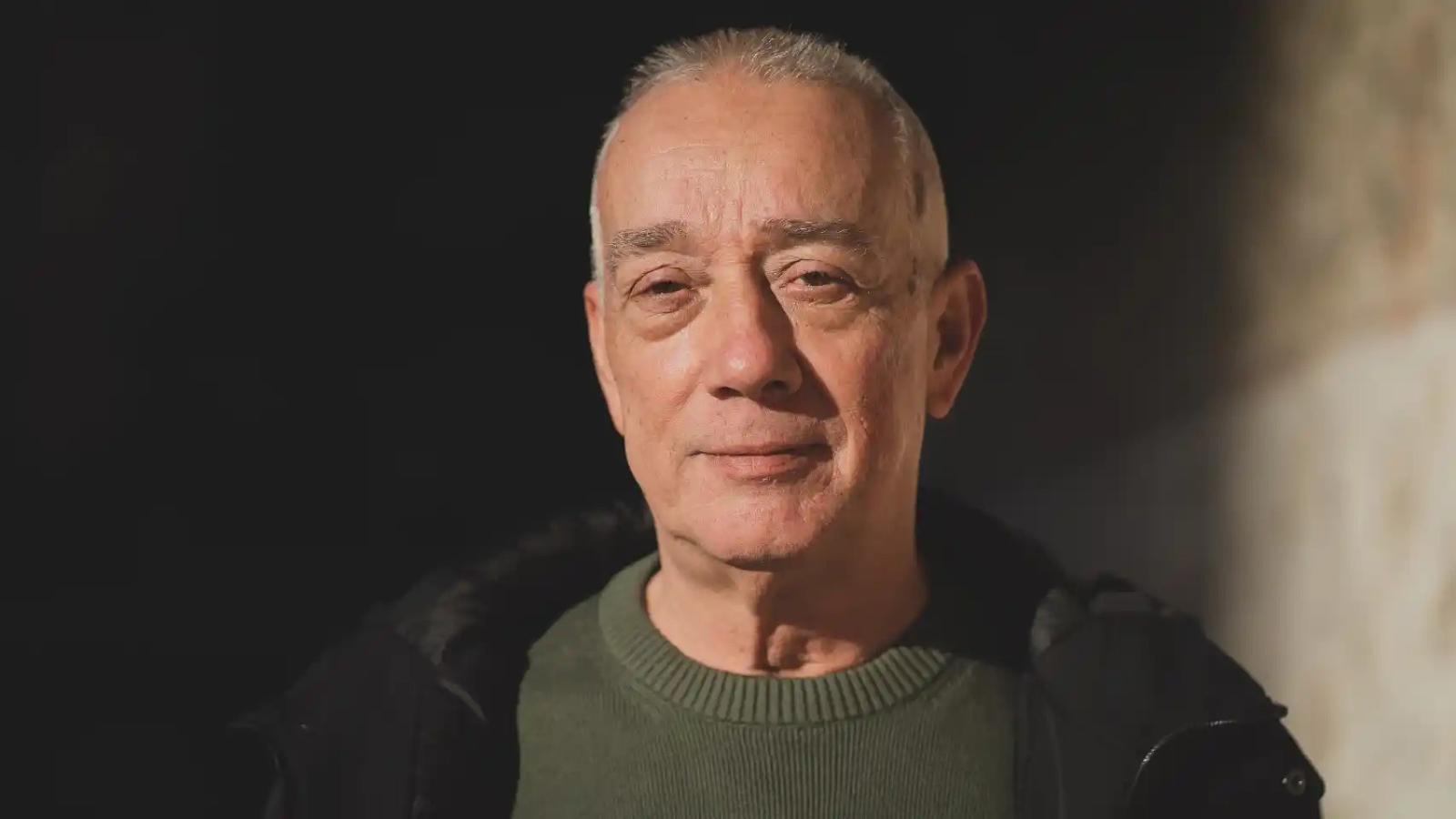
Antonio Alonso: "The key was the towels"
Forensic geneticist, author of 'The Invisible Footprint'
-
CAT -
CAST
BarcelonaHis hands extracted the DNA of Lasa and Zabala, of the terrorists from 11-M and of the victims of the Civil War buried in Cuelgamuros. Antonio Alonso is a privileged witness to criminal history and forensic medicine in Spain. A forensic geneticist, he directed between 2019 and 2024 the National Institute of Toxicology and Forensic Sciences. Retired, he now recounts in the book La huella invisible (Crítica) how DNA has changed the history of justice in Spain.
He identified the bodies of Lasa and Zabala, the first victims of the GAL. And he says he felt broken.
— You could see bites on the adhesive strips, the bandages on the eyes that had already loosened… and of course, that sight shocked me.
It was a milestone for forensic medicine.
— The remains had appeared in 1985 in Alicante and it was not known whose they were. They could not be analyzed until 10 years later, because there was no tool like DNA. The great forensic doctor Paco Etxeberría was the one who connected the cases and who said that the bodies from Alicante could be the two missing ETA youths. We confirmed it, and a window was opened for things that are considered routine today.
Quicklime helped preserve bodies.
— At that moment we didn't know it, but the heat reaction produced when quicklime comes into contact with tissues causes them to dry out, inhibits bacterial growth and, therefore, slows down decomposition. It was key to preserving the remains and identifying them, and also as a signature of those who had done it. To be able to connect the deaths with the GAL.
What did he think seeing the political consequences of his work?
— That in general, but especially in cases that have a lot of impact, not only the scientist's vision is important, but also that of judges and society in general. Many specialists who worked on the case do not understand why there was no conviction for torture offenses, when there seemed to be quite clear indications.
Regarding the DNA revolution, what does the Pitchfork case entail?
— It was the first time DNA was used in a criminal case. Two girls were raped and murdered in the United Kingdom, and the police decided to use a new technique, and for this they asked for blood or saliva samples from thousands of men in the area to compare their DNA with the killer's.
And the killer showed up there?
— No, five thousand tests were done but no one was found. But reality always surpasses fiction. A woman heard some time later in a pub how a guy boasted about having presented himself with a fake passport and having won money. They followed the lead and it turned out that the one who had paid him was Colin Pitchfork. They tested him and it was discovered that he was the murderer.
DNA identifies us, but also our relatives, right? We see this in the case of Inmaculada Arteaga.
— Our first surname comes from the father, and the Y chromosome is also passed down from fathers to sons. Inmaculada Arteaga was a girl murdered in Ciudad Real. The case remained unsolved for years. But finally, DNA was found from a man with similar but not identical genetic data. Tracing the surname, we found the individual whose Y chromosome profile was identical to the one we had obtained from the remains.
Is 11-M the worst thing he has had to live through?
— Yes, the most difficult night. I think that I am not a forensic doctor, I do not perform autopsies, I work in a laboratory. And it was one of the first times that I had to face death directly, and in this case directly the atrocity of a very large number of people in conditions that no professional expects.
The book admits an error.
— It should be taken into account that it is the first time in Spain that we have faced an attack of this magnitude. And we did the identification dactyloscopically, but, of course, afterwards it was difficult to reassign the dismembered parts, you need to have everyone's DNA. It is one of the things that became apparent in the subsequent reviews that were carried out, and from this came a coordination protocol for major disaster cases.
They also identified the culprits.
— The first place where we obtained evidence was the Kangoo van, and this was what allowed us to track phones that had been used and to reach homes. After the terrorists blew themselves up in Leganés, we analyzed their remains to identify each of them, and this also allowed us to trace the places where they had been before. Everything was very important for the final sentence.
A very difficult case is that of the Yak-42. It titles it as the story of an indignity. How could it happen?
— It should never have happened. They were soldiers returning to Spain after having been in Afghanistan. Of the 62 who had the accident, 30 were not identified. I am not saying it was done wrong, I am saying that the coffins were placed at random and the names were written without identifying who was inside. A general, a commander, and a captain did it on their own colleagues. What was the rush? Nor can the concealment by the PP government be understood to prevent families from knowing the truth. They surely would never have known if it hadn't been for 11-M.
Why?
— Because there was a change of government after the attacks and the information was reviewed. In some coffins there were remains of three different people.
DNA also has limits.
— DNA alone does not solve crimes, context is fundamental.
It is seen in the Almonte crime.
— It is the murder of a man and his 8-year-old daughter. The woman, whose name was Marianela, had started a relationship with another person, who was arrested as the perpetrator of the crime. His DNA was found on the towels in the house, but it was not clear when it had arrived there. And the key was the towels.
The towels?
— The fundamental problem is that if you start a washing machine with samples stained with semen or vaginal fluid with clean tissues, and then you analyze them both, you see that there is transfer. So this DNA transfer could have occurred in the washing machine. And any honest expert has to say, in front of a jury, that they cannot rule out that there has been contamination in the washing machine. It is increasingly easy to say whose sample it is, but it is much more difficult to say how and when it got there. The mechanisms of primary or secondary DNA transfer are multiple.
Where can our DNA be found?
— In a person with whom we have shaken hands, with whom we have hugged, or even with whom we have spoken closely and who carries our cellular remains. Therefore, our DNA can be in a place without us having been there. That is why it is fundamental to have the context to understand how the transfer occurred.
Is it a great burden to know that you could be putting someone in prison?
— Clear, but there is a criminal principle that is that in case of doubt, the decision must be in favor of the accused. So if there are doubts, he will not go to prison. In any case, the final interpretation is made by judges, by the courts, opinions in the forensic field have no value. Data and facts that can be proven have value.
What does box 198 mean to you?
— Talking about memory and the Civil War. There are around 33,000 bone remains in Cuelgamuros. We went there to work looking for box 198, which contained bone remains from Aldeaseca and Fuente el Saúz. They are two towns in Ávila where in 1959 Francoism opened the mass graves and brought the bones to the then-inaugurated Valley of the Fallen.
And he repeats that it doesn't matter which side.
— Humanitarian science does not understand factions but rather people who have been violated. In many cases, war caught many people where it caught them and they had to fight for their side. And human dignity and the need we all have to bury our dead and mourn is fundamental.
What does it feel like when someone is identified?
— In the forensic field, every time we obtain the DNA of a missing victim or identify the DNA of a suspected criminal – as it is a eureka moment– there is the feeling of having discovered and contributed something important. And the best reward you can have is for a family member to celebrate your work.
