The Generalitat embraces the private sector to create the 20,000 promised residential places
The executive approves a plan to contract places and respond to a high waiting list that will still go upwards
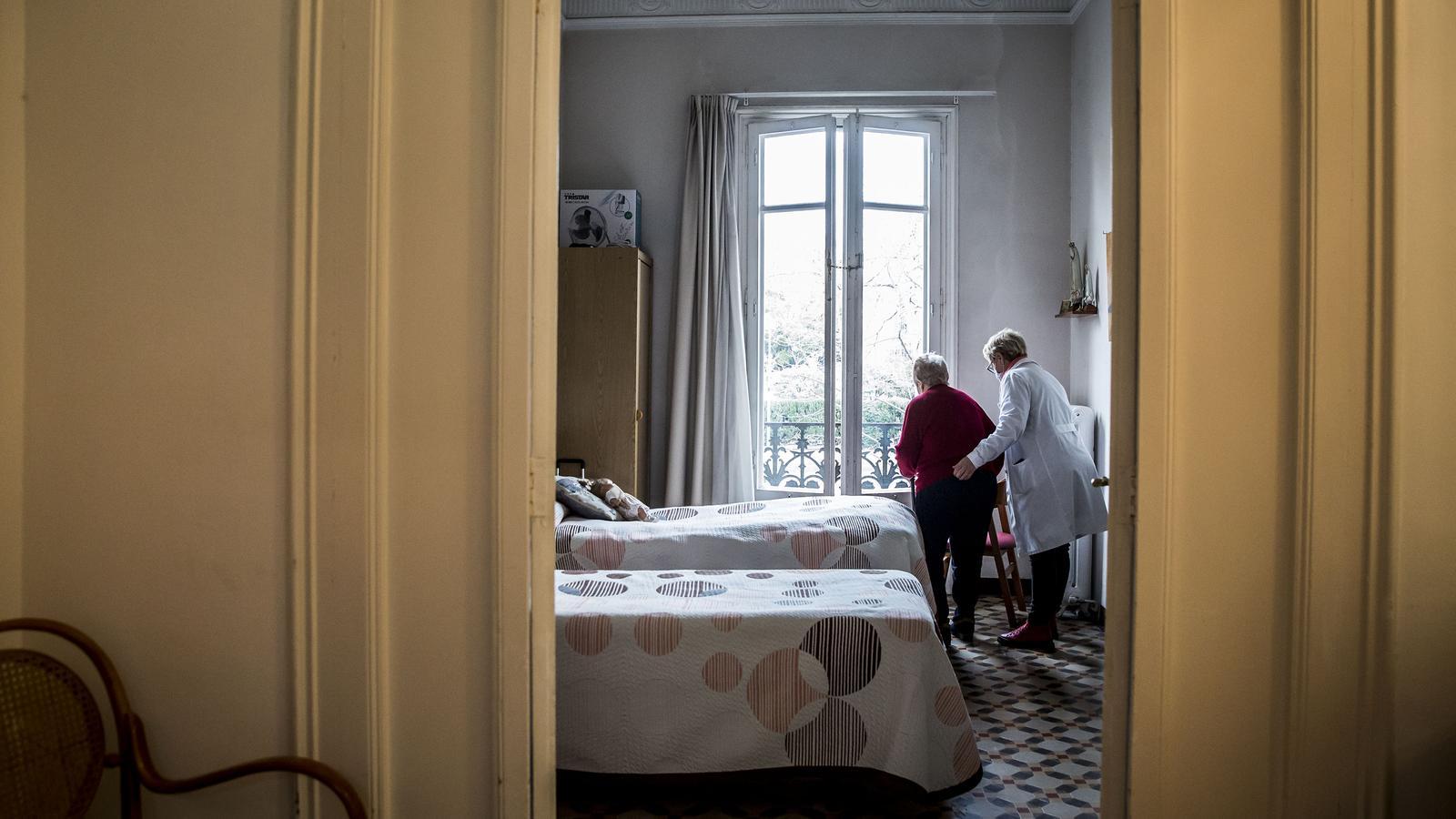

BarcelonaUp to 20,000 more residential places for the elderly and people with disabilities before the year 2030. This is the commitment of the President of the Generalitat, Salvador Illa, which he announced at the end of September during the general policy debate and which this Tuesday he ratified with the approval of the 20,000 Plan by the executive council. The progressive aging of the citizenry means that many more residential resources are needed in the country. Currently, there are already 18,000 people on the waiting list and the forecast is that this figure will increase in the coming decades. The Government relies on the construction of new public residences —15, of which 3 could be operational before 2030—, but also on the participation of city councils and the private sector.
“In the last fifteen years, the Generalitat has not built any public residence with its own funds, and with this 20,000 Plan, what we want is to reverse this situation and adapt Catalonia's residential resources to the new reality of an aging population,” argues the Minister of Social Rights and Inclusion, Raúl Moreno, who defends that the country must “reverse the lost time” in the construction of residential places. Of the 20,000 places projected by the executive, 15,500 will be for the elderly and 4,500 for people with disabilities. The ministry has proposed building 15 new public residences, but of these, only three will be finished before 2030. Specifically, in La Seu d'Urgell, Reus, and Santa Coloma de Gramenet.
Since the demographic transformation makes it more necessary than ever to increase the number of places, the Government has winked at city councils and companies in the sector to help them fulfill their commitment to reach 20,000 places. “Only with the construction of public residences will we not be able to keep up with this need,” asserts Moreno, who stresses that when the executive arranges the places, it converts them into public ones.
“When we say 20,000 places, they are 20,000 places of arranged access, of public access, but, evidently, the third social sector and private enterprise must participate in the construction,” defends the minister, who insists that all hands are needed to get down to work after almost two decades without building any. “It will be complicated for those who have not built residences in 15 years to reproach us now that we are not betting only on public residences,” he asserts.
45,000 funded places
Currently, the Generalitat finances more than 45,168 residential places for the elderly and 7,811 for people with disabilities, which represent an annual investment of almost 1.211 billion euros. In the field of disability, more than 4,300 people are waiting to access a residential resource suitable for their needs, and there are more than 15,000 who are doing so in the field of the elderly.
For this reason, President Illa explained that approximately one-third of the existing private places will be incorporated into the public network, that is, 6,590 places for the elderly and 334 for people with disabilities. In parallel, the Government will contract new places built with European funds, subsidies, financing from the Catalan Finance Institute (ICF), or in projects already underway, among others.
