The accompaniment to the beaches of Barcelona that changes lives
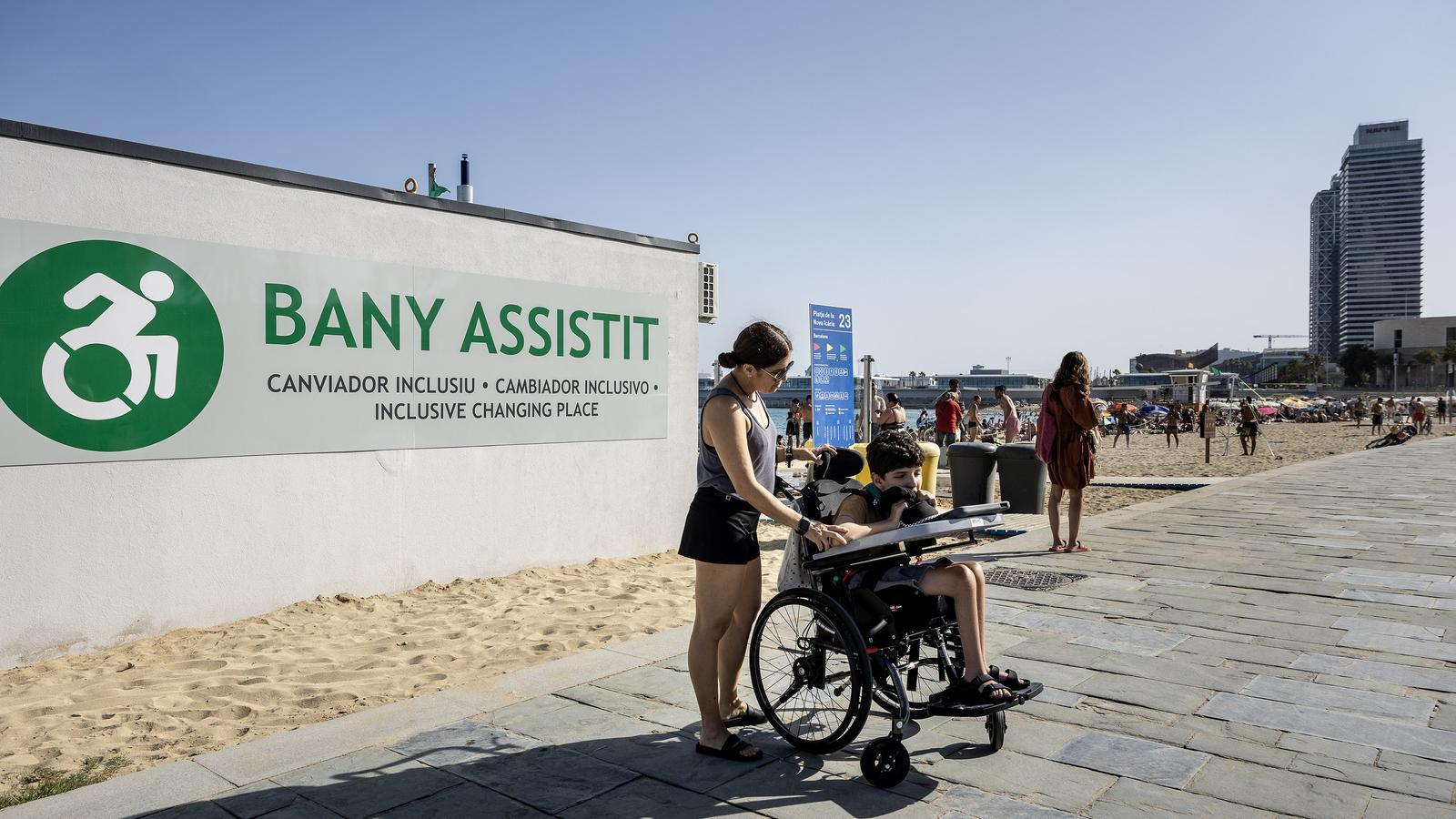
The bathroom support service is a free provision for people with reduced mobility or functional diversity that guarantees the right to leisure for everyone
-
CAT -
CAST
BarcelonaErica is 89 years old and has been a lifelong resident of Barcelona. Years ago, she used to spend hours in the water water skiing, a sport she had practiced since she was young: the sea was part of her life. Before the pandemic, she enjoyed a very active lifestyle, spending hours at the gym training and trying to take care of herself and stay in shape, but when the lockdown arrived, she had to spend ten months barely moving. Those months of isolation, inactivity, and sedentary lifestyle harmed her eyesight to the point of becoming blind. Now she can enjoy the beach again. “Being able to come to the beach is half of my life. I start jumping and playing like a little girl,” she explains. Next to Erica is Antonia García, an 83-year-old resident of Barcelona who needs help entering the water since she suffered a stroke in 2025.“Last year I could enter the water without any problem and I swam perfectly. Until I had a stroke and I lost swimming, like other things that I used to do before and now I can't anymore”, she points out. This summer is the first that Erica and Antonia are enjoying, at Sant Miquel beach, the bathing support service, a free service that the Barcelona City Council offers to people with reduced mobility or functional diversity. Also to people who, like Erica and Antonia, do not want to give up being able to go to the beach. The service is structured in four points of attention located on the beaches of Sant Miquel (in Barceloneta), Nova Icària, Bogatell, and the bathing area of Fòrum. The service technicians help them to walk and enter the water and are attentive in case they require additional help or there is any incident.
Adapted spaces
The points of attention have wooden walkways that reach the water, parking areas with accessible routes to the beach, as well as adapted public transport that reaches the point of attention, visual and tactile signage and information, adapted toilets and adapted showers with chairs and electric hoist. All areas have a pergola or shaded areas to protect users from the sun while they wait. In addition, they have amphibious chairs, a hydraulic chair (only at the Forum), crutch sets and wheelchairs.The responsible company, Ilunion, is in charge of the service and the management of monitors, coordinators, and bathroom technicians who carry out the tasks to assist bathers. The team is made up of integrators, social educators, and lifeguards, in order to guarantee an interdisciplinary staff. In total there are 20 workers: seven at Nova Icària, five at Bogatell, five at Sant Miquel, and three at Fòrum, although the number fluctuates depending on the time of the season.“There are people who come here and haven't touched the beach for years and get very emotional when they can bathe in the water,” explains Dani, one of the Sant Miquel workers who confesses that a service like bathing support changes lives. It's Dani's third year working there. He, like his colleagues, explains the demands they believe should be implemented to offer a service appropriate to the users' needs. Beyond the weather conditions and the state of the water, which directly influences the experience of the people who use it, they also demand the improvement of material, such as the acquisition of new amphibious chairs, the incorporation of more people into the staff, and an increase in the duration of the bathing season so that users can enjoy the sea for more weeks a year. Sandra, the coordinator of the bathing support at Sant Miquel beach, has been a member of the team for ten years. When the service started more than twenty years ago, the team was made up of volunteers. The operation was very precarious and they did not have the necessary resources to attend to all the users who required it. “Every year there were people who were left without being able to use it because the volunteers couldn't cope, even so, before there wasn't the influx of users there is now,” explains Sandra. Currently, they attend to approximately 60 users a day only at Sant Miquel beach. Although the attention point has improved and evolved in recent years, she explains that they encounter complications during the day-to-day that prevent them from attending to users as they would like. They lack “more points, more staff and more resources,” she points out. Marta is one of the lifeguards at Barceloneta beach. A social educator by profession, she argues that a service like this is more necessary than ever to guarantee the “right to leisure,” especially in summers like this year’s, marked by intense heatwaves. “A service like this is very necessary because everyone has the right to leisure, especially with the heatwaves. If with the service we can make accessibility easier and everyone has the opportunity to enjoy themselves, all the better,” she says.
