Josep Maria Pujol: "I still think that socialism would fix many things"
Chaplain of Santa Margarida de Montbui

-
CAT -
CAST
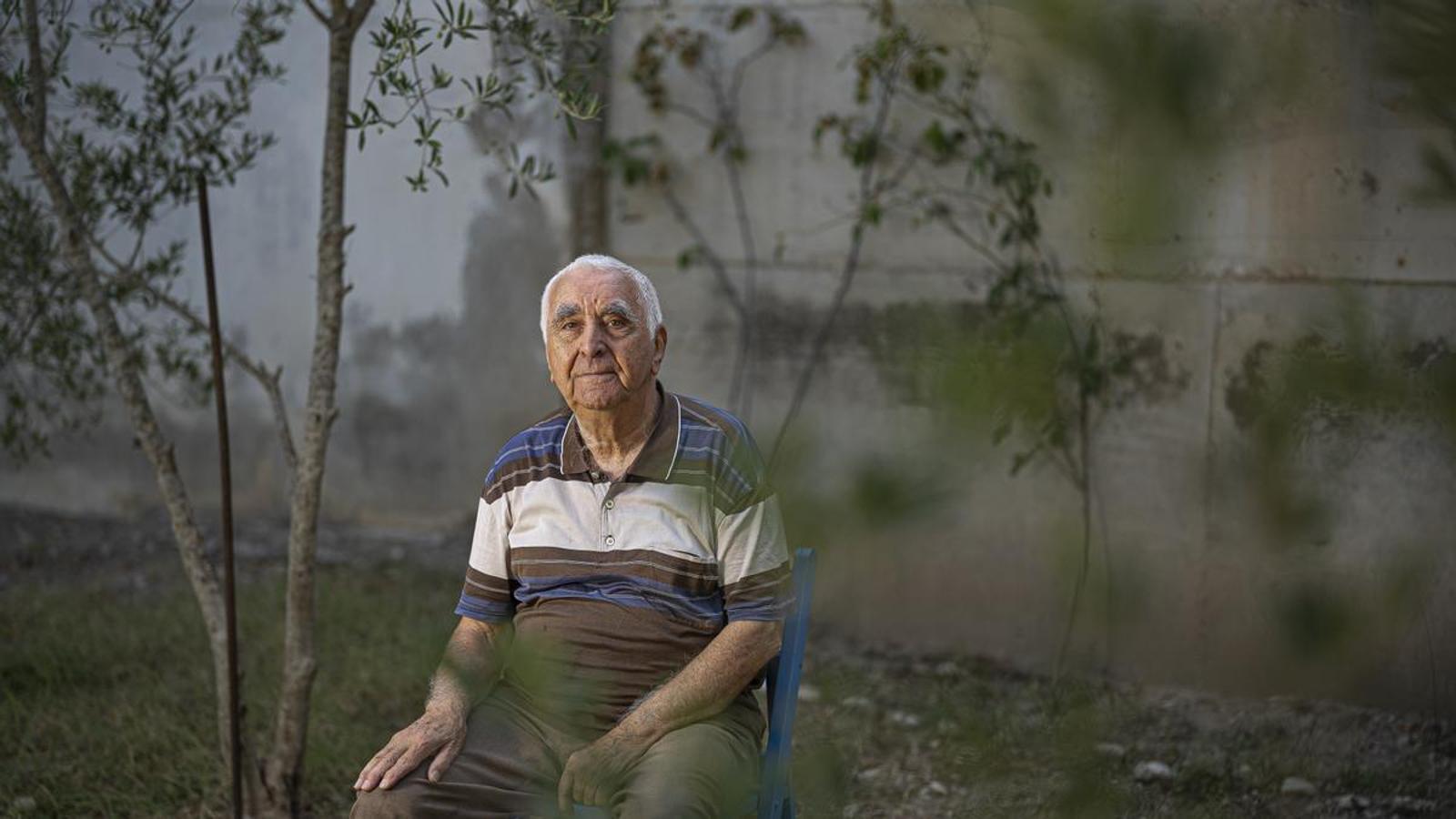
I located him by calling the landline at the rectory of Santa Margarida de Montbui. We discover together what photo he has on his mobile phone, because he didn't remember: it is the celebration of his 50 years as a priest. "I know a little about religion and language, but I don't know anything about modernity". After a life dedicated to three pillars, "the poor, the language and a vision of the Gospel", this September he will leave the parish of Sant Maure, near Igualada, and will serve only as rector of the old town, with 650 inhabitants. We meet, "if there is nofuneral", before going to officiate a mass at a home
— I am burying people my own age. Two this week.
Wow, I imagine it's impressive.
— In these thirty years in the village, I have buried 1,500 deceased, 50 per year. What has been decreasing are the weddings: I have one or two left a year, the same as with baptisms. Between Africa and here, I have performed 7,000 baptisms and have married 700 couples.
Good heavens. These joys, and above all the sorrows, does a priest take them home?
— Well. There are some things that are difficult for you. I am from a group formed during that era of sociological change. After a dictatorship, we believed that socialism would fix many things, and I still think so, but it has not been successful. Now we are in pure and hard capitalism, terrible.
Turbocapitalism, as they say.
— It is painful. Everyone has the right to survive and improve their situation, this is Gospel, and what we are experiencing is that only those who already have money to make more are favored, and it is the ruin of the poor. We see it with immigrants: "Let them die at sea", "The Third World should die in their own home".
You served as a missionary in Rwanda for 20 years. What brought you to Africa?
— At the end of the Franco regime, there were two subjects that interested me. One is Catalan and the other is sociology, the workers, the poor, moving towards socialism. Here it could be done from the neighborhoods, with the workers who were arriving, and I saw it while doing internships in an immigrant neighborhood of Badalona, in Pomar, and these last years here in Sant Maure. But it could also be done in the Third World, with those who had been left out of progress. Two colleagues from Vic had started a mission in Rwanda and we ended up being ten priests from here. I returned in 1994, devastated, after four years of civil war, seeing dead people, living in a refugee camp for 7,000 people and one tap for everyone.
Has helping others been what has driven your pastoral work?
— Helping others to be lucky, as I was. More than religious faith itself, I wanted to help people get out of the darkness: being able to study, write, know, et cetera. When I was ordained a priest I said clearly: "Neither sir, nor father: Josep Maria".
At what point did you clearly see that this would be your path?
— Since I was a child, when they asked me "what do you want to be when you grow up?" I already said "I will be a priest". I suppose my mother had instilled it in me. But then my father lost his job, which was tied to the house, and we had to look for a shack. At 10 years old I ended up in the textile factory, to earn 85 pesetas. That has also influenced me.
How did you arrive, then, at the seminary?
— A new rector came to Avinyó and threatened to report the boys and girls who were of school age and were working. When he found out that we were poor and I wanted to be a priest, he took me by motorcycle to Vic to take the exams and the following week I was already starting. During the summers I still worked in the house of some important people, to earn something, and I know they looked down on the maids and me... At 12 years old I thought: "You will never serve the rich, you belong to the poor and you will always be with the poor."
At the Vic Seminary, in the 50s, was Catalan taught?
— It was officially forbidden. But I had as a companion Josep Ruaix Vinyet [priest, grammarian and writer], who was already a wise man as a child and had a strong command of Catalan. We learned it in our free time, in the summers, we were guinea pigs. Later we took the Catalan correspondence courses from Òmnium Cultural, in the time of Joan Triadú, and we took exams in secret in Barcelona. Once the Generalitat came, it recognized our title.
A priest from Bages, Aquileu, explained to me that in recent years his home has been the arrival point for Rwandan rectors who say mass in Catalonia. He has taught them all Catalan!
— Those of us who went to Rwanda to work spent five months locked away studying Kinyarwanda and the history of the country. In Catalonia, we haven't done this, and it is a major failure. By chance, a priest from my Rwandan parish came here to do his doctorate, and I helped him with the language. This system was institutionalized, because I speak their language and they need Catalan. 26 have passed! My method is excellent: we open a missal in Catalan and start reading. Since they already know the mass in Latin and French, by the second Sunday they are already reading in church. People applaud them.

When the Pope came to bless the tower of Jesus at the Sagrada Família, language drew a lot of attention. Should the Church speak the language of the parishioners, that of the institution, or the language of the place? What do you do?
— Since the Pope had been a missionary, I believe he understood it and, on his own, would surely have done more. In Africa, I spoke Kinyarwanda and not French. At Sant Maure, I conduct the mass bilingually: the part they already know I say in Catalan, and the other texts and the sermon, I mix them, and in the end, they understand everything. Now we have problems with South Americans, who ask for more Spanish or leave for sects.
They have told me that you are an atypical priest.Can one be a dissident within the Church?
— I have been. With tranquility. It seems to me that in many areas of the Church institution, personal, economic, prestige, or honor interests are used more than the Gospel of service and the promotion of what we all carry within: human dignity. And Jesus in the Gospel is the proof of this: it is not the one who goes to the temple every week, it is the one who helps people to get up, to promote; that is what is important.
Why do you think there are fewer believers who go to mass?
— There have been many changes, and now the world demands something else. It is not necessary to maintain the rituals established in the Middle Ages, which do not come directly from Jesus. They say one must pray? I say every day "Thank you Lord for the life you have given me" and that is already a complete prayer. I am not one for daily mass. People have a new way of conceiving life, spirituality, and the growth of personality. We should think: Jesus, in these moments, how would he live it? How would he feel it? From the little we know of the historical Jesus, he was rather of a very open tendency, not closed in temples or institutions.
