Recalling childhood abuse after a stroke at 47
Journalist Marta Plujà recalls in a book the sexual assaults she suffered and how she has managed to regain awareness of them
-
CAT -
CAST
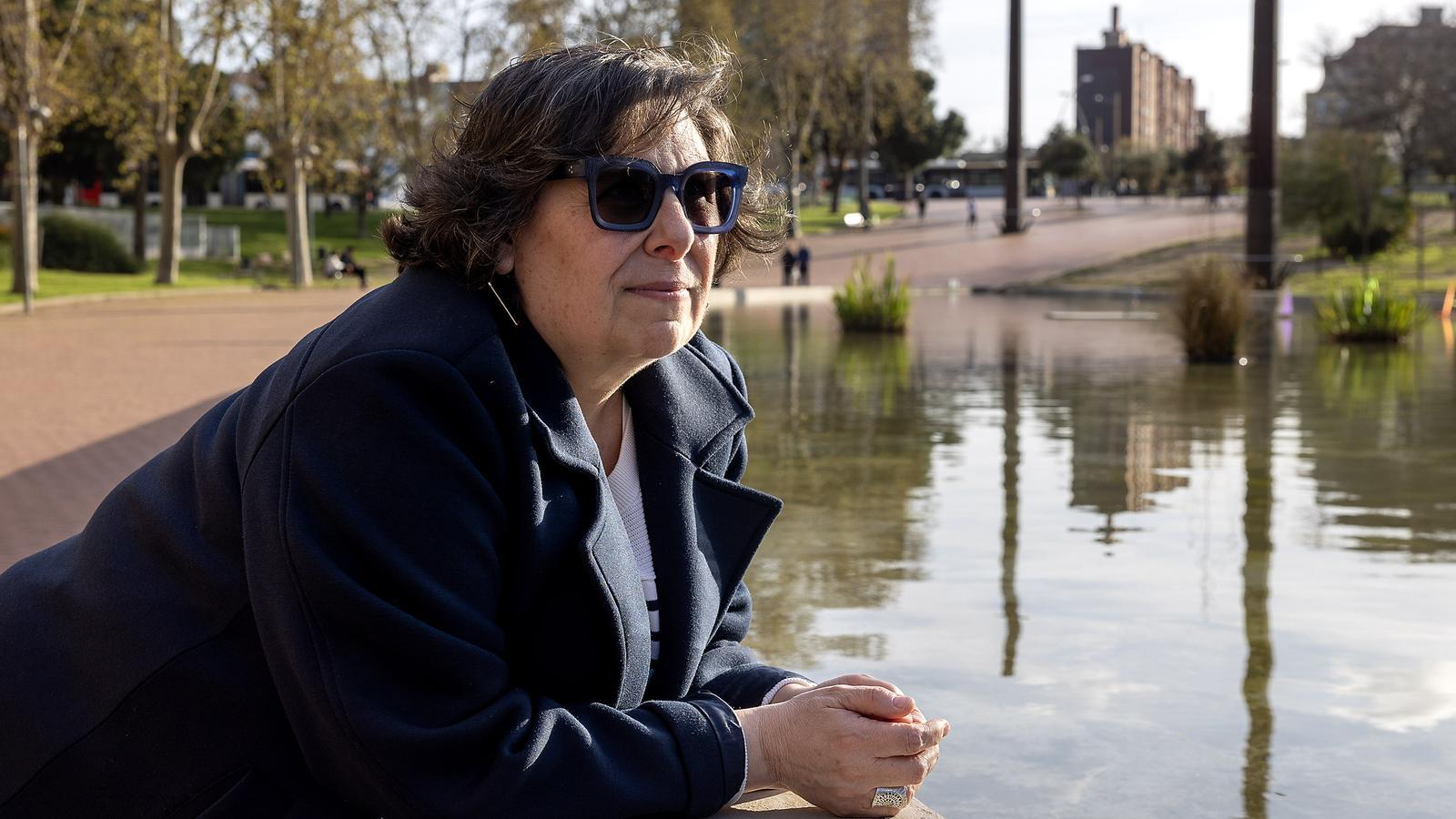
BarcelonaShe doesn't know if it was a smell, the feeling of coldness of body and spirit, but on January 24, 2014, Marta Plujà says she almost had to die to be reborn. That day she suffered a stroke that helped her, definitively, to “wake up” and “break the silence” that she had carried since she was very young without even knowing it. She also doesn't know when the sexual assaults and rapes by a relative began or ended. She calculates it based on the aggressor's biography, who is 10 years older and was already of legal age. “I would have been 9, 10, 11 years old,” she says.
No one around her noticed anything strange in the adult's behavior or in the sadness and loneliness of the child and adolescent Marta. Without realizing it, she finds herself torn between blaming her parents for not having been able to interpret her daughter's despair and understanding because there were other problems at home and that, to contextualize, in the late 1970s, no one talked about it.
Plujà (Camprodon, 1967) is a journalist and as part of the therapy to recover from the trauma of recurrent rapes, she wrote Ca la tia Justa (Ediciones Oblicuas), in which she uses autofiction to explain the control and power the aggressor exercised over her, but also to delve into the painful process of becoming aware of the violence suffered to begin the path to recovery. “Right now, I have already found peace, I have gone through the process – she elaborates while having an infusion –. I don't care if people know who the aggressor is or not; I also don't care what he thinks or what happens to him, it's no longer my problem”.

Alongside her is Pilar Polo, psychologist at the Fundació Vicki Bernadet, a reference entity in the attention of sexual violence in childhood. They met because Plujà presented her with the book's galleys and Polo immediately saw that it was a useful text to combat these crimes, which affect one in five children. She highlights that it can help to focus the gaze of people who "have looked the other way when they shouldn't have, those who cannot find the words to address the issue" or even, as in Plujà's case, "make those who have remained silent speak".
For more than two decades Plujà forgot the rapes, even though every time she sees the aggressor her soul is stirred. The lack of a safe space meant she never shared the assaults with anyone, not even with the personal diary she still keeps. Only one sentence appears connecting her to the man. Nothing more. It is "the law of amnesia" that covers up the pain, the disgust, the rage, and dissociates the person.
Until one day, about 25 years ago, she breaks down and verbalizes her story for the first time. But it is an isolated episode because even with the therapy she starts, she doesn't bring up the subject again and buries the assaults. “There are those who want to remember and cannot, and there are those who want to forget and cannot. There are people who constantly have violence present and others have very small memories that make them doubt whether it is true or if they are imagining it. Or, suddenly, there are people who remembered nothing and suddenly remember everything,” explains the psychologist, referring to the brain's mechanisms and the fact that there is no pattern.
"14 pages in abundance"
In Plujà's case, the “helplessness and loneliness” she felt all alone in the emergency room due to the stroke was the turning point to realize that she could no longer remain silent and that, first, she had to explain it to herself and, then, she had to explain it to others. She admits that they were days of a lot of crying, a lot of pain, of being between “shame and guilt” for having endured it, for not having known how to say anything to make the aggressions stop. They are two feelings, Polo points out, that "go hand in hand with silence".
Determined to reveal the truth, she wrote "14 pages in a row", encouraged by her therapist, and for the next eight years she dedicated herself to shaping the narrative. "I've been silent enough!", she states. Once the rapes are unearthed, the adult Plujà confronts her adolescence and youth in which she gets caught up in toxic relationships, which she now understands are "consequences of the aggression". The violence, the lack of affection and love in the rapes –"games", according to the man–, the submission to the aggressor, the silence and the threats imposed by the adult –"it's our secret", "you'll like it with time", he repeats to her– "leave their mark on the body", notes Polo, for whom this second part of the book has an extra strength and value because it can be "the push to talk about things that are uncomfortable". And she indicates that while "everyone empathizes with a violated child", there isn't always as much understanding for the behavior of an adult who has been violated.
It is almost obligatory to compare Plujà's experience and book with that of the French woman Gisèle Pelicot, whom her husband offered so that "unknown men would rape her while she slept". “Marta's book is braver because, unlike Mrs. Pelicot, she does remember everything she went through, and that is more painful”, she points out. "Well, how lucky you are!", replies Plujà, who states that she has "undressed" herself as an adult.

Gratuïts i confidencials
Generalitat de Catalunya
Emergències
Mossos d’Esquadra
900 900 120 / 016
112
601 00 11 22
(WhatsApp)

Gratuïts i confidencials
Generalitat de Catalunya
Emergències
900 900 120 / 016
112
Mossos d’Esquadra
601 00 11 22
(WhatsApp)

Gratuïts i confidencials
Generalitat de Catalunya
Emergències
900 900 120 / 016
112
Mossos d’Esquadra
601 00 11 22
(WhatsApp)
