More than 6,000 police officers will protect the Pope on his journey through Catalonia
Several streets in Barcelona will be closed and the City Council recommends moving by metro

-
CAT -
CAST
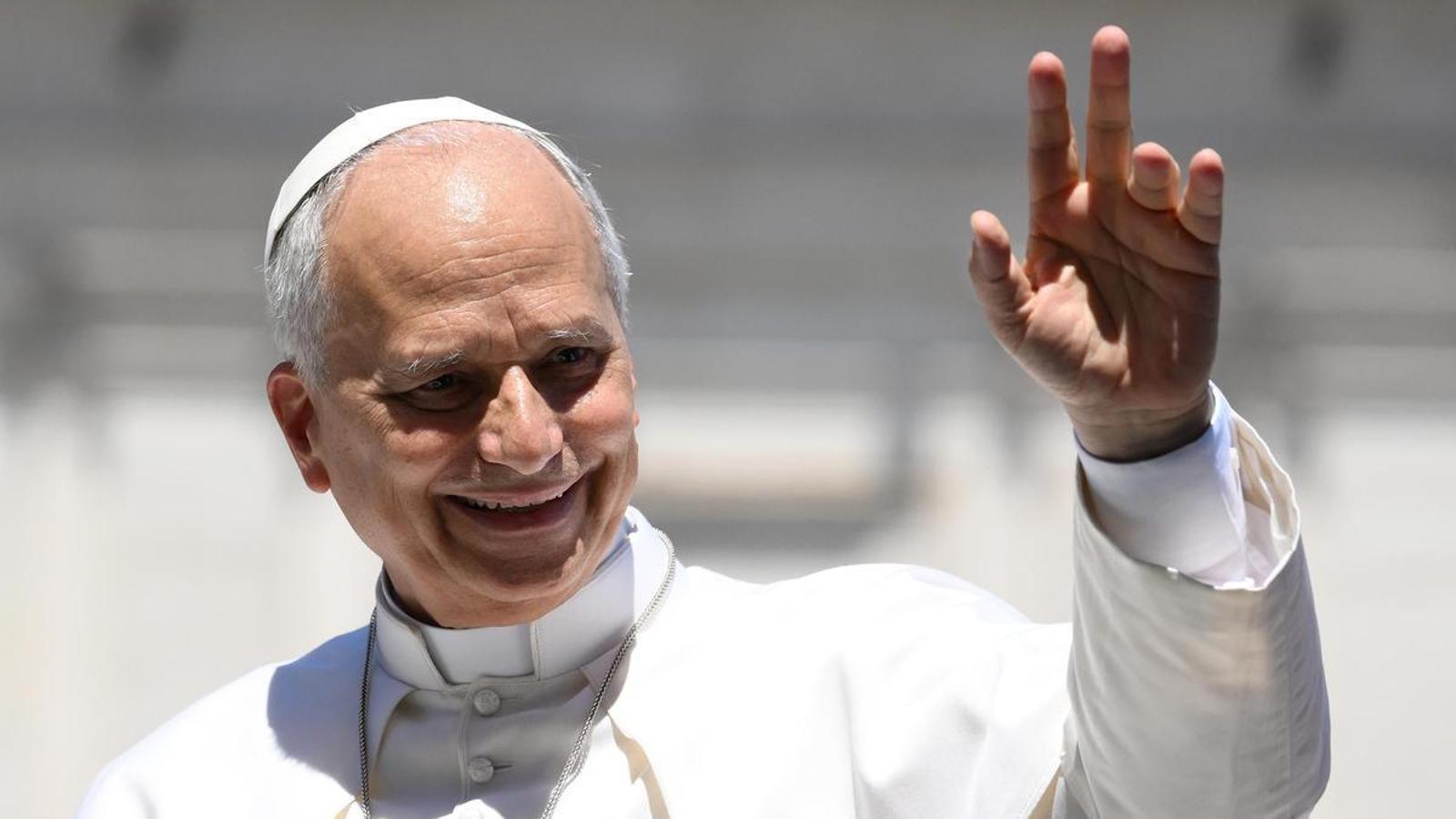
Barcelona"It is one of the largest police operations ever deployed in Catalonia". This is how the Minister of the Interior, Núria Parlon, described this Thursday the deployment of the Mossos d'Esquadra that will take place during the visit of Pope Leo XIV to Catalonia. Up to 5,600 agents of the Catalan police will be activated for this event. It is an almost unprecedented figure, as it means that 25% of the force's members will be active for the Pope's presence. Furthermore, this entire operation is joint with the National Police, the Civil Guard, the royal household, the Vatican Police, and the Guàrdia Urbana de Barcelona, which will have 500 agents available. In other words, there will be many police officers on the streets. "Catalonia is prepared," stated the Minister of Justice, Ramon Espadaler. The Minister of Justice explained that the visit is covered by an agreement between the Generalitat, the City Council, and the Archbishopric, which he has quantified at 1.6 million euros financed by the tourist tax and which will be audited later.
The Deputy Mayor for Security of the Barcelona City Council, Albert Batlle, admitted that it will be a "complex" security operation. The Pope will pass through the Sagrada Família, El Raval, Brians prison, and Montserrat, but he will also take a route in the popemobile through the center of Barcelona. It will be a one-kilometer route that will take him towards Antoni Gaudí's basilica. It will surely be one of the most delicate security moments, as between Còrsega and Rosselló streets the popemobile will not have a cover and will travel at about 10 kilometers per hour. He will make this journey surrounded by security capsules with police vehicles and on-foot officers, at a "human" speed so that spectators on the street can see him well.
"We want to guarantee maximum security with minimum impact for citizens," stated Parlon. "We want to guarantee the city's functioning to the maximum," added Deputy Mayor Laia Bonet. The Government and the City Council want the impact to be "minimal," but it will exist. For example, from 7 AM on Monday, June 8, until 10 AM on Thursday, June 11, there will be traffic and parking restrictions around the cathedral and the Episcopal Palace. In El Raval, the streets around the church of Sant Agustí and Plaça Gardunya will suffer total traffic closures between June 9 and 10.
Closures in L'Eixample
L'Eixample will surely be the most affected district. Starting next Monday, June 1st, there will already be restrictions around the Sagrada Família to set up the platforms and stands planned for the blessing of the Tower of Jesus. The restrictions will increase as the day approaches. The most affected street will be Rosselló, between Diagonal and Lepant, but also all the cross streets between Provença and Còrsega from Pau Claris to Lepant, where parking will be prohibited, even on corners and sidewalks. Traffic will be cut off from the morning of the 10th until the following dawn. On Wednesday, June 10th, and the dawn of the 11th, a security perimeter will be established with traffic and parking restrictions on streets such as Diagonal, Rosselló, Marina, Sicília, or Sardenya, affecting a total of nine blocks. At the Olympic Ring of Montjuïc, traffic will also be restricted from June 8th to 10th. Access to the event at the Lluís Companys Stadium will only be possible on foot or by public transport, not by private vehicle.
Evidentment, the traffic disruptions will also mean that many bus lines will be affected. "The metro will be the most efficient way to get around," said Laia Bonet. That is why the City Council has announced a reinforcement of the lines these days. For example, on June 10, the day the Sagrada Família will be the center of attention, there will be increases of up to 65% in the offer of the metros closest to the basilica (L2 and L5). 150 more people than usual will also be mobilized. In some parts of the city, the restrictions will also affect Bicing, which will have some stations closed. Councilor Parlon has recommended that citizens plan their movements for those days in advance.
Tedax and GEI
"The objective is to guarantee the correct development of the planned events, ensure that the residents of Barcelona can enjoy a good experience, and ensure that citizens have all mobility alternatives," insisted Albert Batlle at a press conference from the Palau de la Generalitat. Thus, specialized police units will be deployed, such as the Tedax, explosives specialists, or the GEI, the militarized unit of the Mossos d'Esquadra.
At certain events, such as the papamobile's route, the Mossos are already warning that people will be screened. In fact, in the main event areas, such as Montjuïc Stadium, the Cathedral, the Sagrada Família, the parish of Sant Agustí, Brians prison, Montserrat Abbey, and the Episcopal Palace, there will be security perimeters where those who approach will be searched, and only authorized persons and residents will be able to access them. The aerial view will also be considered, as drones and helicopters will be deployed, and unauthorized flying devices will be closely monitored. The Pope's mobility will be carried out using security capsules, with total temporary traffic closures, pilot vehicles, closure devices, and several simultaneous convoys, such as those of the Royal House, the Spanish government, and foreign delegations.
Everything will be coordinated from a coordination center (Cecor) with the presence of all police forces. It will operate, according to Parlon, 24 hours a day. Civil Protection of the Generalitat has already approved the six self-protection plans for all major events and will keep the Procicat plan on pre-alert between June 9 and 11. There will be dozens of civil protection volunteers activated each day.
Outside of Barcelona, Rodalies and Ferrocarrils de la Generalitat services will be reinforced. FGC has opened a digital platform so that accredited visitors to Montserrat can book a ticket for the Aeri or the Cremallera to access it at a price of 7.5 euros for round trip, half of the usual. About seventy organized buses will be the only vehicles that can access it. Approximately 8,000 visitors are expected: 5,000 by rack railway, 1,500 by cable car, and 1,500 by bus.
