The large fires of Madrid and Avila give a breather and thousands of neighbours return to their homes
The fourth heatwave of the summer, which begins today, threatens to truncate the advances achieved in the last hours
-
CAT -
CAST
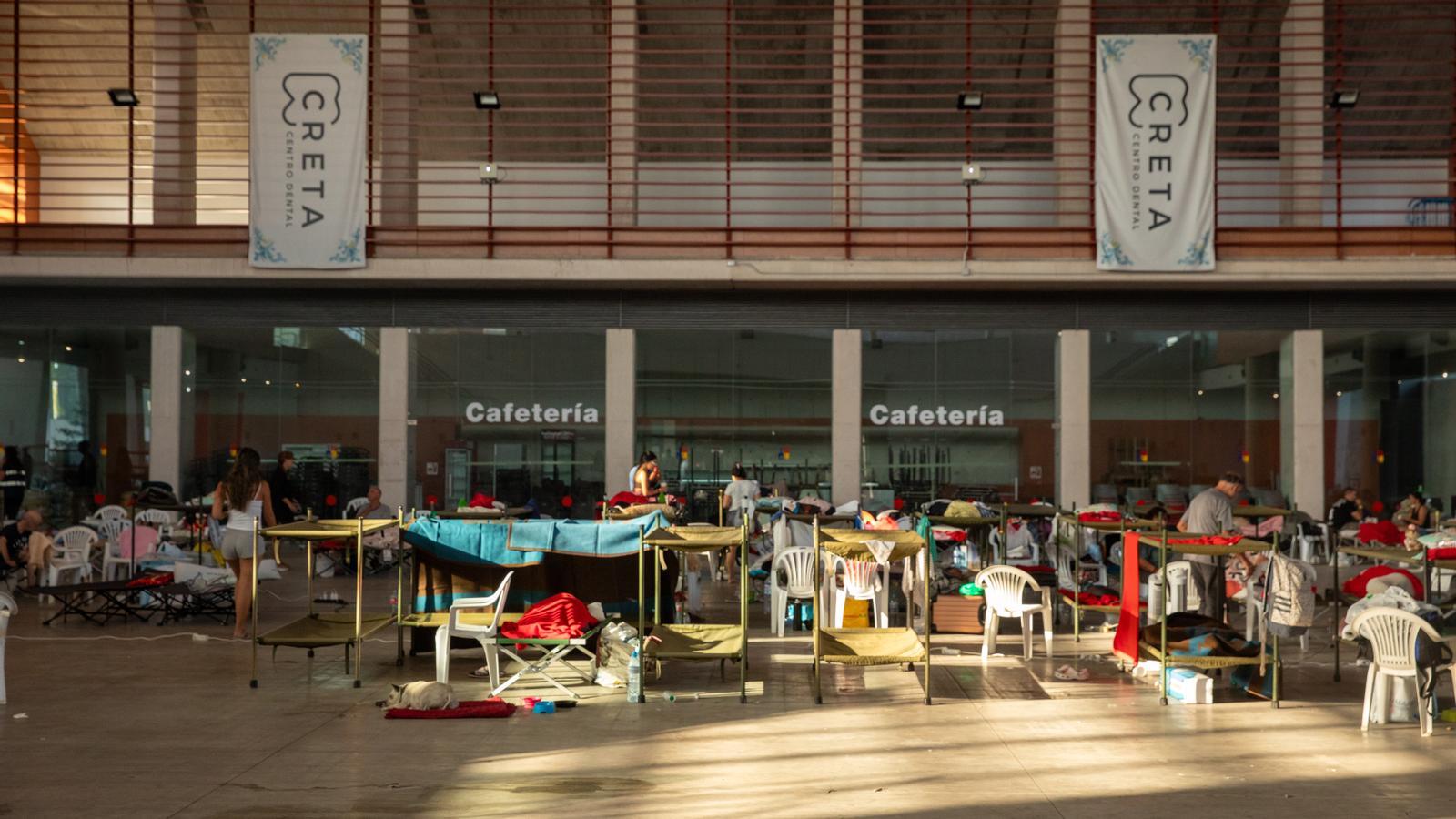
MadridThe next few hours are expected to be difficult due to the start of a new heatwave, but firefighting efforts offer optimism in the severe fires affecting Spain. On Tuesday, restrictions were lifted for 44,000 people affected in the Community of Madrid - 24,000 evacuated and 20,000 confined -, although 11,000 still cannot return to their homes, while in Ávila the forecast was to begin the resettlement of about 4,600 people
In total, about one in every four people affected by the virulent fires in the center of the Peninsula will be able to return home. In the case of Madrid, the towns are Cadalso de los Vidrios, Cenicientos, Navalagamella, Navas del Rey, Rozas de Puerto Real, Aldea del Fresno, Chapinería and Colmenar del Arroyo, Fresnedillas de la Oliva and Zarzalejo; in the case of Ávila they are Fresnedilla, Burgohondo, Higuera de las Dueñas, Pedro Bernardo and Navaluenga south.
The Spanish executive has reported that the decision to lift these restrictions responds to three main criteria: the complete absence of hot spots, the certainty that no flare-ups have been registered in the last 48 hours, and the fact that safety on access routes is guaranteed. However, the government reminds that those evacuated are returning "to a situation that has been truly devastated by an emergency" and they are asked to "take self-protection measures", such as wearing masks.
Thus, according to the Minister of the Interior, Fernando Grande-Marlaska, the current situation is "reasonably positive" given the meteorological conditions that will worsen from this Wednesday, when the fourth heatwave arrives. "We are already noticing an increase in temperatures and humidity has been reduced, but wind gusts have not been significant," Marlaska added on Tuesday evening, after a new meeting.
The Minister of Environment, Agriculture and Interior of the Community of Madrid, Carlos Novillo, has celebrated that the fire has not reached the surroundings of the Sierra de Guadarrama, as it had a very high destructive potential, but has admitted that it will still take days to contain and stabilize the fire. However, he has positively valued that the return of those affected is beginning: "We do not want to lose a minute and we want citizens who, with enormous resilience, have been away from home for more than five days, without knowing the real damage to their homes, to be able to start a normal life as soon as possible".
After the meeting held at the Operational Coordination Center (Cecop), Grande-Marlaska assured that the hotspots in Ávila "have also evolved positively" thanks to the extinction tasks – which are favoring the stabilization process of the flames –, although there have been some resurgences in some points, such as in Burgohondo. The Spanish Prime Minister, Pedro Sánchez, also said that we are beginning to see "the end of the tunnel" in the fight against the large active fires, although the next hours and days will be particularly complex. This Wednesday, the head of the Spanish executive will travel again to the affected area.
Regarding the strategy to tackle the fire, the Minister of the Interior recalled that the extinction tasks are aimed at treating the different open fronts in Madrid and Ávila as a single fire. However, Marlaska insisted that, for the moment, there has been no "total or absolute convergence" of the two large fires.
Meeting amidst the emergency
With the start on Wednesday of a new heatwave, Aemet warns that there will be a “rise in temperatures” that will “drive up” the risk of fires to “very high or extreme” levels in most of the State. The episode will last at least until Sunday. This Tuesday, however, the progressive increase in heat has already begun to be noticed: thirteen autonomous communities are at risk due to high temperatures, and a large part of Spain is at extreme risk of fires, according to the Ministry of the Interior.
In this context, Minister Marlaska will meet remotely on Wednesday with the autonomous communities within the framework of the National Civil Protection Council. The meeting was convened on July 13 with another objective, but it will also serve to address the fire situation. Specifically, four new general guidelines are planned to be addressed that will affect emergency plans at the state, regional, and local levels.
Aid to those affected
On the other hand, the council of ministers has declared territories hit by 211 catastrophic episodes registered between March 31 and July 27, 2026, in fourteen autonomous communities as areas affected by a civil protection emergency. The majority were forest fires, although they also include rain storms, thunderstorms, floods, coastal phenomena, and landslides.
Among the most serious fires are those in Madrid, Ávila, and Toledo, which for the first time have motivated the declaration of a national interest emergency for forest fires, as well as that of La Vall d'Uixó (Castellón), which has not yet been extinguished, and that of Los Gallardos (Almería), which left thirteen dead. Catalonia appears among the most affected communities, with fires in municipalities such as Òrrius, Talavera, Forallac, Sant Quirze Safaja, Tàrrega, Tiana, and la Bisbal d'Empordà, in addition to various episodes of rains and storms that forced the activation of civil protection plans and the ordering of preventive confinements.
