Losing five centimeters of height while not seeing a doctor: testimonials from waiting lists
Catalan patients explain to ARA their experience with long waiting lists

-
CAT -
CAST
BarcelonaIn Catalonia, there are more than 300,000 people waiting for an operation, a test, or a specialist visit who are on a list that exceeds the waiting time set by law. Patients who have been waiting for years to go into the operating room or who have to reschedule specialist appointments to repeat diagnostic tests that are no longer valid at the time of the consultation. While urgent care that cannot be delayed is maintained within the deadlines set by law by the Department of Health, visits and tests focused on prevention and improving quality of life are accumulating more and more patients out of schedule.
"I am a healthcare professional and I am very disappointed with the system"
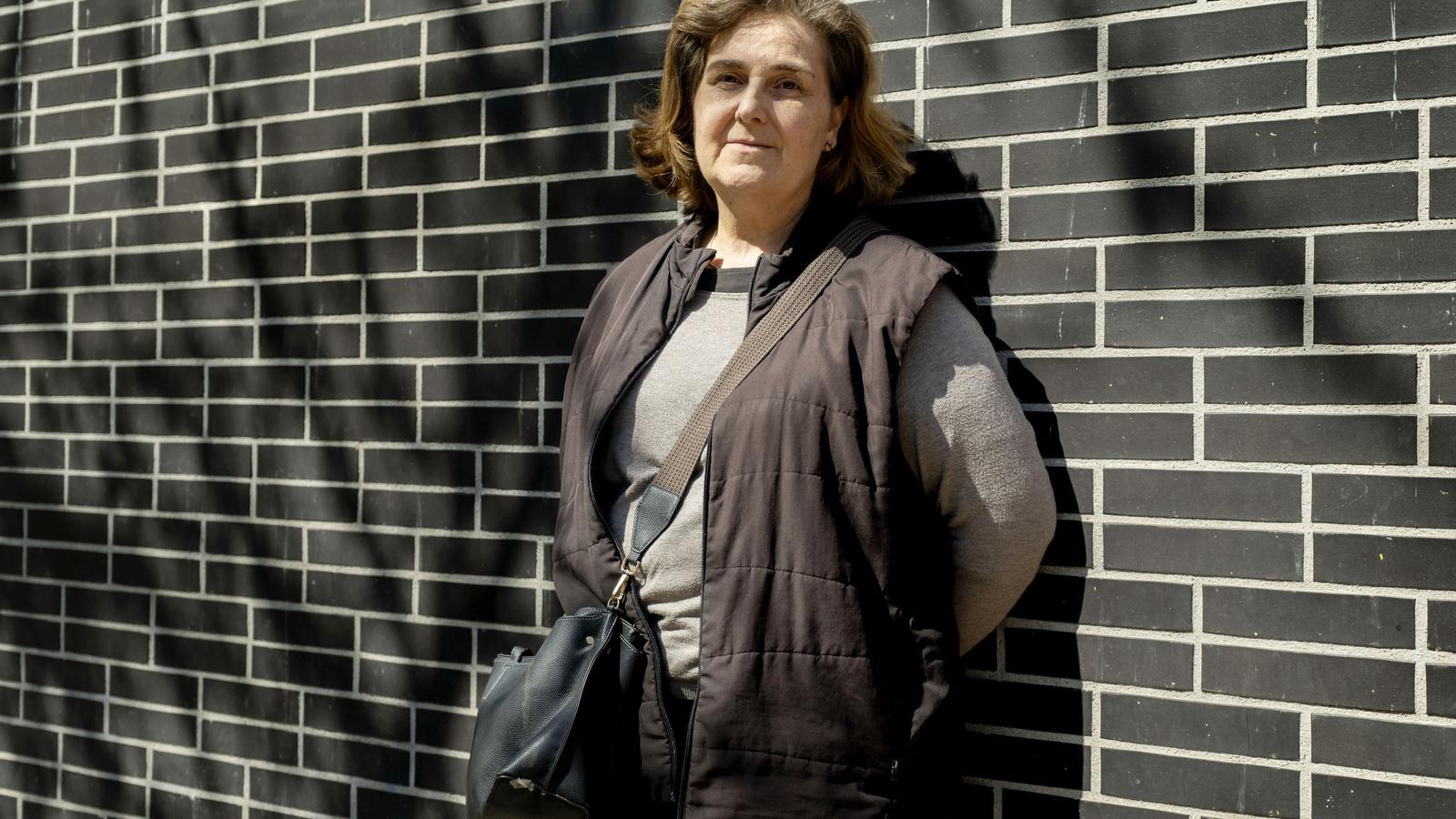
Maria Bosom is a family doctor and, at times, between appointments, she has to do stretches due to the pain she suffers. After a great overexertion to respond to the coronavirus pandemic, which fully impacted the physical and emotional health of healthcare professionals worldwide, in 2022 she suffered an epileptic seizure and, during a very strong contraction, a dorsal vertebra was crushed. As she had fallen, she had X-rays of her lumbar spine and arm, but they did not detect the real injury. As a result of the fall, she was off work for half a year, but the pain continued, sometimes she even had to sleep on the sofa because it was impossible for her to sleep in bed. Finally, she ended up returning to work without the pain disappearing. Later, thanks to a test she underwent for a respiratory infection, the spinal injury was detected.
Then, Maria began a journey through different health centers, jumping from one consultation to another, without any solution to her health problem to this day. First, she was seen by the rheumatologist, who referred her to the orthopedist. She had to wait a month for the first appointment and when she finally saw her, she requested an MRI to determine the degree of the injury and specify the treatment. The test, however, took six months; during that time, she continued working with pain.
She had to reschedule her appointment with the traumatologist to evaluate the test results and determine what treatment to follow. Then, the professionals who attended her dismissed operating on her because too much time had passed since the injury – it was too late to go through surgery –, and they referred her to the spine unit of the Vall d’Hebron Hospital for more conservative treatment. Again, the first hospital visit was delayed for months, and when she managed to be seen, they told her the MRI was old and needed to be repeated.
Almost four years later, María has her appointment for a new MRI this June and still has no date for a new visit with the specialist. She doesn't know what treatment she will have to undergo or what the consequences will be of an injury she sustained almost four years ago. "I am a healthcare professional and I am very disappointed with the system. I was naive and thought things worked better, but once you are a patient, you realize how badly everything works," laments María.
The front part of the vertebra that María injured is severely affected, and this has modified her entire spine, forcing her to strain her cervical and lumbar areas to maintain posture in her day-to-day life. She has lost five centimeters since she was injured, cannot stand up straight, and has constant pain, although she continues to work to serve an ever-increasing volume of the population and tries to avoid situations like the one she is experiencing. She also wonders what would have happened if she had been treated faster and if they could have operated on her, as she has had patients with similar injuries who have managed to be operated on in time. "If in primary care we had more time to ask questions and examine, and review patients' medical history, we would save on poorly requested or unnecessary tests, and the resolution of an important part of visits would improve," concludes the resigned doctor.
"By the time the traumatologist sees me, I won't have any sprain left"
Rosa is 37 years old and prefers to use a fictitious name to explain her case. In February, she sprained her ankle after a fall that forced her to be off work for three days, but when she returned to work, she saw that something was wrong. She works in a store, has to be on her feet for eight hours, and couldn't put weight on her foot. They took an X-ray, but found nothing broken, so she continued working in pain until one day she left work limping. She couldn't take it anymore. Since she couldn't get an appointment with a traumatologist, she requested a visit through her private insurance and, that same week, she already had an MRI done.
She was diagnosed with fractures in two ankle bones that made her unable to work. At the CAP, they extended her sick leave and referred her back to the orthopedist. The specialist, however, gave her an appointment for June, four months after the first fall, and her work is asking her to return already. "I've done everything in my power to speed up my return. If I hadn't had private insurance, I still wouldn't know what I have, I would have continued working, and the injury could have become chronic," laments Rosa. For now, she remains on sick leave and jokes that, at this rate, by the time the specialist sees her, she will have rested so much that she won't have any sprains left: "Surely by the time the orthopedist sees me, this will already be resolved."
She wants to clarify that, despite having private insurance, she is a strong advocate for the public system, but that for this type of intervention, the wait is too long. Like Rosa, in Catalonia there are almost 100,000 people waiting for an appointment with an orthopedist, and the average waiting time is almost 200 days, double the maximum health deadlines.
Four years with a broken nose
Xavi, who also doesn't want to give his real name for fear of reprisals, is 26 years old and almost four years ago he broke his nose in a football match. A derby between two teams from Vallès Occidental in Tercera Catalana ended in a fight and a player from the rival team punched him in the face. He explains that, as a footballer, he had private insurance and went to get a first test to determine the severity of the injury. With the results, he opted to have his nose operated on in the public system. "I need maxillo-facial surgery on my nose and, then, with my family we decided that the best thing was to go to a public hospital, even if it was slower," Xavi recalls, years later.
He has a crooked nose and breathes worse, but he still doesn't know when he will be called to go to the operating room. After the visit with the specialist, he contacted the hospital to confirm that he had been put on the waiting list and they confirmed that he had, but that he still didn't have a date. It wasn't until this 2026 that he was contacted by the Hospital Parc Taulí de Sabadell to perform the operation, with such bad luck that on the day he was supposed to go to the operating room there was a doctors' strike and there were no anesthetists at the center to operate on him. Although they quickly rescheduled him, he had a trip planned for months on the same day the center proposed, and now he is back on the waiting list and has no forecast of when they will call him.
"At first it bothered me, but now it's been four years since I've seen myself in the mirror every day. I take it with humor because, otherwise, it's enough to get very nervous with how everything works," explains Xavi ironically, who despite breathing difficulties assures that he leads a normal life. Of course, he says he will never fight again.
Eight weeks between the diagnostic test and the results
Iñaki Gurruchaga is 55 years old and has been suffering from ankle problems since 2023, when he had a traffic accident while riding a motorcycle. A vehicle hit him from behind at a traffic light, and the fall caused him various injuries: a ligament tear, an anterior lesion, and damage to the cartilage of the talus. He was in rehabilitation for four months until he partially recovered. At the end of 2025, however, he re-injured the same ankle in a domestic accident. While playing with his cat, he made a bad move, and his ankle failed again. As he was not improving, he was asked to get an MRI. At that time, he was using crutches everywhere, even at the primary care center where he works.
The test could be moved up exceptionally. He received a call informing him that there was an available slot at the Hospital de Sant Pau and that if he arrived within twenty minutes, they would do the MRI. However, despite the initial speed, the result did not arrive with the same celerity, and he did not have the MRI report until eight weeks later. During this time, he did not have a definitive diagnosis or clear indications on the treatment to follow. "One thing is the performance of the test, which can be relatively quick, and the other is the interpretation of results, which depends on the specialists. As there are not enough radiologists to handle the volume of tests performed, many reports accumulate," explains Iñaki, who is a family doctor.

Currently, she is still awaiting results which, depending on what they indicate, may lead to her being referred to rehabilitation, which would further delay the start of treatment. This could worsen the injury, as she leads a normal life with pain and fears it may become chronic. For all these reasons, she focuses on primary care and calls for more resources to be allocated to hiring professionals because diagnostic tests and specialist referrals are requested that the current healthcare system cannot handle. "We can already perform tests, but if there are no professionals to look at them afterwards, we won't get anywhere," she laments.
The discomfort of not being able to sleep at night
Jorge Mestre is 63 years old and has already retired. For months, he wakes up at night, has a dry mouth, and has difficulty breathing. He has already had surgery on his ears twice, but he hears a whistling sound when he wakes up in the early hours of the morning, and last July he made an appointment with an otolaryngologist to have him evaluated. Although he says it is not urgent, he wants to feel better after so many weeks of little rest. "I made the appointment months ago because I suffer at night," insists the patient, who still does not have an appointment to see the specialist. In Catalonia there are more than 60,000 people waiting for an appointment with an otolaryngologist like Jorge, more than half of whom are on a waiting list exceeding three months.

In fact, the average wait is 133 days, but Jorge has already been waiting double that time. He explains that this is not the first time he has had to face an exhausting list, as he injured his shoulder months ago; he could barely move his arm, which hurt even when he lifted cutlery to eat. He was given an injection at the primary care center and in August they assured him they would call him to see a specialist because at that time there was a lot of care overload and they could not attend to him. Since then, no one from the hospital has contacted him. "They still haven't called me and my shoulder is already fine," says Jorge, who explains that he has been doing exercises on his own and has recovered by himself.
Regarding his pending visit to the otolaryngologist, the patient says he does not want to pressure the professionals, who are already going quite fast, and that he has already accepted that he will wait as long as necessary, as he has done so many other times he has been attended to in the public health system. "I don't want to overwhelm them, nor do I want to overwhelm myself. I want them to look at it calmly and tell me what I have. And then we'll see how we can solve it," he concludes.
