Living with an artificial heart: "I couldn't even go down stairs and now I go to rock concerts"
Bellvitge Hospital placed 11 left ventricular assist devices in the year 2025

-
CAT -
CAST
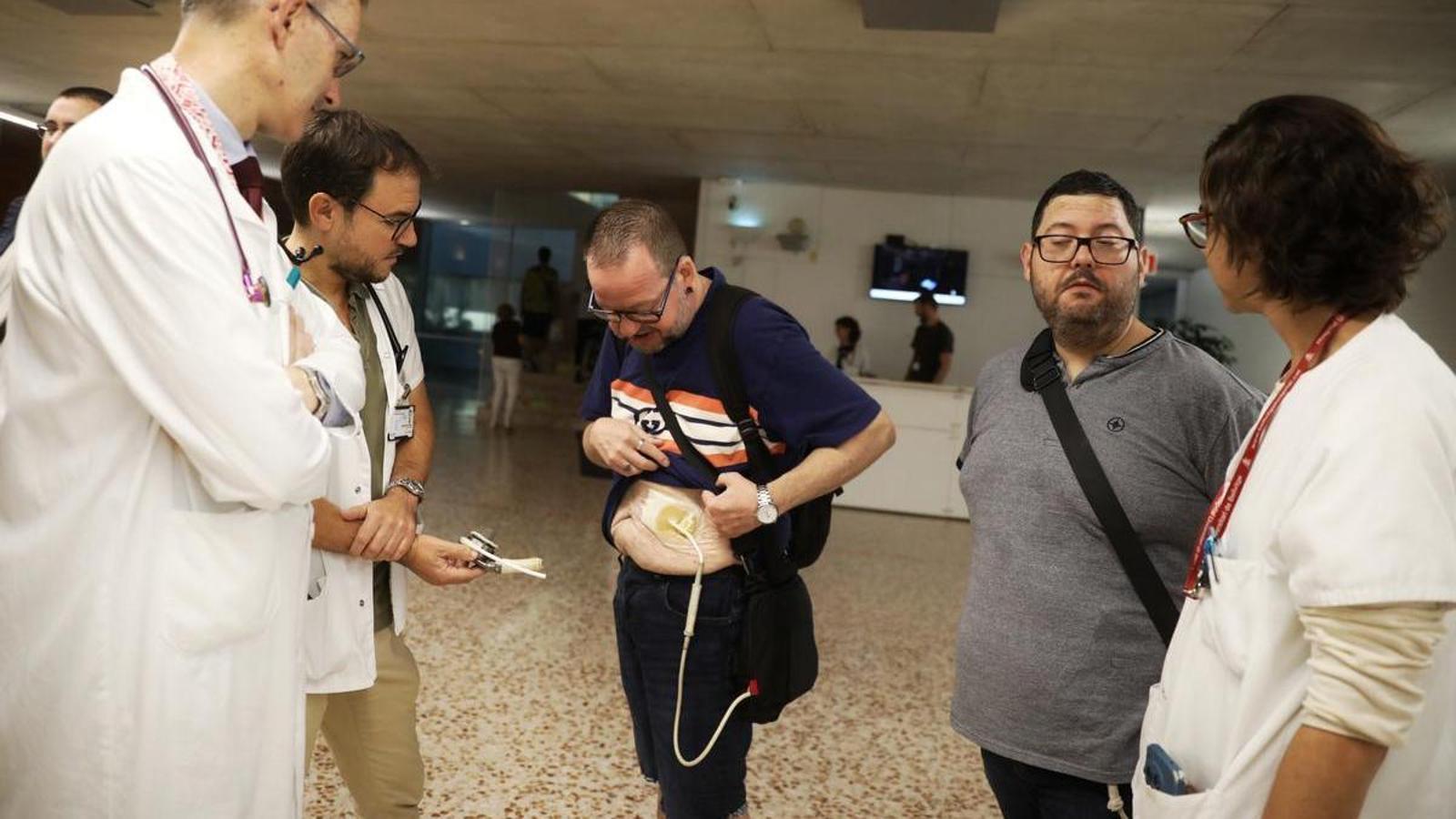
BarcelonaGoing shopping, climbing stairs, or even walking were unthinkable activities for Ramon Centelles two years ago. His heart was functioning so poorly that the most mundane tasks were unattainable; he barely left the house and was often hospitalized due to the advanced state of the heart failure he suffered from. Everything changed, however, in December 2024, when he was implanted with a type of artificial heart called left ventricular assist device, which compensates for the organ's malfunction and allows patients like Ramon to regain their autonomy. "Before, I had no life," explains this 50-year-old man to ARA, who is back to living a normal life while waiting for a definitive heart transplant.
To understand how these devices work, one must think of a centrifugal pump that is implanted in the left ventricle and helps pump blood continuously to the rest of the body. The implant requires major surgery, which leaves a cable that comes out from under the ribs. For the past two years, Ramon has had to always carry a backpack where he carries the pump's control unit, which runs on two external batteries. It has an autonomy of about 17 hours, he must have weekly medical care, and he has to shower in parts, since water cannot touch the cable or the backpack, as he could get electrocuted. If he wants to travel, he must ask the hospital for permission beforehand and be very careful with the batteries to always have energy available. "It has limitations, yes, but I can live a practically normal life. I'm enjoying things again," says this patient, satisfied. Like him, in the last year, the Bellvitge Hospital has placed left ventricular assist devices in 11 other people, and it is the hospital center in the State that has performed the most interventions of this type. Daniel Ortiz, head of the hospital's cardiac surgery department, explains that each unit costs about 100,000 euros and that in recent years it has been achieved that the devices are smaller and fully implantable. This improves the quality of life of carrier patients like Ramon, and also their life expectancy. They have had a patient who has been a decade with a device of these characteristics.Postpone the transplant
Not all patients who have been implanted with an artificial heart are waiting for a transplant. This is the case of Juan José González, who due to a genetic mutation suffered from heart failure that gradually weakened his heart in a degenerative way until it was left functioning at only 14% of its capacity. He lives on a second floor and every day, to leave the house, he had to sit on a step because he was short of breath. He suffered a very serious physical deterioration and the last time he was hospitalized he thought he would not come out of it alive. Since the implantation of the device, their quality of life has changed radically. They have bought a car and adopted a little dog, Chloe, with whom they go hiking in the mountains. They walk a lot, go out with friends, and have returned to a Benito Kamelas concert. "I really like rock, but I've seen bands that you won't know who they are," they explain jokingly when asked about the last concerts they have been to. Since they are young and feel very well with the machine, in agreement with their cardiologist, they have decided to postpone joining the waiting list for a heart transplant until they are 49 or 50 years old, in order to reserve the limited lifespan of a donor heart for later.
