"It was hell living like this": the fight of a Poblenou neighbor to avoid eviction
The Tenants' Union denounces that the property owner wants to evict the tenant and has carried out renovations in flats that should be for official protection
-
CAT -
CAST
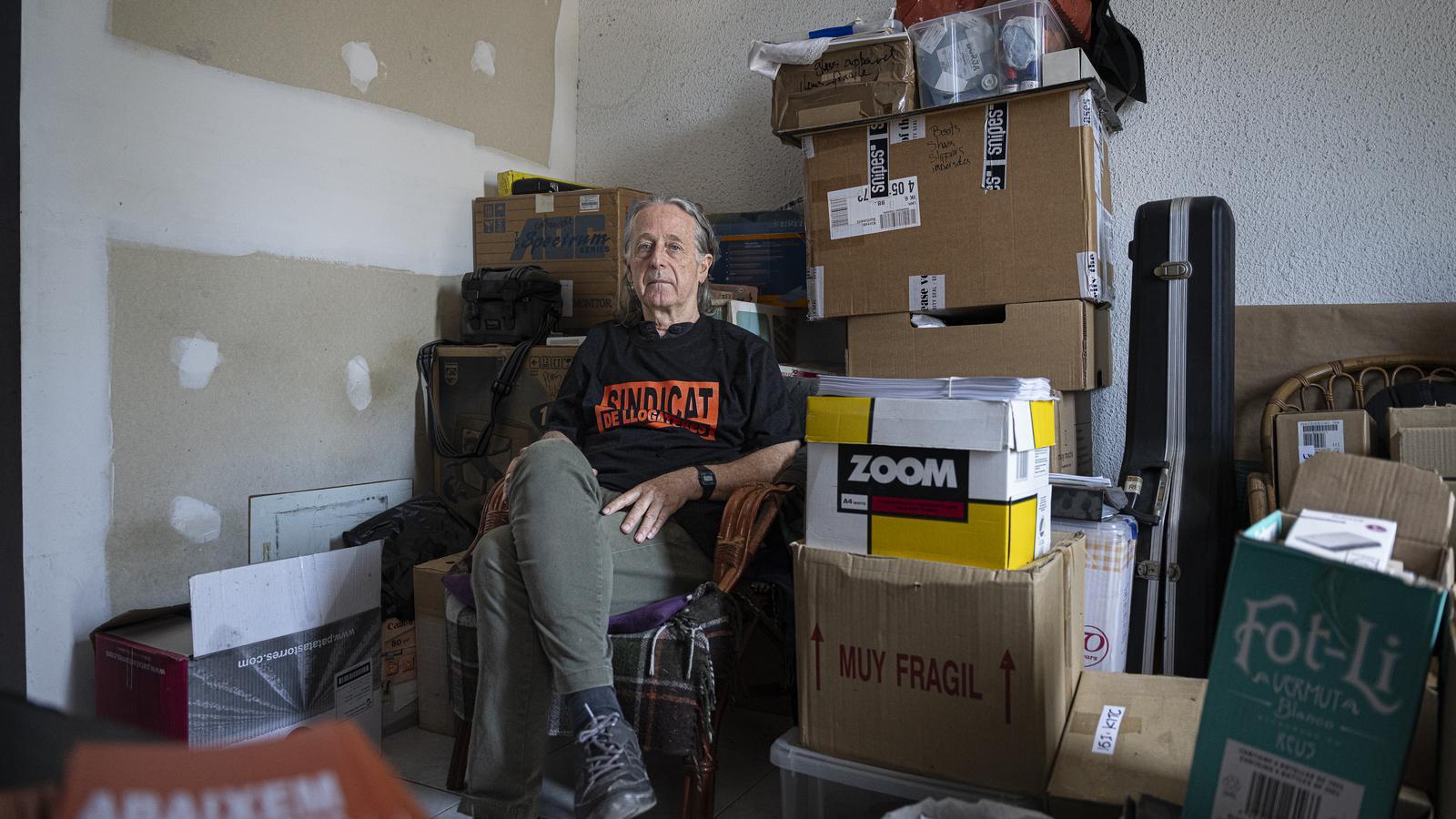
BarcelonaIvan Giesen is 68 years old and has been living for 27 years in an apartment at number 153 of Ramon Turró street, in Poblenou. In 1999 he moved there after living for a few years in the Gothic Quarter, at a time when the rent price in this more central area began to double. "I was looking for a place and I found this apartment in Poblenou, which, moreover, suited me very well because at that time I was running a language academy in the neighborhood," recounts the resident. In 2019, however, the company Maramca SL – owner of the building since 2012 – began renovation works in the building and notified that it would stop renewing the contract with the residents, including Giesen.
Since then, the tenant has lived a long path of struggle to continue living in his home. Almost seven years in which he has seen the neighborhood and the interior layout of the homes change. "After some residents left, of those of us who lived here before, now only the two old rent apartments and I remain," he specifies. In his case, his contract expired before the pandemic, but legal extensions allowed him to continue in the apartment until 2021.
At that time, the property filed an eviction lawsuit against Giesen which was eventually set for January 16, 2025, and which was halted thanks to the eviction moratorium. "The fact is that there has been no willingness to negotiate, and that is the problem, that we have not been able to speak with the property," emphasizes the tenant, who in 2019 contacted the Tenants' Union.
"With the renovation works, what has been done is to go from the two apartments per floor to three, except on the one I live on," Giesen specifies. That is, the 10 apartments that existed have become 15, through the subdivision of the existing homes. Renovation works proposed by the property that were approved in December 2015 by the City Council as part of an urban improvement plan within the scope of the Modification of the PGM for 22@, the urban, economic and social revitalization planning in Poblenou.
The Tenants' Union, however, denounces that the increase in the number of housing units in the building would be illegal in relation to this plan. In this regard, article 9.2d of the planning states that "new housing units derived from the increase in the number of floors or the subdivision of existing ones will be linked to some public protection regime."
A question that, according to the union, the property would be violating, since, although the work is already almost finished, no official protection housing has been offered in Giesen nor has any office been made available. “We want to know if it is being controlled that there should be official protection flats here, because I believe that if there were no pressure, the company would never do it,” the neighbour states. For this reason, the tenant, with the help of the union, has requested an inspection by the City Council and the Generalitat to verify that everything is in order, but above all, given the obligation that some of the flats must be public protection housing.
Wear and tear from the works
The construction process, according to Giesen, resulted in many years of wear and tear in his daily life. The building's entrance was also being renovated and there were no safety signs, as well as practically no light on the stairs. In addition, they had to make holes in some of the apartment walls and redistribute some of the spaces, such as the kitchen or the bathroom. “It was literally living in a construction site every day,” he remarks, adding that the neighbors had no knowledge of any construction schedule and that the noise was constant. In fact, for this second case, he assures that he even filed a complaint, although it did not end up prospering. “Really, it was hell living like this for so long,” he emphasizes.
Now, seven years later, the new apartments are gradually beginning to accommodate the first tenants –most of them foreigners–, with whom Giesen has had practically no opportunity to speak. “The relationship now is non-existent,” he points out, noting that except for three or four apartments that are already occupied, the rest remain empty.
The new eviction date is set for next June 5, but Giesen lives with the hope that it will not end up prospering. In fact, the day before the eviction, a festive and cultural vigil will be organized to gather the crowd. "The problem is if there are many consecutive calls," points out the tenant, who hopes that the inspection they have requested can change the course of history.
