Jordi Sarrats: "He lay down and said: 'Over my dead body'"
President of the Business Guild of Elevators of Catalonia

-
CAT -
CAST
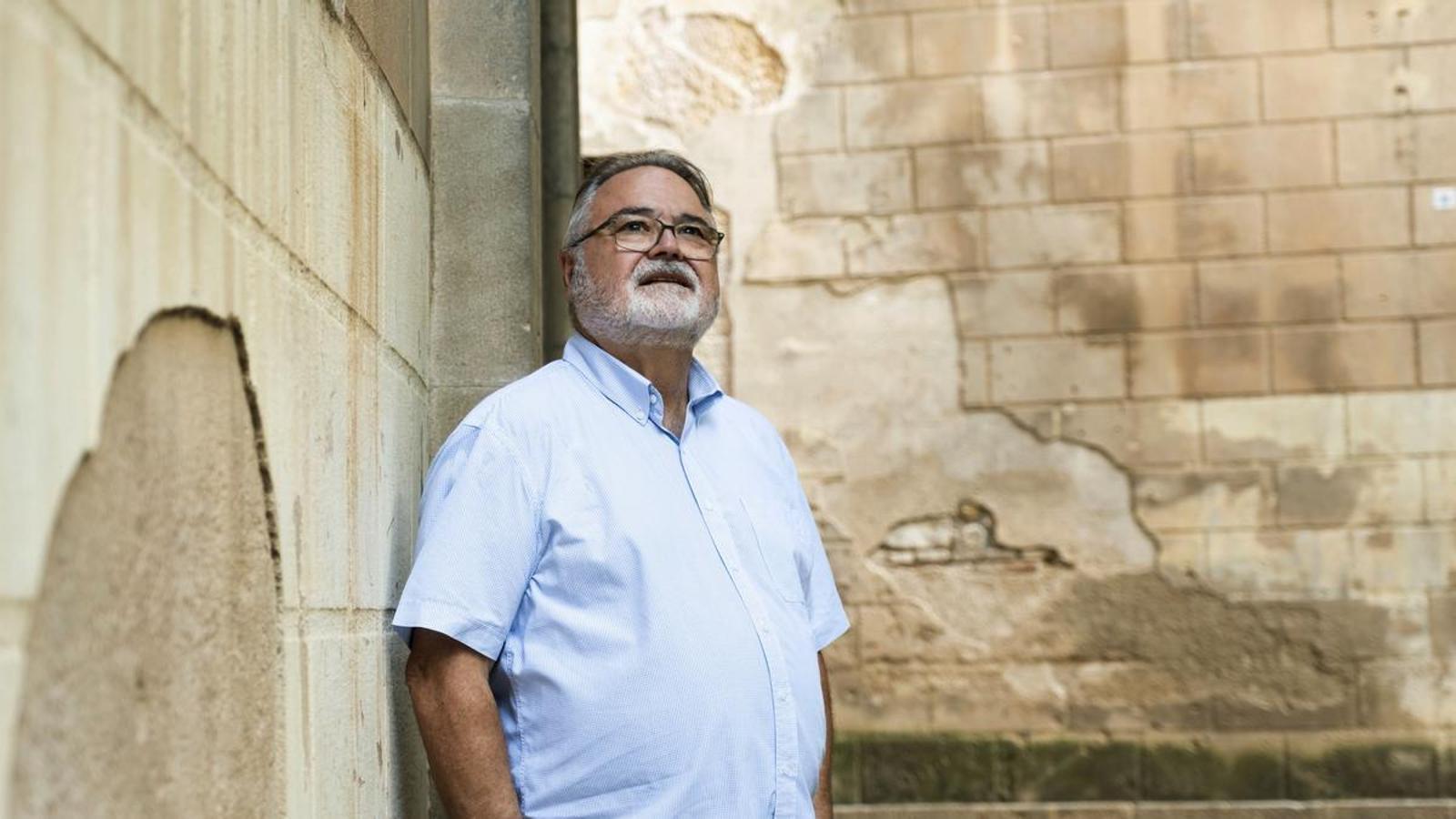
He is seen smiling, with his finger raised and a backpack on his back. But Jordi Sarrats chose this photo for what is behind it: a river. "The horseshoe-shaped curves of rivers have always seemed to me a whim of nature, and this one, of the Colorado River, is iconic." Today he is retired, but he owned an elevator company for many years and today he presides over the guild that groups this sector.
One might think that elevators do not deserve an interview…
— It is the elevator that has allowed cities to grow vertically, for better or for worse. They are very important.
Whose fault is it or who should we thank for it?
— It was Elisha Otis, in the mid-19th century, who invented a system that braked elevators. They could go down and up and stop in the middle.
Did you notice any special one?
— When I was a young lad, we operated the elevator at the Casita Blanca. Many articles have been written about it, but the elevator has not been talked about.
Let's talk about it.
— When a new regulation came out in '81, the premises could not be closed to make the adaptations. So the workers worked on the ceiling. And when someone got into the elevator, they would stay silent, without making any noise. We looked for very discreet people, because there could be a mayor or a bishop there.
What is the most surreal thing you have seen?
— After the floods of '62 it became evident that shanty towns had to be eliminated and many housing estates were built. And in one of these new buildings, the technicians always found the cabin dented. And they said: how can that be?
What was happening?
— A donkey. It turns out that a family had it when they were in the hut and they brought it to the apartment. And they would lift its legs so it could fit in the elevator. Imagine how scared the animal must have been...
Surreal.
— There are also hidden elevators.
How?
— In the noble area of Barcelona there was a beautiful lobby with a wooden elevator that was a marvel. And to one side a small corridor that led to another elevator that connected to a single floor.
I'm already imagining it.
— An apartment for the mistress, the lover. Only by taking the context into account can one understand that someone could design a building to highlight their power and request such a facility.
I must say that the modernist elevators in the noble area are incredible.
— As a citizen, I am clear that it is a heritage to be preserved. But it clashes with the regulations, because the railings around it have some problems.
Which ones?
— The holes in these grilles, the mesh that surrounds the elevators, are too big. It is a problem that the heritage and industrial safety departments now face. And everyone is right... I hope a solution is found and that together we do not ruin the country.
You have been among elevators your whole life.
— My father started working in it in the 40s and I ended up founding my own company. I remember being little and seeing the technicians repairing things above the cabin, and the elevator going up, and thinking: wow, will this stop?
How scary.
— But nothing can happen, on the ceilings of the cabins there are safety switches. The elevator can never hit the ceiling.
I have always been more afraid of the idea of an elevator falling.
— I would say that the probability is close to zero. The cables that hold the elevator must be dimensioned to withstand 16 times the load they have to support. There is also a parachute.
A parachute?
— It doesn't open as if it were Mary Poppins, but it is a system that detects if it is going faster than it should and locks the chassis onto the guides and brakes it.
There are many people with a phobia of elevators.
— Yes, but the elevator will not fall. And you also won't run out of oxygen, which is a widespread urban legend. By law, they must have a minimum ventilation surface that allows people to breathe air with oxygen. The only dangerous thing about an elevator is fires.
Have you encountered many problems between neighbors?
— Many, and I have had to act as a mediator a lot. I remember a case in Sants. It was a building with a central space and two courtyards, one on each side. The elevator had to go through one of the two. And that was like the Capulets and the Montagues.
What did you do?
— They ended up in court and I had to testify. The judge asked: which is the most economical patio? In one of them, there was a ridiculous little shed made from an old wardrobe, and it had to be removed. Perhaps that was 500 euros out of a project of more than 100,000. But the judge ruled: for the most economical patio.
Did they take it well?
— The day the construction work began, an 80-year-old lady lay down and said: over my dead body.
Wow.
— There were many conversations, a lot of psychology… and in the end they understood that they had to give in. The day it started to work they invited us for cava.
Are there many buildings without an elevator?
— Less and less, municipalities have given many grants since 2006.
But the typical case where the one on the ground floor doesn't want to pay…
— The law states that if someone in the building has a disability or is over 65 years old, that person has the right to demand that the community install the elevator anyway. But yes, it is not always simple: there are subsidies if it cannot be afforded. The administration can pay 100%. The problem is that they later deduct it from the inheritance or the sale. In other words, it carries a charge.
What is the main problem you have today?
— The staff. There is no qualified staff and the boomers will be retiring.
Can you make a good living from the trade?
— An experienced operator who solves problems does not go home with less than 40,000 euros gross per year. And the lowest, is around 30,000. The conditions are good, but I think vocational training has not been given prestige and now we are suffering for it.
