Firefighters, police and healthcare workers: the European plan to coordinate cross-border emergencies
The European Commission wants to unify emergency communication into a single 5G system

-
CAT -
CAST
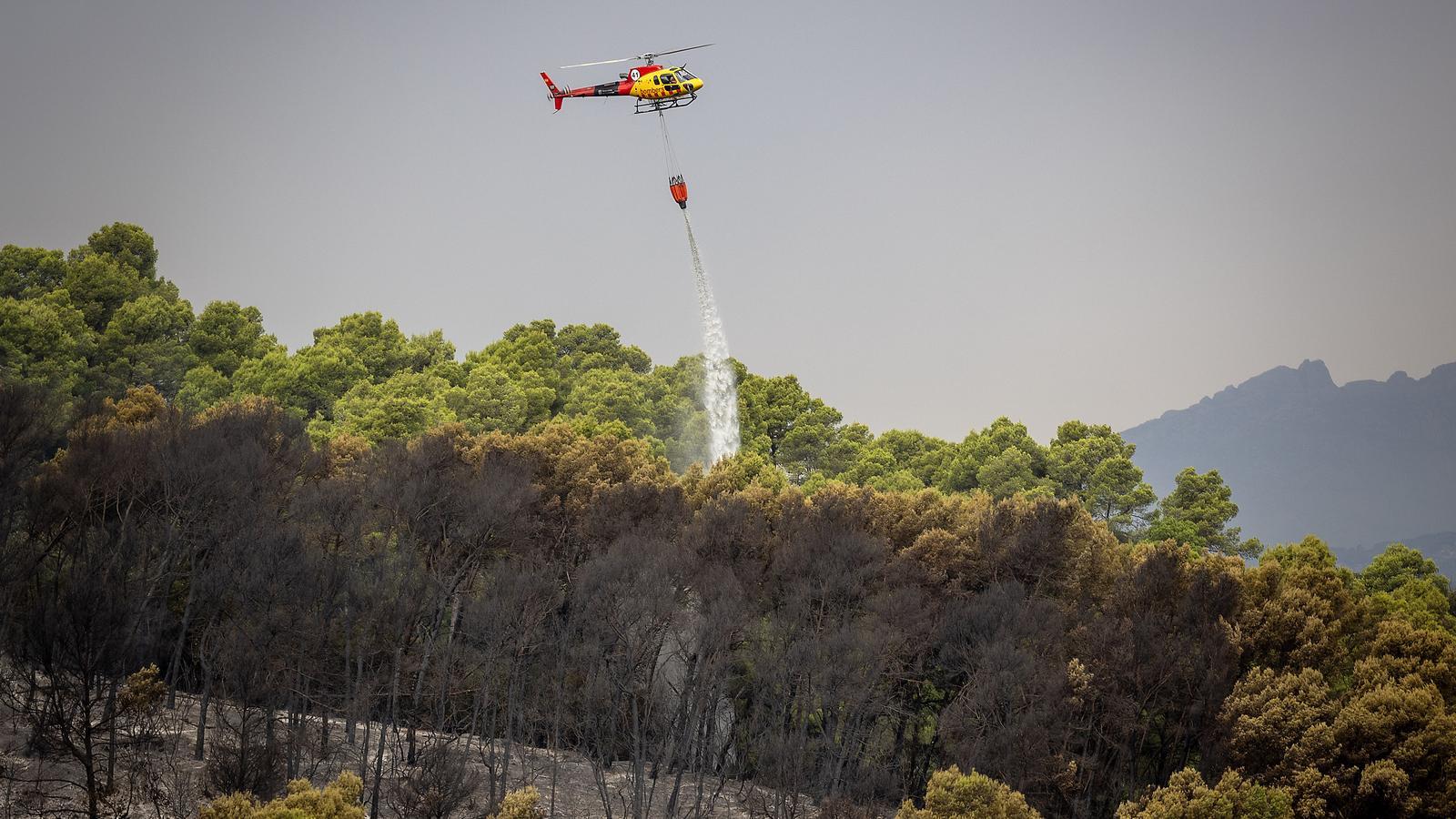
BrusselsThe fires this summer have left a lesson for the continent: climate emergencies are a new reality that we must live with. Just in July, simultaneous fires in France and Spain burned nearly 100,000 hectares and the brutality of the fire put emergency services against the ropes, to the point that they had to ask for help from other European Union states.
Faced with the scenario that incidents like this will become increasingly common, the European Commission presented a plan this Wednesday to coordinate emergency service communications across borders. The initiative proposes creating a European Union Critical Communication System (EUCCS), which must connect the national networks of police, firefighters, emergency medical services, and civil protection.
The system, which will cover the EU and countries associated with Schengen, was born in the wake of the terrorist attacks of 2015 and 2016, when states found that their systems were incompatible. Currently, these systems stop working when teams cross a border, which is why they often cannot communicate with each other when working together in an emergency, and have to resort to improvised solutions.
With the new system, first responders will be able to share photos, videos, messages, and geolocation in real time from a device, and not just via radio as until now. When a team goes to help another member state, it will be able to use its communication system because it will be compatible with that of the rest of the countries. "Time is precious in a crisis," noted the Commissioner for Preparedness and Crisis Management, Hadja Lahbib, who explained that in critical moments like this summer, "good communication can save lives".
How will this network work? The idea is for states to progressively abandon radio systems and switch to broadband systems, such as 5G, which have priority in saturated mobile networks. Where there is no coverage or in the event of a blackout, EU satellites and deployable mobile units that will restore the connection will come into play.
All of this will be supervised by two bodies. On one hand, the European Network Monitoring Centre will control that the system works and will host, over fiber optics, the interconnection between states, so that each country connects to a single central point. On the other hand, the European Security Monitoring Centre will analyze cyber risks and provide support to the states.
More strategic autonomy
Brussels presents the project as a tool for strategic autonomy to reduce dependence on foreign technology. For this reason, European companies will develop the critical components, that is, the satellites, the core of the mobile network and broadband technology. In addition, governments will be able to add users, such as the armed forces, if they so decide.
Until now, two pilot tests have been carried out inspired by real situations, such as fires in border areas or drug trafficking. But the horizon for its implementation is distant. If the European Parliament and the Council of the EU finally approve the proposal, a gradual deployment will begin. A first group of states will connect in 2030, a second in 2033, and it is expected that by 2036 the system will be operational throughout the entire community territory.
