Francesc Marc Álvaro, an ERC deputy in Congress, presented his book 'El franquisme en temps de Trump' in Vallecas on Tuesday. He teamed up with the PSOE deputy and general secretary of the socialists in this Madrid neighborhood, Vicente Montávez, as they have forged a good relationship thanks to the hours they spend in the Foreign Affairs commission of Congress. Both kicked off the event with irony: this is the authentic "peripheral left front," they stated, in allusion to Gabriel Rufián's proposal.
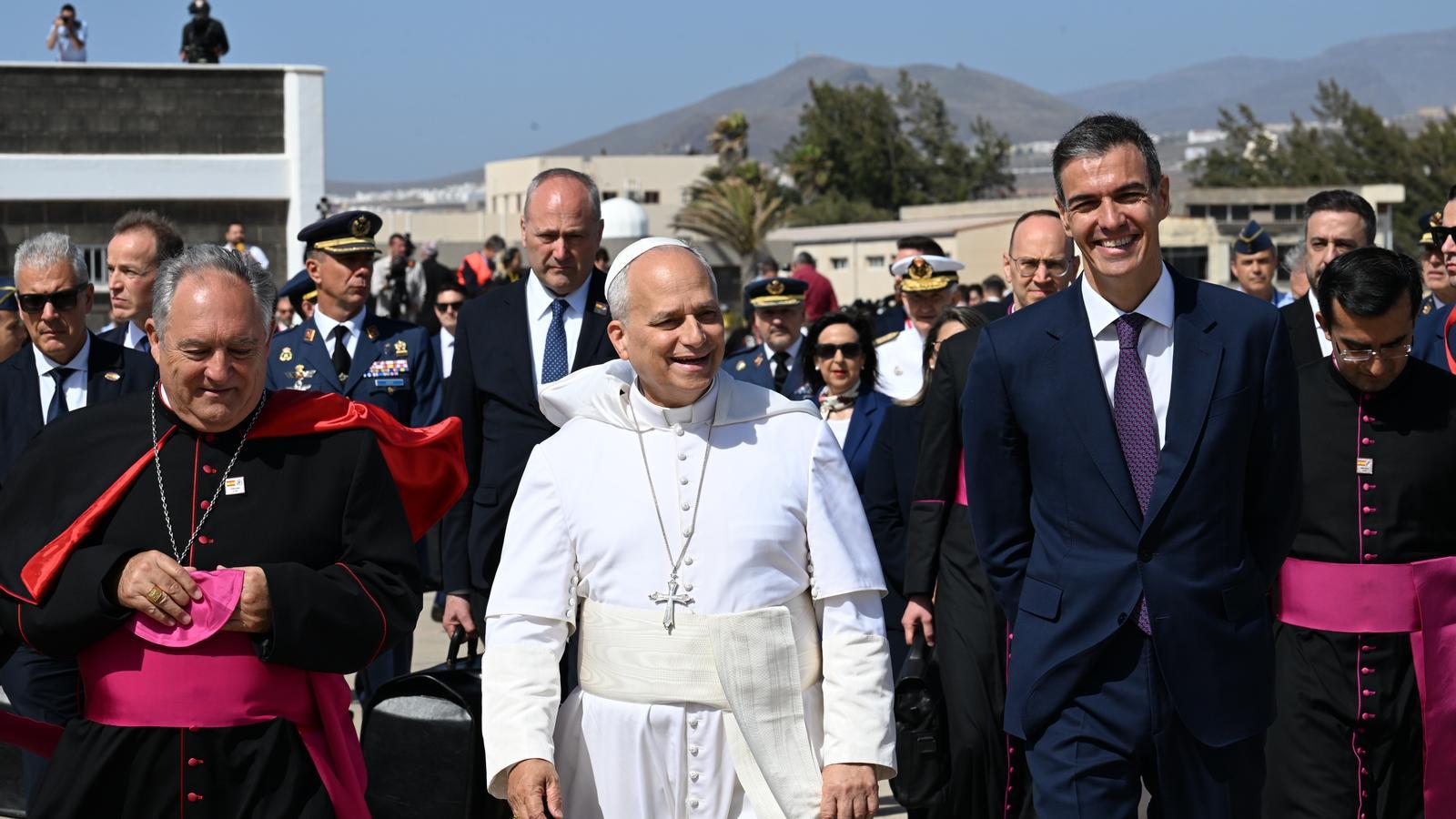
Who wins and who loses with the Pope's visit
14/06/2026 - 08:00 h

-
CAT -
CAST
The Spanish government eagerly awaited the Pope's visit. Not only for the symbolism of the head of the Catholic Church being in the State for a week, but because it implied a breath of fresh air amidst the judicial storm.It is enough to list the sequence of recent events to get an idea: on May 19, before the press conference of the Council of Ministers, the indictment of José Luis Rodríguez Zapatero, a key man of Pedro Sánchez, by the National Court was made public; on Saturday the 23rd, the UDEF report on which the investigation is based was leaked; and on the 25th, the record of the search of the former Spanish president's office became known, and everything revolved around the jewels found in his safe. Then the UCO appeared at Ferraz headquarters in Madrid for the Leire case, and until this week, the annotations from the notebooks of the former PSOE militant have been coming to light, who allegedly led an operation to destabilize the judicial cases affecting Pedro Sánchez's circle.Therefore, Pope Leo XIV's appearance in Congress and his defense of immigrant reception against the national priority policies of the PP and Vox was a balm for the PSOE. And once again, regarding the positions of the right and the far-right, very critical of the regularization initiated by the Spanish government. This week, in the corridors of Congress, from the socialist ranks they insisted on the harmony with the pontiff, tiptoeing, of course, around the fact that the Pope lectured against the right to abortion and euthanasia. And it is that if one attends exclusively to the content, the pontiff gave a cold and a hot one for all groups.This was not a sufficient reason, however, for anyone (beyond Podem and the BNG who were absent) to withdraw recognition from him. The groups applauded the Pope for more than seven minutes in Congress, which means two things: that no party, despite the disagreements, wanted to appear against the pontiff, and that the political operation to seduce Leo XIV has worked perfectly. Spain is a non-confessional state, but it has thrown itself into the visit; half the population considers itself Catholic, but the entire hemicycle of Congress has embraced it. And this is only explained because the parties perceive that public opinion has a favorable position towards the current pope – in the time of Donald Trump, the traditional social doctrine of the church has become progressivism – and this is a merit of the Vatican. The total winner is the Church.The return to reality
Although this Wednesday's session in Congress was already a return to the war between the PSOE and the PP, the week that begins will bring the Moncloa a new bath of reality. It is the week horribilis that has already begun with the valuation of Zapatero's jewels (1.3 million). On Monday, Sánchez's wife, Begoña Gómez, is summoned for a preliminary hearing in the trial; on Tuesday, the director of the Civil Guard, who met with Leire Díez, must appear in the Senate; on Wednesday and Thursday, Zapatero will testify as a suspect before the judge; and on Friday, the Attorney General in the upper house for Leire Díez's meetings. With the possibility that, at any moment, the sentence for the mask case of former minister José Luis Ábalos may be made public and there may be a first conviction around Sánchez. This week, from the PP ranks, they recited this calendar, taking for granted that Pedro Sánchez will hold out until 2027, but with the tranquility, they say, that the more time passes, the more burned he will arrive at the polls.
The irony of Francesc Marc Álvaro
Required to start working at 12 p.m.
The Pope's visit forced Congress to tighten security measures. The press had to be accredited exceptionally, and freedom of movement within the chamber was limited. To the point that group workers were asked not to come to work in person until 12 noon, when the pontiff had already left Carrera de San Jerónimo.
