When were you president of the Generalitat?

-
CAT -
CAST
San Fernando de HenaresThe last time there was similar expectation in San Fernando de Henares was on November 24 last year. A crowd of journalists waited from early morning in freezing cold for the arrival of the Pujol family. It was the day that what has been dubbed the trial of the decade began, although after that day the media spotlight has not been the same. In Madrid, comments in talk shows have been minimal in recent months, and the trial has not made headlines on any other day than the first. Until this Monday, April 27, when there were more or less the same journalists again, this time suffering from the heat and with maximum expectation due to the widely misunderstood decision of the tribunal president, Ricardo de Prada, to make Jordi Pujol appear in person in the Spanish capital. "He has discovered the Mediterranean Sea," quipped a lawyer, when they decided to exclude the former president from the case due to incapacity.
To set the scene for the reader, San Fernando de Henares is a municipality that borders Madrid to the west, with about 40,000 inhabitants, and whose industrial estate houses one of the dependencies of the National Court. It is the venue where mega-trials like this one are held, in which there are about twenty defendants among all the siblings and businessmen. It is easy to imagine the atmosphere: necessarily familiar, with siblings sharing the defendants' bench.
Voluntarily without image
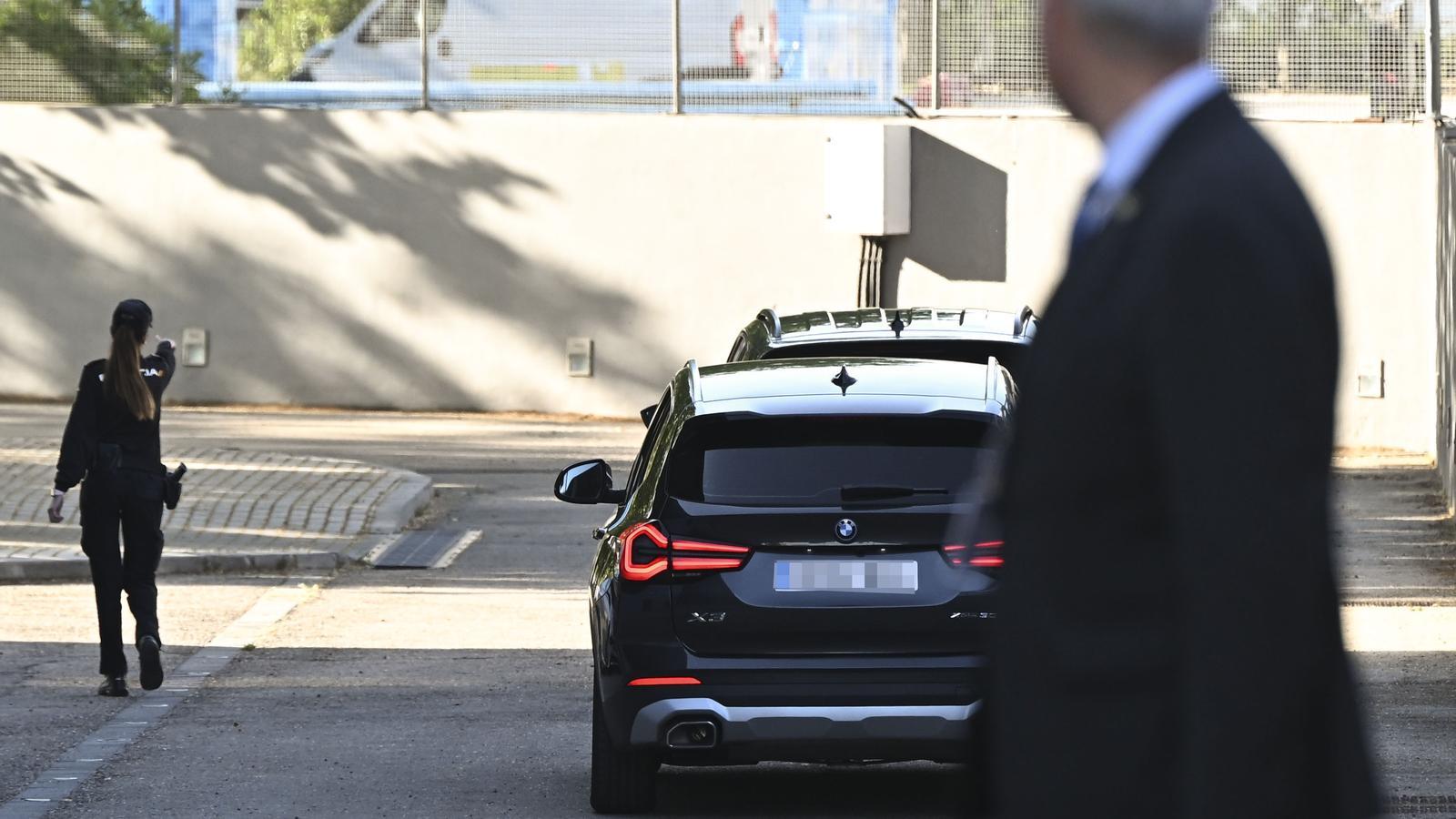
Pujol approached the Audiencia in a gray Seat car, with tinted windows, and drove past the cluster of journalists who were guarding the parking lot entrance. No camera managed to capture an image of the former president beyond the car scene, as his escorts and the National Audiencia's security team had agreed: he went straight inside, where the forensic doctor was waiting to examine his physical and mental condition, and then appear before the court. A sequence that his children have been trying to explain to him since last week: "Two parts, father: first a forensic examination, and then the capacity assessment."
The former president left Barcelona this Sunday around two in the afternoon, with a retinue of children – not the eldest, who was already in Madrid – and arrived in the Spanish capital before dinner. He got into the car lost in thought and left lost in thought: he couldn't quite understand why, again, a medical examination. That said, voluntarily, neither he nor the family wanted to submit any other report to avoid the trip to Madrid, even though quite a few suggested doing so. "Take him to the emergency room, say he's feeling unwell...". They didn't do that: Pujol decided to show up and, furthermore, tell the forensic doctor that he wanted to testify. He wanted to face it head-on.
A relaxed but tense atmosphere
The scene was, to say the least, peculiar. While the doctor examined Pujol in private, all the ex-president's children, businessmen, journalists, and lawyers waited in the lobby of the Court. After months of sharing the same space, everyone already knows everything about everyone else. Mercè Gironès's lawyer is a magic enthusiast and amazes the lawyers when they have dinners; one of the businessmen teases Josep Pujol for wearing his trousers too high; a lawyer explains that he wears his tie for special occasions: the one from 1983, when he was admitted to the bar. And another jokes that the most defining thing about his career has been being an Espanyol fan.
In another corner, more serious, Jordi Pujol Ferrusola reviews what appears to be his statement to Cristóbal Martell. Everyone knows they won't have to face the Prosecutor's questions this Monday and that he will be the only one acting. The entire case revolves around the eldest son of the Pujols and his businesses, and the rest, both businessmen and siblings, are secondary protagonists who appear in the background. "We are nervous," admits a family member. "Finally, you will be able to defend yourselves," adds their entourage. The atmosphere seems relaxed, but it isn't: in reality, all the children are suffering over what will happen to ex-president Pujol. The lawyers also suffer, as they know the ex-president wants to testify despite not being capable, and this would greatly alter their script.
The closed door
The forensic analysis, however, is orthodox and, when it is the court's turn, the magistrates ask Pujol the simplest to the most complex questions to assess whether he really knows what he is accused of and can testify. When was he president of the Generalitat? "From 1980 to 2003," replies the former president without hesitation. Is he aware of what he is accused of and what he faces? And it is here where he begins to ramble and talk about politics and the Generalitat... because he, he explains, did a lot for Catalonia and also collaborated with Spain. He does not refrain from talking about values and Christianity either; religion, always very present throughout his life.
Pujol leaves the National Court exonerated and through the same door he entered. He puts an end to the judicial case accompanied by a wave of empathy from a very relevant part of Catalan society – from his political heirs to his main competitors –, which means that the restoration of his figure is almost complete. That the legacy, despite the shadow of suspicion, is preserved. However, he knows that, in reality, nothing ends this Monday: all his children remain in the courtroom of the National Court, who will have to face the court now without the protection of what his father represents.
