What sticks in the wheels has amnesty found after the CJEU?
The Court of Auditors has given the parties ten days to state their case, but the independence movement and the Government demand that it automatically archive the investigation

-
CAT -
CAST
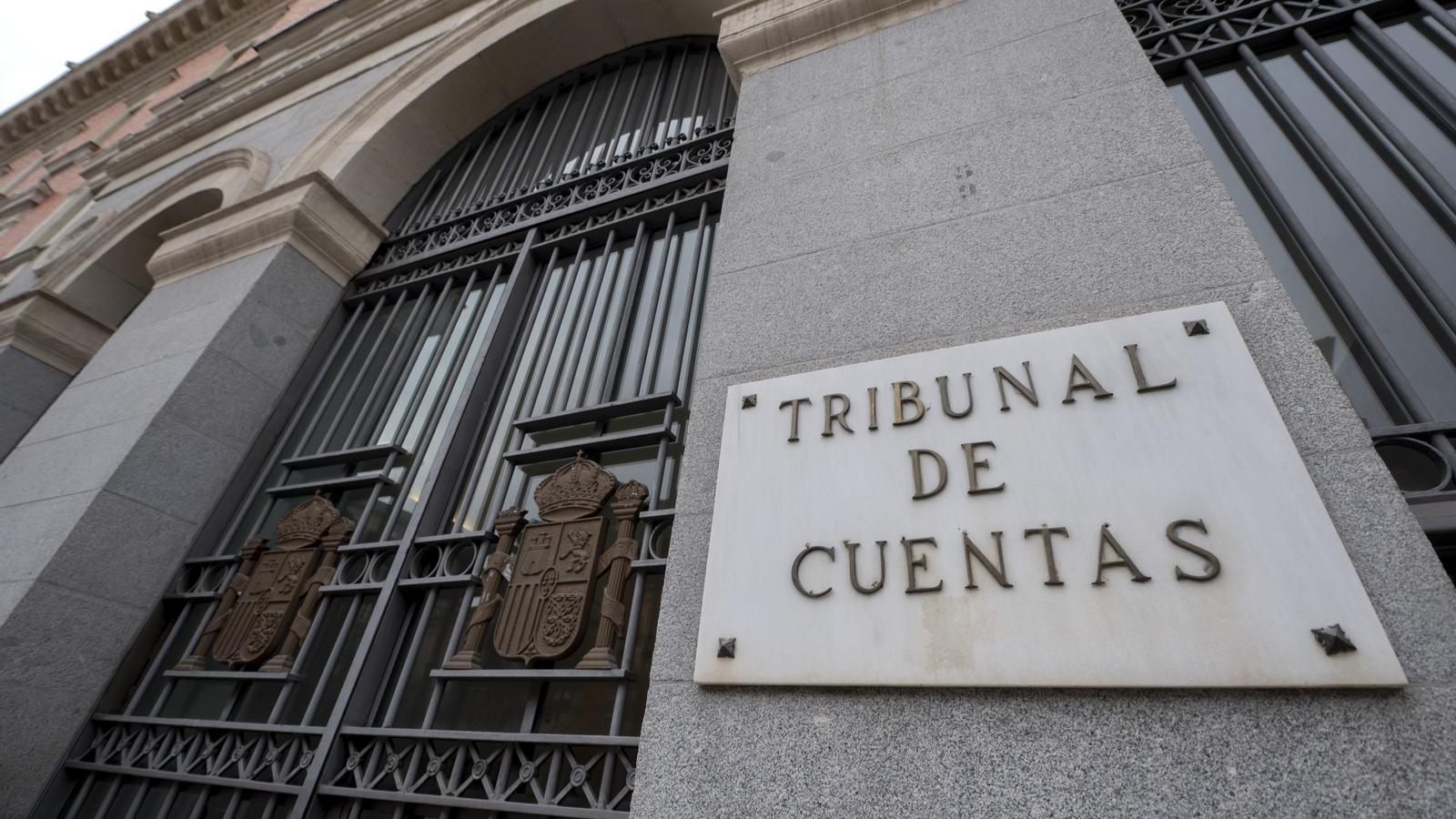
Madrid776 days have passed since the amnesty law came into force. Since then, its application – with a dropper – has had to overcome multiple adversities from various courts along a tortuous path. Not going any further, on Friday the Supreme Court ended four cases that had been frozen for months. And the one who is now trying to play dumb is the Court of Auditors. The accounting case regarding the expenses of the Generalitat's external action and of October 1st, which affects 35 people, ended up in the Court of Justice of the European Union because the accountant minister expressed doubts about whether pardoning these acts was "compatible" with European law. However, the ruling from two weeks ago dismantled the argument that the independence of Catalonia could have caused a reduction in the European Union's own resources and gave the green light to fully archive the procedure.
Despite the support coming from Luxembourg, the Court of Auditors' decision was to limit itself to "resuming" the processing of the procedure, giving the parties ten days to formulate "allegations" and provide "any relevant documentation" regarding the origin of the funds used. Furthermore, it asked them to report on the possibility that the amnesty may not be applicable if funds from the European Union budget were used, a premise that was not foreseen during the investigation. In other words, the Court of Auditors did not automatically apply amnesty, but rather kicked the ball forward again, even though the CJEU had made it clear that the "obligation" to "issue a resolution of extinction of responsibility without assessing the exculpatory allegations and evidence" is "consubstantial" to the amnesty.
The Prosecutor's Office, ERC, and the Government make a move in Madrid
The next day, the Prosecutor's Office complained that the Court of Auditors' request was “unreasonable” and “unnecessary,” demanded that it apply the amnesty directly, and criticized it for now sowing doubt about the origin of the funds: “At no time, except after the amnesty law was approved, has it been questioned that the undue expenses have a different origin than the Generalitat”.
In the same vein, Oriol Junqueras, Raül Romeva, and Dolors Bassa accused the Court of Auditors of “artificially prolonging” the procedure and “flagrantly violating” the amnesty law with a “manifestly arbitrary” ruling, introducing an “improper new step” of documentary evidence: “There is no evidence of the use of funds from the European Union,” they insisted, recalling that the same counselor of the Court of Auditors acknowledged this two years ago when she referred the case to the CJEU. Finally, in its capacity as a presumably harmed public sector entity and to “contribute to the definitive closure,” the Generalitat submitted a brief expressly stating its agreement with the extinction of the accounting responsibilities.
In contrast, the Spanish entity Societat Civil Catalana, which initiated the procedure, questioned the demands of the independence movement: “They believe that Spanish courts must be their puppets and interpret and apply the law as they please,” they protested on X.

Puigdemont goes to Europe
For his part, Carles Puigdemont opted to fight it out in Brussels and denounced Spain to the European Commission for having suspended de facto the deadline for issuing the amnesty. “The ruling is mandatory from the day it is pronounced,” stressed Gonzalo Boye, who asked the European Commission to initiate an infringement procedure against Spain.
The response from the spokesperson for the Community executive, Guillaume Mercier, was to recall that it is up to the Spanish courts to “apply the rulings” of the ECJ. The European Commission will now have to evaluate the request in depth and decide whether to dismiss it, open an infringement procedure, or initiate an informal dialogue with the Spanish government to try to clarify or correct the situation.

Josep Maria Jové urges the TSJC
In parallel, the current ERC president in Parliament and who was Secretary General of Economy and Finance in September 2017, Josep Maria Jové, has urged the TSJC to withdraw the preliminary ruling it filed two years ago and apply the amnesty to both him and Lluís Salvadó. Both are accused of embezzlement, but the TSJC admits they did not enrich themselves. Therefore, the only suspicion it had was that the financial interests of the European Union could have been put at risk, a path that Luxembourg has now closed. Despite the clear path to being exonerated, the TSJC has avoided making an immediate decision and on Tuesday asked the Public Prosecutor's Office, the State Attorney's Office, and Vox – which is the popular prosecution – how to proceed. They have five days to respond.

The National Court, impassive with the CDRs
Meanwhile, there is no news from the National Court. There, the movement has been made by the CDRs who were waiting for Europe. The document from one of the lawyers, to which ARA has had access, is clear: “Once the CJEU has ruled out the incompatibility between the amnesty and the European directive on the fight against terrorism, and the exclusion clause is not concurrent, the application of the amnesty proceeds”. Despite this, for the moment, the court presided over by Alfonso Guevara has not reacted to the European ruling. Ten days ago, Luxembourg concluded that the amnesty “does not deteriorate” the effects of the European directive against terrorism.
A joy for the organizers of 1-O
Those who have recently managed to be pardoned are the five members of the Electoral Syndicate of 1-O. All were acquitted in April 2021, but the Barcelona Court ordered a retrial at the request of the Public Prosecutor's Office, which sought two years and nine months in prison for disobedience and usurpation of public functions. Since the approval of the amnesty, the case has been blocked – in part – due to a jurisdictional dispute that has ended up becoming an “unpleasant and unjustified penance”.
