A victory of the Church over the non-confessionality of the State
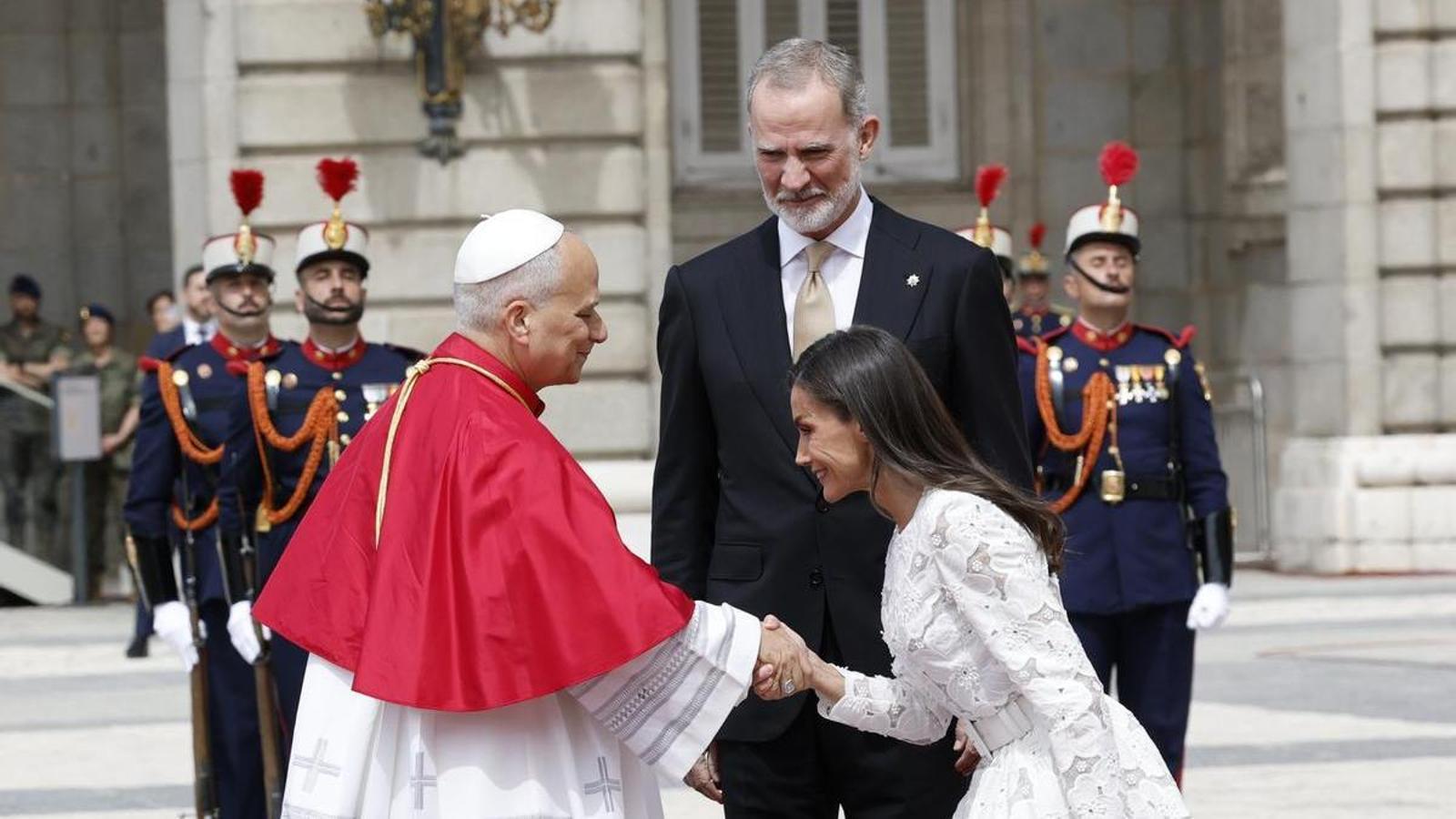

BarcelonaThe papal visit has left a lot of headlines and striking images, and at a superficial glance it can be said that it has come as a balm for Pedro Sánchez. But the real headline left by this visit is that, once again, it has become clear that the supposed non-confessionality of the State is more apparent than real, and that the weight and influence of the Catholic Church are of such magnitude that even civil powers bow before it.
This is not so much about the public resources spent on the visit, as from a purely economic point of view it could be argued that they have had a greater return, but rather about the political gestures that have accompanied the pontiff. The seven minutes of unanimous ovation in Congress for a speech that, however interesting and well-constructed it was, was not exactly one of consensus, were revealing. If Santiago Abascal had given a similar speech on abortion or euthanasia, there would certainly have been an uproar in the plenary. Instead, the deputies from the left joined those from the right without batting an eyelid to applaud the speech of a religious leader who told them to their faces that their laws were immoral. Not to mention the decision of the Generalitat and the Barcelona City Council to hang the Vatican flags on their facades. Would the same be done with any other religious leader in favor of the supposed neutrality of the State?
Demonstration of strength
Under the exquisite and polite demeanor of Robert Prevost, and the visual force of the crowds of believers in the street, what we have witnessed these days is a great victory for the Church, a demonstration of strength by someone who is a true de facto power, and who thus protects themselves from possible future attempts to strip away part of the enormous privileges they enjoy.
Because who will dare, after what we have seen, to question the concordat with the Vatican of 1953 (and validated in 1979) that shields religious education in the State? Who will want to delve into the Church's registrations or the payment of IBI? Behind Prevost's beatific smile lies an organization with great power to intimidate public authorities, who fear its influence over the electorate.
Let's be realistic. Spain is not a non-confessional state in the style of Great Britain. And even less so a secular one like France. It is a state that is not neutral, where Catholics enjoy special protection and the ecclesiastical hierarchy has powerful levers (economic, media, etc.) to defend its interests. The actions of public authorities have not been, as Salvador Illa argues, compatible with the non-confessional nature of the State. They have been typical of a state that considers itself Catholic.
