Rafael Xambó: "There is a common thread between the murder of Guillem Agulló and the investigation against Mónica Oltra"
Sociologist
-
CAT -
CAST
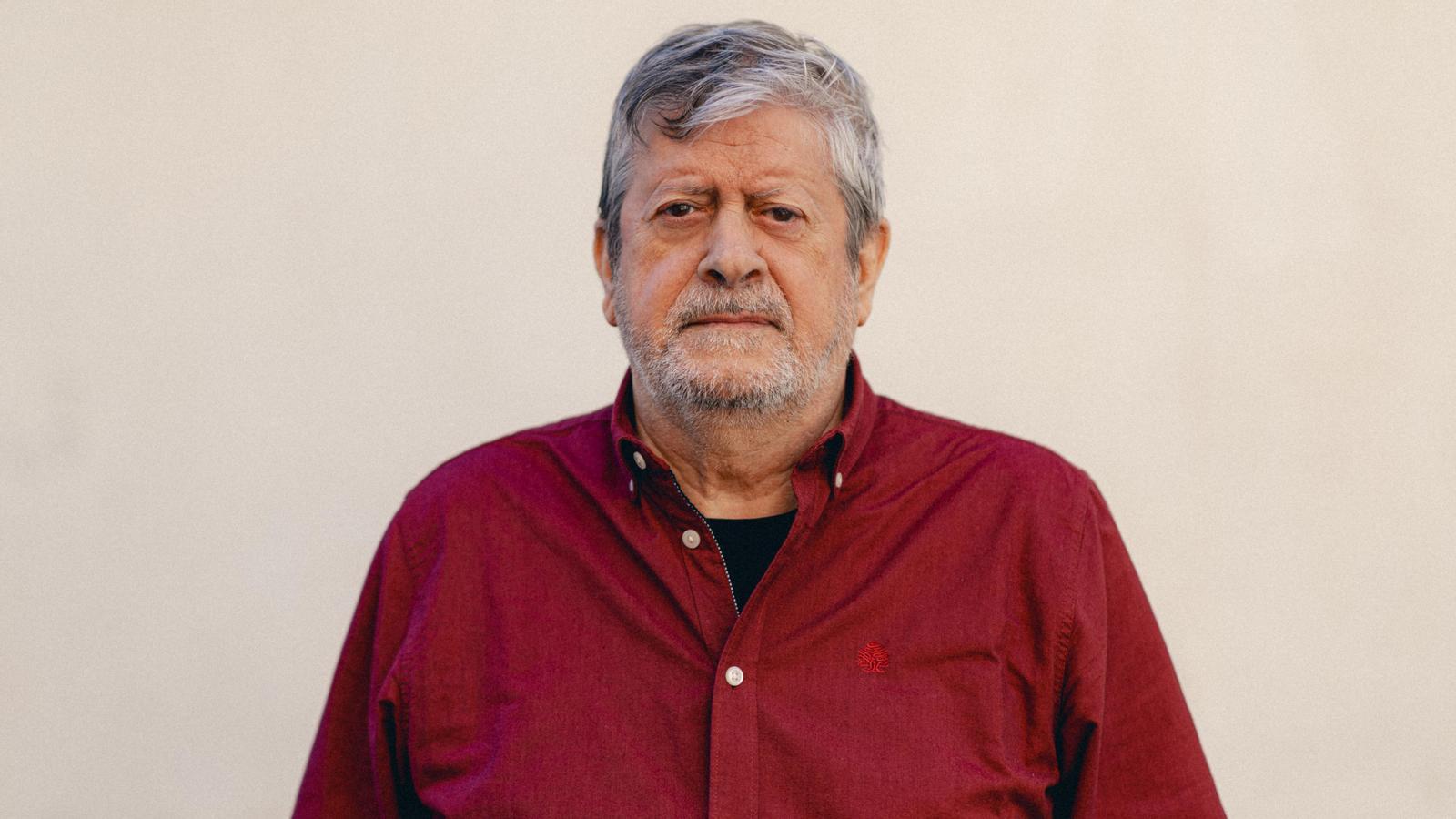
ValenciaFor the Valencian sociologist Rafael Xambó, the media coverage and judicial investigation of the murder of the independentist militant Guillem Agulló were entirely tendentious. 33 years after the crime, the also specialist in media, publishes The Murder of Guillem (Rebel Edicions, 2026), with a prologue by the writer Núria Cadenes and an epilogue by the former CUP leader David Fernández. An extensive work in which he analyzes why only Pedro Cuevas was convicted and the other four far-right militants who accompanied him were acquitted. The book will be presented on April 23 at the Ateneu del Pallars in Tremp, on the 24th at the Ateneu La Baula in Lleida, on the 28th at the Casal Popular Tio Cuc in Alicante, on the 29th at the Casal Jaume I in Elche, and on May 5th at the Ona bookstore in Barcelona.
Regarding media coverage, he particularly criticizes the role of the newspaper Las Provincias (LP). What importance did it have?
— It had overwhelming hegemony. It was the most read and influential. His obsession was to exempt the far-right from responsibility because they did not want the case to be politicized. They wanted it to be interpreted as a fight between youth gangs.
¿LP did not want the violence of the far-right to disappear?
— They didn't even want to, but rather, they considered it functional. In 1993, there exists [the independentist youth organization] Maulets, which is growing in all the Catalan Countries, the squatter and libertarian movement, which is gaining a lot of strength, and this had to be stopped. That is to say, who pays for Pedro Cuevas' lawyer, who was José Miguel Morató Enguídanos, who had been the last Francoist mayor of Manises, and who was very expensive? Who pays for the office of Javier Boix [a lawyer who has defended PP leaders Carlos Fabra, Francisco Camps, or Rafael Blasco]? Because Boix's wife, Amparo Palop, was the defender of one of the accused, José Camilo Cuñat Montaña. The families [of the accused] did not have the resources to pay for it.

Who are the key figures of the Valencian far-right during this period?
— Fundamentally, José Luis Roberto. He is involved in the placement of a bomb at the Levante stadium [during some independence rallies], the accusation for which miraculously disappeared. He creates the National Syndicalist Workers' Central, a far-right union, sets up the Levantina de Seguridad company, the political party España 2000... He organizes demonstrations in the city against immigrants... He is also behind the complaint against Mónica Oltra.
It also criticizes the performance of the public television Canal 9 and the Generalitat, which was then led by the PSPV.
— On Canal 9, they calculated what they could say and what they couldn't. In June [1993] there were general elections, therefore, in April [when the murder takes place] there was already a pre-electoral atmosphere. The PSOE's positioning is very lukewarm; it doesn't want the case to stimulate positions to its left. They use it to position themselves in the center, as the benevolent solution. All that violence also works very well for the PP to present itself as a centered, non-violent party.
How do you value the judicial action?
— The court's obsession is to not accept any evidence that links the defendants with far-right groups when there is a very clear relationship.
Years later, the fourth section of the Provincial Court of Valencia, presided over by Judge Pedro Castellano, annulled the case of Operation Panzer against the neo-Nazi group Frente Antisistema, in which Guillem Agulló's murderer was implicated. Is there a common thread?
— In the case of Judge Castellano, it is more than clear. In the Panzer case, the Civil Guard destroyed part of the arsenal they had and the Court annulled the proceedings. What a coincidence that dirty tricks always benefit the far right.
Does the judiciary still condition Valencian politics?
— There is a sector of judges who are clearly far-right or right-wing and who act deliberately. There is a common thread between the murder of Guillem, the people behind it, who are the ones paying the lawyers, and the investigation of Mónica Oltra, and that common thread comes from the Transition and reaches up to the present day. With different names. First it's Acción Radical, then Frente Antisistema, then they put on a tie and run for elections. Then they leave the PP and form Vox. There is also a sector that is even further to the right of Vox that wants direct action...
On October 9, 2017, an episode of much far-right violence occurred in Valencia. Is the beast alive for when it is needed?
— That's right.
Does the fact that the Collective of Victims of Terrorism (Covite) has considered Agulló a victim of terrorism represent an advance?
— Yes. It allows claiming a different qualification of the murder from the State and a recognition of Guillem's figure. If there is a part of opportunism on Covite's part, I don't know, but in any case, I value it positively.

