The amnesty gets stuck for half of the independentists
Alerta Solidària denounces that 61% of politicians have not been amnestied and 97.5% of police officers, yes
-
CAT -
CAST
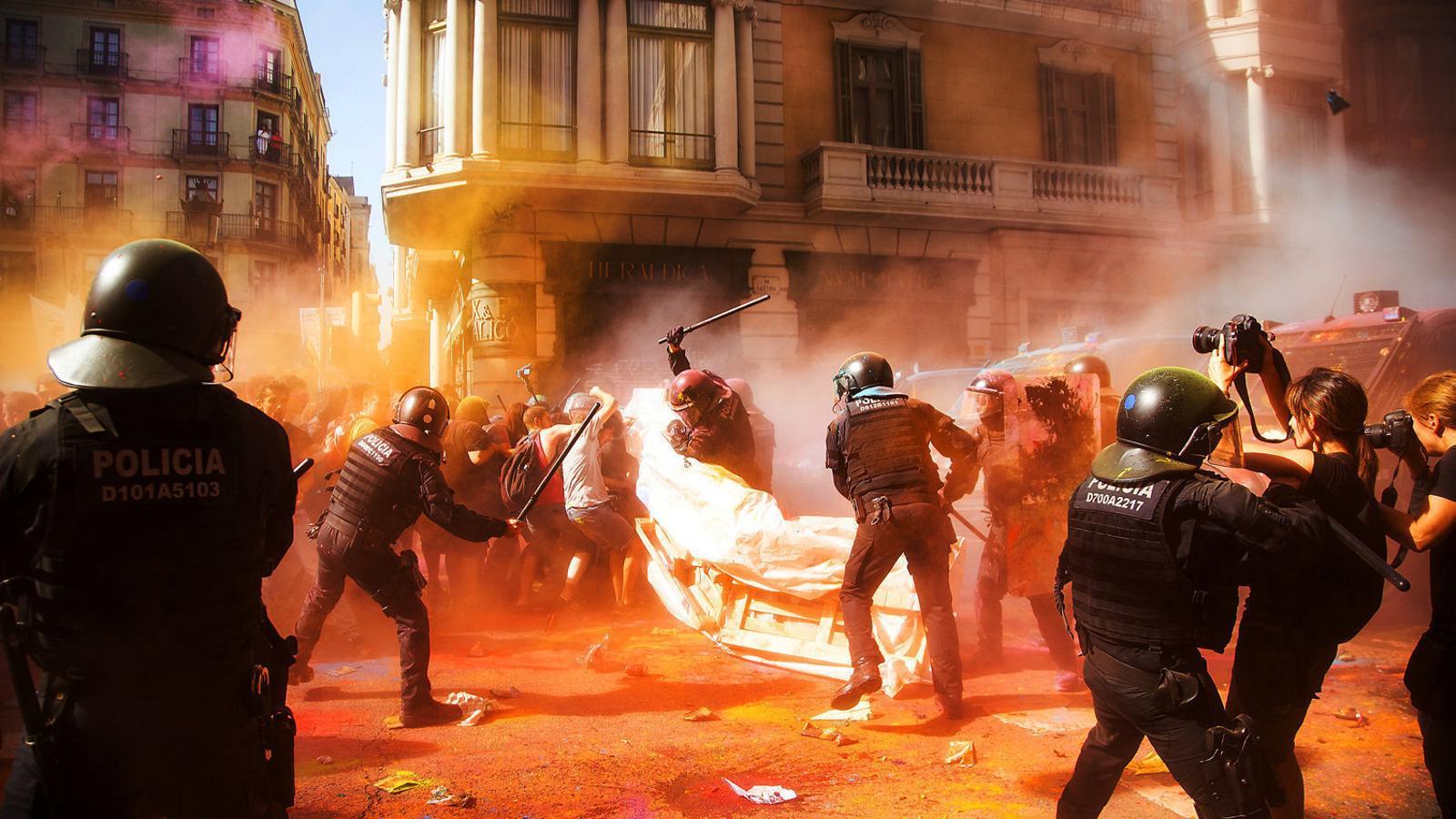
BarcelonaTwo years have already passed since the final approval of the amnesty law, but the hottest part is still to come. For example, it has only been recognized in just over half (52%) of the cases of activists where it should have been applied, according to data provided by Alerta Solidària. 181 protesters have benefited from it, and also 64 pro-independence political officials. In total, 245 people have had their criminal liability extinguished, but there are 257 who are still pending, either because they have been rejected outright or because the courts have not yet ruled. The basic difference arises when compared to the police officers who were indicted: only 4 out of 162 have been denied amnesty.
If we focus on public office holders, 61.3% of politicians have not been amnestied. This percentage contrasts with the 97.5% of police requests that have been approved. The only exception has been the case of Roger Español. Justice has not amnestied the four National Police officers involved in the operation that caused the activist to lose an eye from the impact of a rubber bullet.
Two years after the approval of the amnesty law, there are still 261 cases not amnestied: 104 were denied and 157 are pending resolution, the vast majority being protesters and activists or politicians and public officials. The clemency measure has been denied to 75 protesters, 25 politicians, public officials or businessmen, and out of police officers, only the 4 mentioned above. Finally, there are 157 amnesties pending resolution: 89 for protesters and activists, 68 for politicians, public officials or businessmen. In contrast, the 403 amnesties granted have been for 181 activists, 158 police officers and 64 politicians, public officials or businessmen.
72% of demonstrators without need for amnesty Also, the disqualified former ministers from ERC and Junts, such as Oriol Junqueras, Jordi Turull, Raül Romeva or Dolors Bassa, are awaiting the TJUE's decision after appealing the Supreme Court's decision not to grant them amnesty for embezzlement and for the TC to admit their appeals. "The majority of amnestied politicians have been for minor court cases; the TC, the TS and the TSJC are paralyzing the application of the law because many judges are boycotting it," denounces Martí Majoral, spokesperson for Alerta Solidària, in conversation with ARA. In any case, Majoral believes that the TJUE's ruling could be the breakthrough: "We hope it will resolve both the terrorism charge against the CDR and the embezzlement affecting the Court of Audit proceedings".

72% of demonstrators without need for amnesty
Analyzing the results of the 1,225 activists or demonstrators under criminal investigation, for 72%, 880, amnesty is no longer necessary, mostly because cases have been dismissed (634), because they have been acquitted (166), or because they have not requested amnesty despite having been convicted (76) or being pending trial (4). Regarding the 345 cases, more than half, 181, have been amnestied despite having been convicted (50), pending trial (70), or still in the investigation phase (61).
In 75 cases (22%) judges have denied amnesty, and 25 of the activists, 7%, are still awaiting court decisions: 13 are pending trial, but their case has been referred to the CJEU, as in the Judes v. CDR case; 7 have been convicted, amnestied, and appealed to the Supreme Court and the Constitutional Court; three have been convicted and two are pending trial.
"The recognition of amnesty for police officers is automatic, while for separatists it can be tortuous and very difficult: eternal silences, grotesque denials, or the constant prevarication of the Supreme Court summarize the two years in which about 150 cases between demonstrators and politicians still need to be resolved," criticizes the entity's spokesperson.
Majoral denounces "the surreal arguments" for denying amnesties: "The majority of the us tell us that they do not fall under the amnesty law not because of the specific crime or the timeframe, but because of the context, and for example, in May, 18 people were tried and not amnestied, in a protest against Societat Civil Catalana, because the ruling denied that the activists were protesting against the entity's militant Spanish nationalism, but rather that what had driven them to demonstrate was their hatred of the writer Miguel de Cervantes".
