The National Court rules out for now charging the PSOE for the Leire case, just as the PP requested
Judge Pedraz assures that "for the moment" there is not enough evidence to define the socialist party as under investigation
-
CAT -
CAST
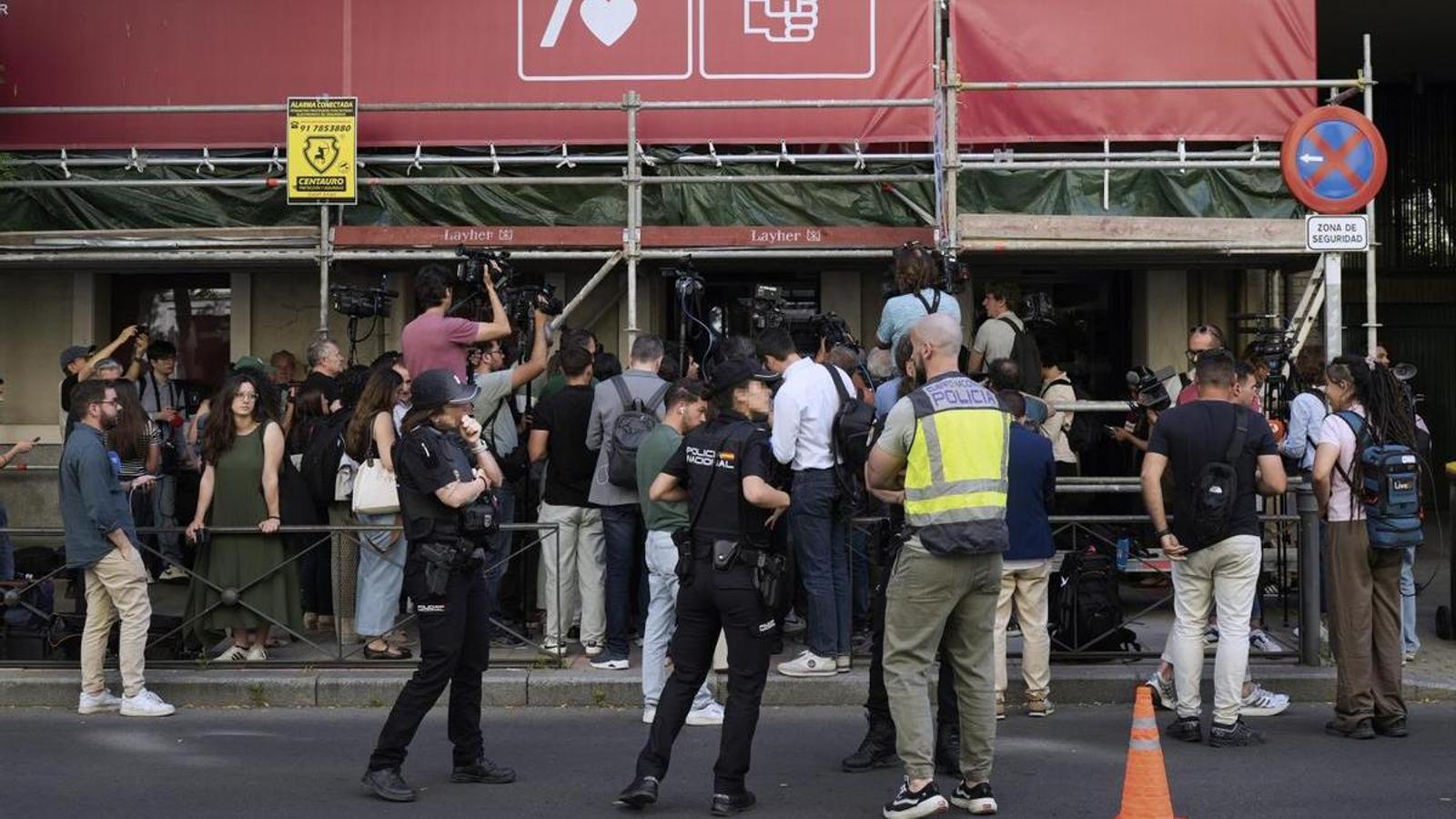
The request from the People's Party, which asked to indict the PSOE for the Leire Díez case, has not been successful. The judge directing the case at the National Court, Santiago Pedraz, has rejected, for now, that the socialist party be considered an investigated legal entity, as some proceedings in the framework of the case are still pending.
However, the interlocutory order points out that this decision is the one reached "for the moment", that is, it does not rule out being able to indict the PSOE later on within the investigation into the alleged organization established to destabilize the judicial cases affecting the PSOE and the Spanish government.
According to a statement from the National Court, the magistrate relies on the Supreme Court's doctrine regarding the criminal liability of legal entities and the requirements demanded for their indictment, and explains that for now, it does not credit what is called "principle of evidence" to attribute the status of investigated party. Some missing proceedings include the analysis of the documentation seized at Ferraz or the statement of the party's former Organization Secretary, Santos Cerdán. Once these are done, Pedraz will decide again whether or not to indict the socialist party.
What would be needed to indict the PSOE?
The National Court explains that it is not enough for PSOE executives or employees to have committed a crime, but that it is necessary to prove a structural defect in the organization, control, and supervision of the entity, and that there must be a direct or indirect benefit for the organization. Therefore, it is necessary to assess "a possible and indicative attribution of criminal responsibility to the party" for the alleged crimes of Leire Díez and Santos Cerdán. Specifically, what real powers Cerdán had, who executed the payments under investigation, what internal controls were in place, whether there were relevant errors in the supervision mechanisms, and, obviously, whether the party obtained any benefit from it.
