The Church stands united in favor of the regularization of immigrants: "The PP also agreed with it"
The Canary bishops lash out against anti-immigration speeches and point out that "many should get into a 'cayuco'".
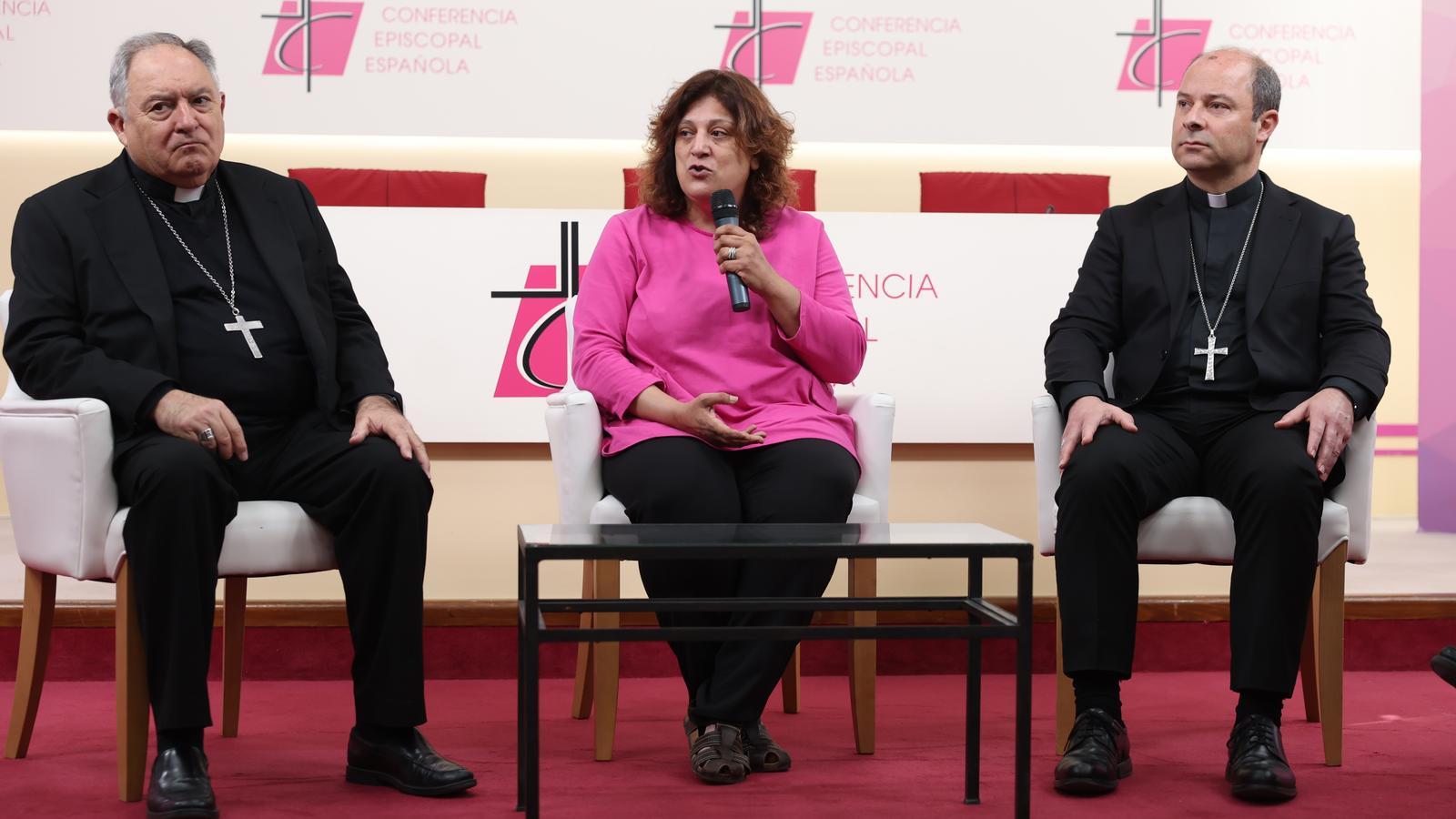

BarcelonaPope Leo XIV's visit to Catalonia and Spain in June will have immigration as one of its fundamental themes, especially during his tour of the Canary Islands. Precisely, this Wednesday the Canary bishops and the representative of Caritas in the territory made a call for the regularization of immigrants and against anti-immigration discourses at a press conference in Madrid, preparatory for the pontiff's visit. A few days after the pact between the PP and Vox in Extremadura, which advocates for implementing an anti-immigration policy with the agreed "national priority" in public policies, the Catholic Church strongly opposes it. The bishop of the Canary Islands, José Mazuelos, was clear: "A year and a half ago it seemed that the PP and PSOE agreed on regularization, but unfortunately it has been reached in this way," he stated, and recalled the initial process in Congress with the favorable vote of the Popular Party.
According to his explanation, the bishops and the Pope himself are not "politicians" but have "sensitivity," and he defended "making a call to politicians" to "seek solutions together," especially when "human dignity" is at stake. He was even more forceful in portraying the contradictions of the detractors of regularization: "Even many of those who are against it, I am sure they have their grandmother with some undocumented Latin American," he assured, thus emphasizing jobs in the care sector. In this regard, Mazuelos stressed that "many people should spend five days in the Atlantic in a cayuco
, without food morning and afternoon, and [live] as they arrive, so that when they arrive they see what we do." "We will have to welcome them and care for them, logically. If one wants to be Christian and human, they must be attended to and cared for," he concluded.
In the same vein, Caya Suárez, Caritas's Canary Islands representative, pointed out that for "a long time" immigration had been spoken of as "a problem," but that it is not. "We human beings are, we turn it into a problem when we don't provide resources, when there isn't an attitude of welcome," she defended. In this way, she said that "the person must be put at the center" regardless of origin or religion to accompany the most vulnerable.
Suárez, furthermore, has emphasized that "regularization is the consequence of many years of work and claims by the entire Church" to "give dignity to the permanence as a society" of newcomers in an irregular situation, who "already participate in our schools and contribute to our society", although often in the underground economy due to lack of papers. The Church undertakes the task of "accompanying these people" and ensuring they "are informed" about regularization. But the arrival of immigrants does not cease and the day the decree was approved, he recalled, "200 people arrived".
Càritas also stars an informative campaign against the "disinformation" of those opposed to regularization.
The pontiff, key
On the other hand, the bishop of Tenerife, Eloy Santiago, pointed out that "the visit of Pope Leo XIV is highly significant" due to the "important presence of immigrants" in what is "the southern border of Europe" with the arrival of makeshift boats and cayucos. Why? To vindicate "the Church's mission of first reception, that it be welcoming, that legal procedures can be carried out". On the island of El Hierro, for example, 9,000 people live there and last year 25,000 foreigners arrived. "We lack human and economic resources, we feel powerless in the face of the Atlantic route," he stressed, calling it "deadly".
In this way, the three speakers highlighted that Leo XIV will meet with immigrants and will make "a recognition of hospitality". A synthesis of what it means "to be with the last", as the Bible says. Although they also emphasized collaboration with countries of origin and the fight against mafias, they made it clear that they are "very disgusted when the immigrant is treated as a number", according to Mazuelos. This happened in the distribution of undocumented foreign minors.
The Canary Islands are in "a situation of structural poverty" with 25.5% social exclusion, according to the representative of Cáritas, and with 24% of the total foreign population, "mainly Latin American". The Holy Father's visit to the islands will have a subsidy of one million euros from the regional government and half a million from the provincial council (cabildo). The bishops pointed out that there will also be aid from the administration in Barcelona.
