Sánchez wants to turn Barcelona into the cradle of resistance against the far-right wave
The socialists choose the Catalan capital to launch a global progressive platform with a vocation for continuity

-
CAT -
CAST
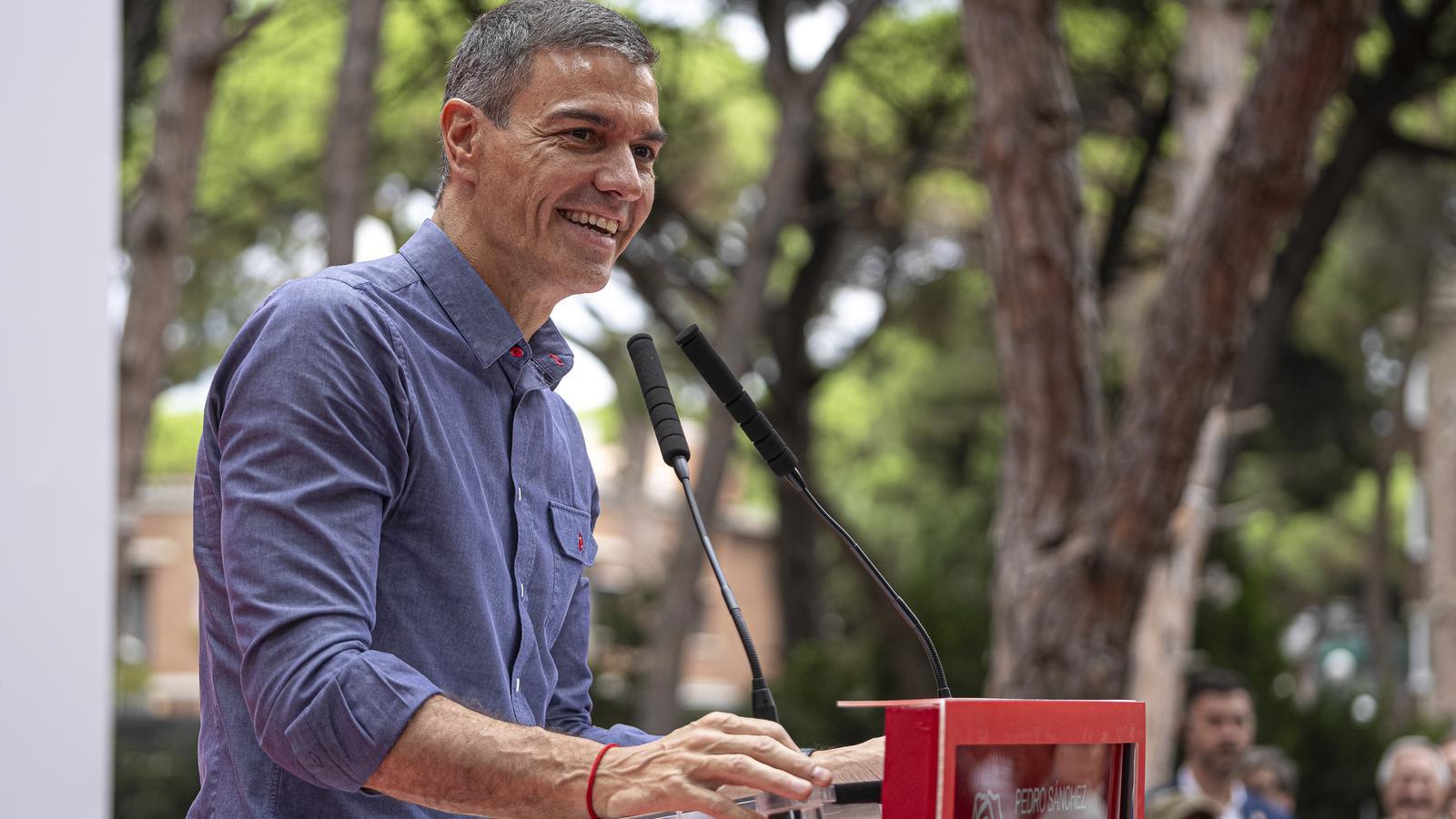
MadridBarcelona as the cradle of resistance against the global far-right wave. With this objective, the PSOE, in coordination with the Socialist International, presided over by Pedro Sánchez himself since 2022, is organizing a transnational conclave of progressive parties and organizations in the Catalan capital on April 17 and 18 to signal that they are standing up to the rise of the far-right. This is the "Global Progressive Mobilisation", which, according to socialist sources consulted, has a will to continue and is not just a one-off political event. In fact, the far-right has also held several global meetings, including one in Madrid where the leader of Vox, Santiago Abascal, sponsored European leaders" who follow in Donald Trump's footsteps.
The event, which will be held at Fira Barcelona, comes at a time of maximum visibility for the Spanish president on the international stage, precisely because of his confrontation with the American president: not only with the war in Iran but also with defense spending or policies such as the regularization of half a million migrants.
The choice of Barcelona to host this event is also not coincidental. Beyond the desire for decentralization that, the PSOE assures, the party has, it is clear to everyone that Catalonia is an oasis for socialists compared to the rest of Spain, with the PP and Vox governing in most of the autonomous communities (and with a growing demographic presence). Unlike Madrid, governed by the hardest PP both at the municipal level and in the regional government, going to the Catalan capital has become a balm for the PSOE, especially since the appeasement of the independence movement, which has lost strength in the streets. Catalonia is the most relevant community in terms of demographic and economic weight governed by socialists in all of Spain. For this reason, government sources anticipate that the president of the Generalitat, Salvador Illa, will have a role in the progressive summit as host, along with the mayor of Barcelona, Jaume Collboni. Taking into account, furthermore, that the situation in large cities, especially regarding housing and affordability – a concept that gained traction from the Democratic candidate in New York, Zohran Mamdani – will be one of the axes that will shape the meeting.
"Barcelona was the ideal place", PSOE sources affirm. "As reactionary forces organize on a global scale, it becomes more necessary for progressives from different latitudes to organize and coordinate their response. The growing far-right wave must be met with an equally transnational, inclusive response united by shared values", they summarize from the party to explain the motivations of the progressive platform.
Cultural battle
For months, the PSOE has been working on this event with the aim of Sánchez being the host of renowned international progressive leaders. However, as it arrives, consulted leaders believe that, paradoxically, it is Sánchez who is currently the most visible figure and that the platform will serve to further enhance this message. "It wasn't planned for this, but it will end up being this," interprets a consulted socialist leader.
Who will be in Barcelona? The president of Brazil, Lula da Silva; the president of Colombia, Gustavo Petro –both have shown an openly anti-Trump stance in Latin America–; the president of South Africa, Cyril Ramaphosa; the president of Uruguay, Yamandú Orsi, and the president of the European Council, António Costa. Also intellectuals from the left to give a patina of deep political thought to the event, in addition to several ministers from the Spanish government such as the vice president, Carlos Cuerpo, or the former president José Luis Rodríguez Zapatero, as well as several European social democratic leaders.
Since his "no" to the war in Iran, Sánchez has multiplied his presence in international media. After appearing in the New York Times regarding the regularization of migrants –he himself wrote an article defending its merits–, he has become the subject of reporting. One of the first to launch the headline internationally was the British newspaper Financial Times with the title "How Pedro Sánchez became the antithesis of Trump" and last week the North American economy-specialized newspaper Wall Street Journalpublished a special on the bilateral relations between Spain and the United Kingdom titled "Spain's Revolt: The Leader Saying No to Donald Trump." The Spanish president has capped it off with his own article in Le Monde Diplomatique, a publication that is a benchmark for the European left, in defense of multilateralism. With this strategy, La Moncloa wants to go beyond progressivism and also appeal to voters with liberal values who feel attacked by what it considers to be the 21st-century neofascism embodied by Trump.
Apart from the PSOE and the Socialist International, also part of the organization of the progressive summit in Barcelona are the Party of European Socialists (PES), chaired by Stefan Löfven, former Swedish prime minister, and other organizations and platforms such as the Progressive Alliance, which has set aside the differences it had with the Socialist International (it split in 2013) to organize the conclave. The idea of the promoters is to dedicate Friday the 17th to debate of thought, while Sunday the 18th would be the most political event with international figures and Sánchez himself. In parallel, apart from the summit, the Spanish president would star in a bilateral summit with Lula da Silva within the framework of the bilateral pacts of each country.
The program is still under construction, but some of the debates that are already planned have to do with "progressive feminism as a global defense of democracy"; "reclaiming the power of the narrative" against the far-right; wage inequality, or diversity in Europe. In short, Sánchez champions global progressivism with the hope that this will also give him an internal return: that his voters will be activated for the Andalusian elections –there will be just one month left until the appointment on May 17– and that the framework will take shape that in the next Spanish elections it will be either him or what trumpism represents. It is the last card left for Moncloa to try to overcome the demographics and the judicial problems that surround the government until D-day arrives in 2027.
