Ernest Urtasun: "In these elections we are gambling the future of Catalan"
Minister of Culture and number 2 on the Front Ampli list for Barcelona
-
CAT -
CAST
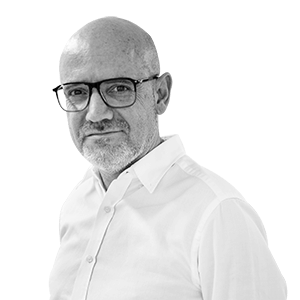
BarcelonaThe Minister of Culture, Ernest Urtasun (Barcelona, 1982), visits the ARA newsroom a few days after it was made public that he will be number 2 on the Sumar candidacy for Barcelona in the upcoming general elections.
How has the election call caught you at the head of the Ministry of Culture?
— We are preparing the entire electoral operation, but the government is not in a caretaker capacity. We are governing. For example, I have announced that I will take to the courts the decision of the Junta of Castile and León to ideologically condition subsidies for cinema. It seems to me a form of censorship.
What is your assessment of your time at the ministry?
— We have carried out an update. It was very anchored in old policies and we have focused it around the concept of culture as a fundamental right, which is what the United Nations marks for us. Especially regarding access to culture. It is also the first time that we have a Ministry of Culture with a conception of Spain and a plurinational state, and I am very proud of it. Co-official languages had never been protected like they are now.
If Madrid is to be a federal capital, shouldn't it have, for example, signs in the four official languages of the State?
— I am in favor of it. We have been introducing all co-official languages into museums. I also claim that, for the first time, co-official languages can be used in Congress. But this debate is very important in view of the upcoming elections. We are at risk of having a government in the State that protects the Catalan language or one that persecutes it. These are transcendental elections for defending Catalan. People must be aware of what could happen if they have a majority like the one in Valencia, where the PP has cut all aid to Escola Valenciana or Acció Cultural Valenciana. These entities have survived thanks to the fact that we have given them financial support. This is their model. In other words, if PP and Vox reach the government, they will have no qualms about attacking the language. And, therefore, we are also gambling the future of the language in these elections.
You have the commitment to prepare a report for the Spanish Cultural Heritage Institute regarding the Sixena paintings, but it seems the judge did not want that...
— The judge did not want us to make this report, although I believe that the reports that were and are valid in these cases are always the reports of the conservators of a given heritage asset. In this sense, the reports of the MNAC conservators are very clear. There is a great risk in the transfer of these paintings. And we have always given full support to their reports. I have always said that I do not share this ruling because it ignores technical criteria. It is completely unacceptable to politicize heritage issues in this way. It is completely unacceptable.
What do you think would be the first measures that a minister of a PP-Vox government would take in their position?
— They would certainly want to reinstate the bullfighting award; to halt the decolonial transformation of museums that I have set in motion, of course, and in terms of language, I am sure they would withdraw all the aid we have provided to organizations for the promotion and defense of Catalan in Valencia and the Balearic Islands, for example.
Let's change the subject. Why has unity to the left of the PSOE not been possible?
— There has been a lot of debate these days and it is up to Podemos to explain its decisions. However, there will be a unity ballot with more than 15 organizations that is running throughout the State and that is running in Catalonia: Broad Front. It has been very difficult for us to build it, but we have built it. From here on, the decisions that others have made must be explained by them.
Have you felt betrayed by Gabriel Rufián?
— Gabriel Rufián has made a decision, which is to be a candidate for the Republican Left. I respect it, of course. What is clear is that there will be two electoral proposals in Catalonia: the proposal of the Republican Left, which together with other formations have been partners of the parliamentary majority, and there is a proposal from the plurinational left, which is that of the Broad Front, with which we aspire to revalidate the government majority and to continue governing to transform the State.
Do you think that the 40 Catalan deputies who invested Sánchez will take the same decision?
— I am a bit surprised, in these first days of the pre-campaign, by this kind of desire for equidistance that Junts per Catalunya has manifested. Faced with the possibility of the arrival of fascism in the government of Spain, one cannot be equidistant. How can one be equidistant with a government that might want to repeal the amnesty?
But even if the PP and Vox repeal it, it would not affect the amnestied people...
— No, but they could repeal it, like all measures in favor of Catalan. For example, if they have a majority on the board, they could ensure that Catalan could no longer be spoken in the Congress of Deputies. And not to mention the matter of culture and ideological persecution, as we see in Castile and León. Faced with this, I cannot understand why Junts per Catalunya places itself in a position of equidistance. I am convinced that in the next elections the people of Catalonia will not be equidistant and will vote overwhelmingly for there to be a left-wing government.
Returning to the unitary candidacies of 29-N, have you considered, for example, not running in constituencies with few seats, such as Lleida, and asking for the vote for ERC?
— In 2023 we presented ourselves with a great platform of the plurinational left, which was Sumar, and our result was a determining factor for there to be a left-wing government. Therefore, I insist, there is the unity ballot, both in Catalonia and in the rest of the State, and it is called Broad Front.
Would they set new conditions to revalidate a new Pedro Sánchez government?
— One issue that has caused us to have a major disagreement and has fractured our relationship with the Socialist Party significantly is the management of the Rodalies commuter rail service. They have been at the helm of the Ministry of Transport for eight years, and I believe it is unacceptable that a metropolitan area, which is one of the largest in Europe with five million people, such as Barcelona, does not have trains in proper condition, and this affects people's lives. Furthermore, in parallel to this, they have announced a 13 billion euro plan to expand airport activities, which goes against everything scientists tell us regarding climate change. This also fractured our relationship significantly.
These elections are also called based on a call regarding the eviction of Maricarmen Abascal...
— First of all, I want to vindicate the decrees that are already in force. Everyone knows that these decrees, without our presence in the government, would not have been approved. If today there is a moratorium against evictions until 2030, if there is an extension of rentals until December 31, 2028, it is because of the tremendous battle of our political space. The PSOE with these things is always much more permeable to real estate interests. And these decrees cannot be the final point, they are a starting point and we must go much further. We must completely ban speculative purchases, something that, for example, we the commons already agreed upon in Catalonia with the PSC in the Parliament.
Do you consider that calling a general strike on November 11th, just before the election campaign, is a good initiative? In France, for example, the one profiting from the protests and riots is the National Rally.
— I would like to thank the Tenants' Union for all the work they have done so far. I believe that, furthermore, they are a social movement, and particularly the Tenants' Union of Catalonia, which moves with great intelligence. It mobilizes the street and is a very influential actor in the institutions. And we have always said that we would support all the mobilizations they decided upon, and I believe the strike was important. This housing issue was a ticking time bomb that had to explode at some point, because it is evident that it is unsustainable for thousands of citizens.
Let's finish. These years you have lived in Madrid, which is precisely the epicenter of the State's conservative policies, with a figure like Isabel Díaz Ayuso. Have you noticed much difference from Barcelona?
— Barcelona is a city where it is noticeable that the left has governed uninterruptedly, except for Xavier Trias's period. And I believe that the legacy Ada Colau has left in housing, the superblocks model, and traffic calming, is pioneering in Europe. Although I adore Madrid, I have lived there for many years and it is a city that fascinates me, it is true that the right-wing parties have built it as a great neoliberal capital, and that is noticeable.
