The first to interrogate Koldo was Alejandro Luzón, the Chief Prosecutor of the Anti-Corruption Prosecutor's Office. The day before the statement, his defense team was still unsure if he would answer questions. In the end, he did, but the questions were not without tension. "You are not seeking my innocence," he retorted at one point. "Refreshing the memory is always worthwhile," he had said earlier. And it's a phrase the prosecutor didn't take well: "Don't question me and don't interrupt me." Luzón also complained that his lawyer intervened while he was asking questions: "I will ask not to be interrupted in the middle of an interrogation. It hasn't happened to me in 35 years of professional practice, and I've been enduring it for the entire trial." Later, Koldo boasted about having called whoever "was necessary" to solve a problem. "Like with women," the prosecutor muttered. "You have very poor taste," Koldo reproached him.
Koldo admits that the chistorras are 500 euro bills that he received from the PSOE and the Civil Guard
The former advisor to Ábalos denies having spoken with Pedro Sánchez and denies having received 10,000 euros monthly from Víctor de Aldama

-
CAT -
CAST
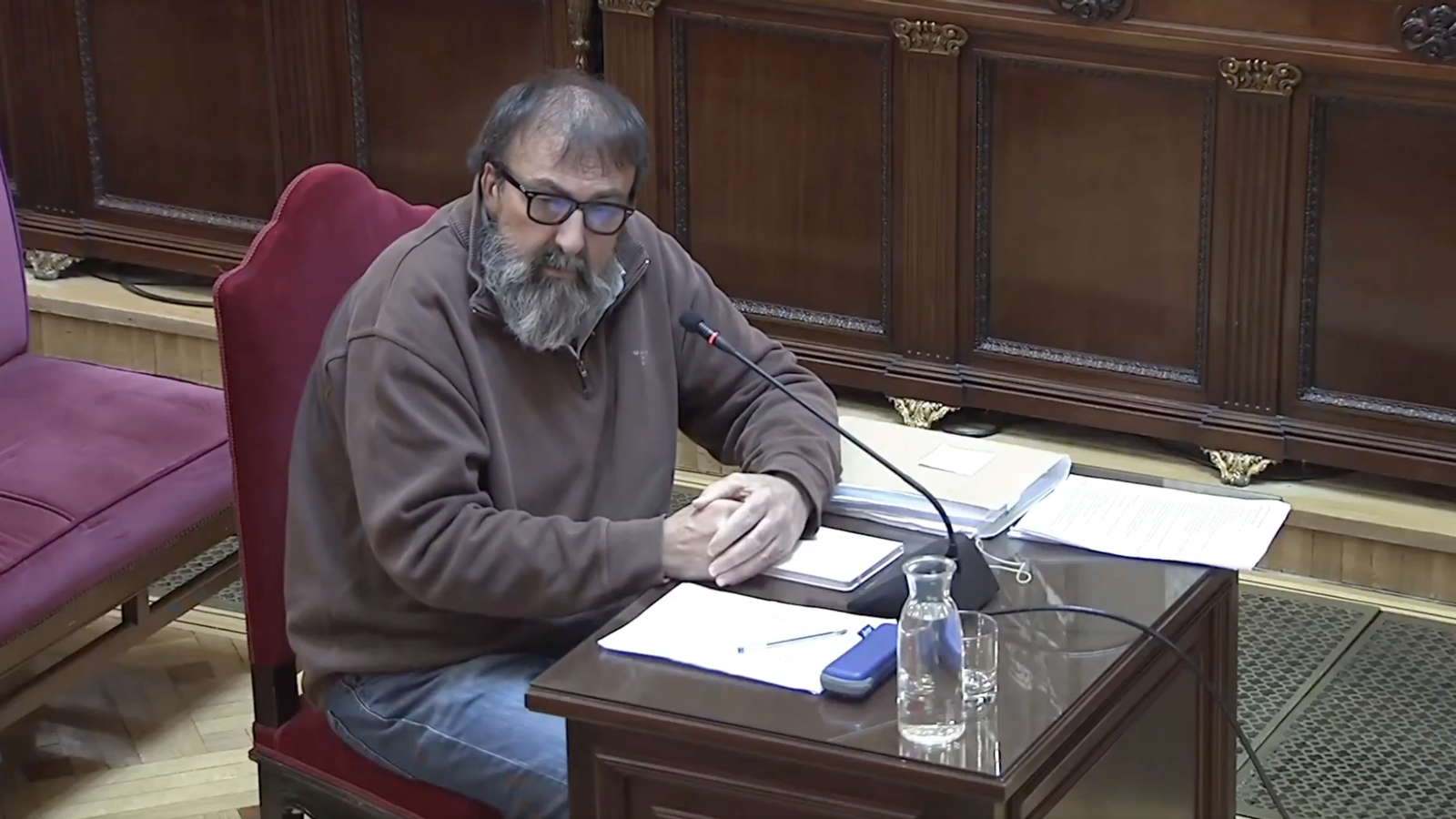
MadridDay of revelations and denials at the Supreme Court. After Victor de Aldama's explosive statement, which shot left and right to try to splash Pedro Sánchez and question the PSOE's financing, it is now the turn of Koldo García, who was an advisor to José Luis Ábalos in the Ministry of Transport and for whom the Prosecutor's Office is seeking nineteen and a half years in prison. "Ask me absolutely everything to try to prove my innocence," the prosecutor urged right at the start. And, after five and a half hours, he has resolved one of the great questions of the trial: what are "chistorras"? A Guardia Civil report suspected that it was the code name to refer to 500 euro banknotes. And Koldo García, when questioned by his lawyer, confirmed it, despite the fact that last October, in a couple of television interviews, he stated that the chistorras were "sausages".
Where did the tickets come from? Although the former PSOE manager He also had words about Víctor de Aldama, the alleged facilitator of the plot, whom he considered his friend and with whom he spoke about "absolutely everything", even more than with his brother. Of course, he took the opportunity to deny many of the statements made by the businessman. He argued that it is "common sense" that he had no contact with Pedro Sánchez since he arrived at Moncloa: "I did not speak with the President of the Government," he assured. He denied receiving 10,000 euros per month from Aldama and said that his brother did not travel to the Dominican Republic to look for bills, but to meet a woman he was getting to know and to see pitahaya plantations while he studied whether to open a new line of business. "In life, you have to try to prove things, what is said must be demonstrable," he reproached him.
Without decision-making power to buy masks
Without decision-making power to buy masksThe apartment and the hiring of Jéssica Rodríguez
The floor and the hiring of Jessica Rodriguez
Jessica Rodriguez's apartment and hiring"He pressured a lot that her problems had to be solved because otherwise public opinion would become aware of certain things. Not illegal, but personal ones," the former advisor recalled about the alleged blackmail that Jéssica Rodríguez was doing to the former minister. Regarding her signing with INECO, he said that he limited himself to "passing on" the curriculum vitae, just as he sent "many, many more." And he denied that he incited her to be absent: "I have not told anyone not to go to work".
