Sonia Moreno: "Behind the Ceuta crisis there is political intentionality"
Journalist and author of the book 'Morocco, the uncomfortable neighbor'

-
CAT -
CAST
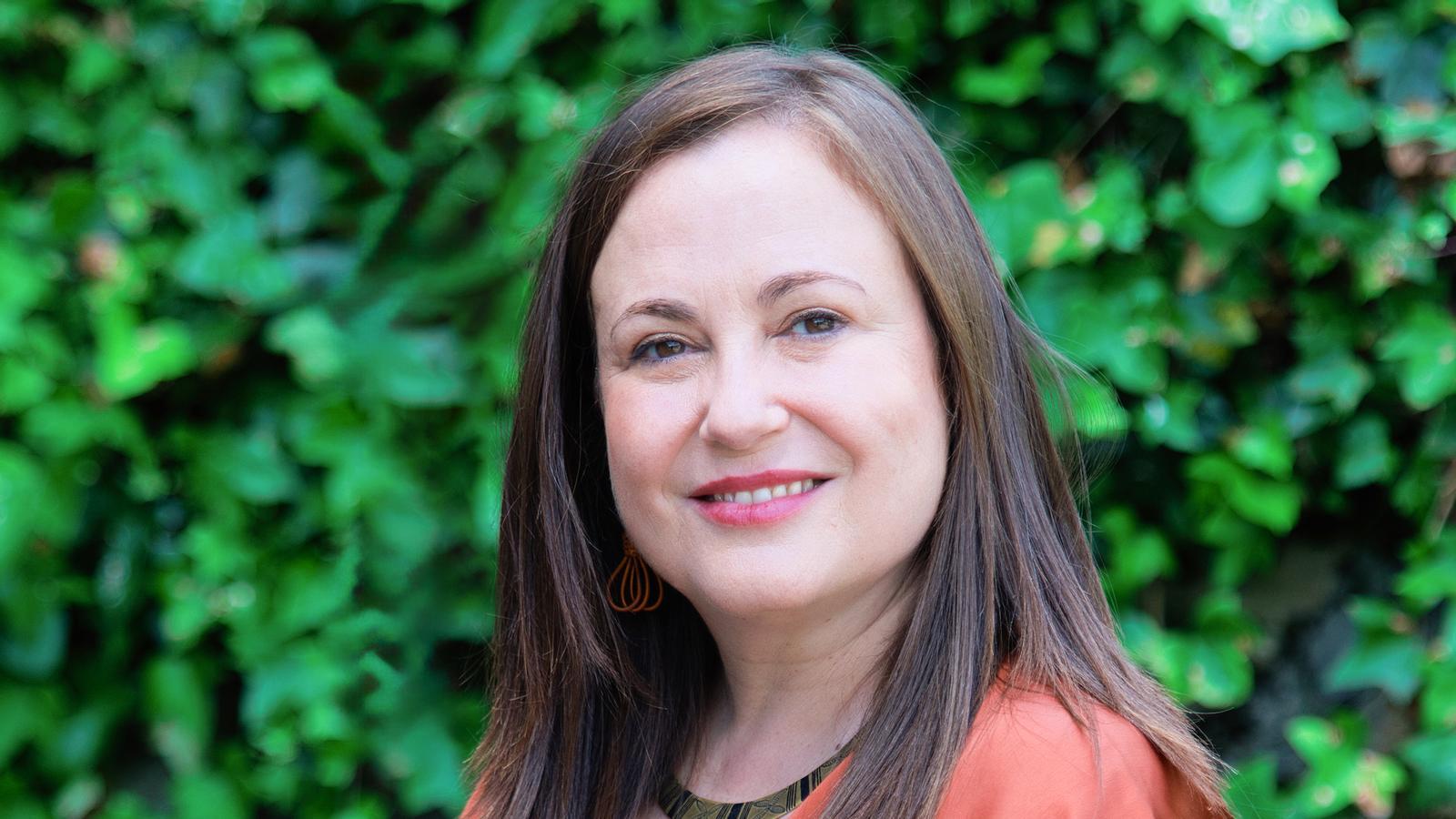
MadridSonia Moreno is a journalist, former correspondent in Rabat for various media outlets such as Cadena SER and El Español, and author of the book Marruecos, el vecino incómodo (La Esfera de los Libros, 2025). It is now more relevant than ever with the Ceuta crisis, as Moreno points out the keys to understanding what is happening.
Why is Morocco an uncomfortable neighbor?
— It is uncomfortable because it is strategically located where it is, on the southern border, and there is the Strait of Gibraltar, which many countries want to control. That is why we collaborate with them on anti-terrorism, drug trafficking, immigration... We must get along, but we see that even though we get along, we are in the current situation in Ceuta. Even though Pedro Sánchez made a turn in his policy on Western Sahara, we have achieved practically no advantage.
She believes that Morocco is behind the massive entry into Ceuta.
— There are photographs, it is the modus operandi of Morocco and it is the analysis that anyone who knows those borders can make. I lived in Tangier, Rabat, I have infiltrated the mafia and I know how they work with immigration, and in the Ceuta crisis there is no mafia behind it. There has been a policy of crossed arms on the part of the Moroccan armed forces. It is impossible that after 24 hours people were still entering; in all the cities there are police checkpoints. I have also spoken with people who were at the Throne Day in Morocco on July 30th and it was already known there that something was happening.
What is Morocco looking for?
— I do not believe this is a migration crisis. Behind the Ceuta crisis there is a political intention to pressure Spain to take a further step in its recognition of Western Sahara. Until now, the Sánchez government has agreed to accept the autonomy plan, but it does not recognize Morocco's sovereignty over the entire territory of the Sahara, as Germany did and, above all, as Donald Trump did. Therefore, what they want is the airspace and the jurisdictional waters to exploit everything. And that is what is intended.
And what about the claims of Ceuta and Melilla?
— They want a shared sovereignty.
After the declassification of documents, do you think the Spanish government could have reacted?
— Spain has delegated a great deal of border control to Morocco and should have anticipated things it knew would anger it, such as the law granting nationality to the Sahrawis.
Do you predict a worsening of relations?
— There will be diplomatic problems. Furthermore, the visit of King Felipe VI is scheduled, and the last and only time King Juan Carlos I went there, there were 60 days of diplomatic crisis. It is also true that Spain cannot do much more: until now it has cooperated and has achieved nothing. There is not much of a scenario left other than trying to confront Morocco. The recent image of the King dressed in military uniform with the Minister of Defense is to tell Morocco that they are neighbors, that there is cooperation, but that this cannot continue like this.

What does it mean to stand up to Morocco?
— Get serious, probably send more weaponry to Ceuta and Melilla, organize the visit of the King and Queen, and continue defending the Spanish character of Ceuta and Melilla without hesitation.
How has the current confrontation between Spain and the United States impacted this crisis?
— If Spain had a better relationship with the United States and Israel, it would be more difficult for Morocco. Now Morocco is emboldened. The United States is very interested in the control of North Africa, of the Strait... And Israel, even more so.
Was it Morocco that spied on Pedro Sánchez? Do you think they are blackmailing him?
— There is an investigation by many international journalists and Amnesty International that points to Morocco being behind the infection of my mobile with Pegasus. I do not know what they have. My Moroccan sources tell me it was corruption. They told me this in 2021 and spoke to me about Ábalos.
What is it like to be a journalist in Morocco? She was spied on.
— From the moment you arrive in Morocco, the government knows where you are. The man who acts as a guardian for the houses is clearly paid by the state and reports on what you buy, what time you enter and leave, who comes to your house... We are very clear that working as a journalist in Afghanistan is not easy, but neither is it in Morocco. They can enter your house and plant evidence of anything, which is what happens to our Moroccan colleagues, who end up in prison. My mobile phone was infected and I experienced it very badly. Now there will be a trial and, luckily, it is on track. I have not been afraid, but now I would indeed be in physical danger in Morocco.
The book says that Spain has not looked at Morocco as an equal.
— It is about not looking through colonialist glasses, which is equivalent to underestimating. There is a brutal lack of knowledge about what Morocco is. How can one speak of invaders? It is mind-boggling, it is not understanding absolutely anything, not understanding that there is a lot of repression, a 37% youth unemployment rate, a brutal absenteeism in schools. It is necessary to understand all this to understand why they want to come here.
