Politics and bickering go hand in hand inexorably. The executive power operates in direct connection with the legislative power, on which it depends, and under the watchful eye of the judicial power. Installed upon the complex system of interests that articulate societies, they are spaces of order, but also of confrontation: the legislative is the scene of political debate, where laws are approved and majorities are made and unmade. The judicial has the delicate mission of pointing out who has exceeded the limits of what is legally possible. And the executive is responsible for government action and the control of society. In this evident uproar, human impulses manifest themselves, endowed, as we all know, with a complex economy of desire: passions, they call them.
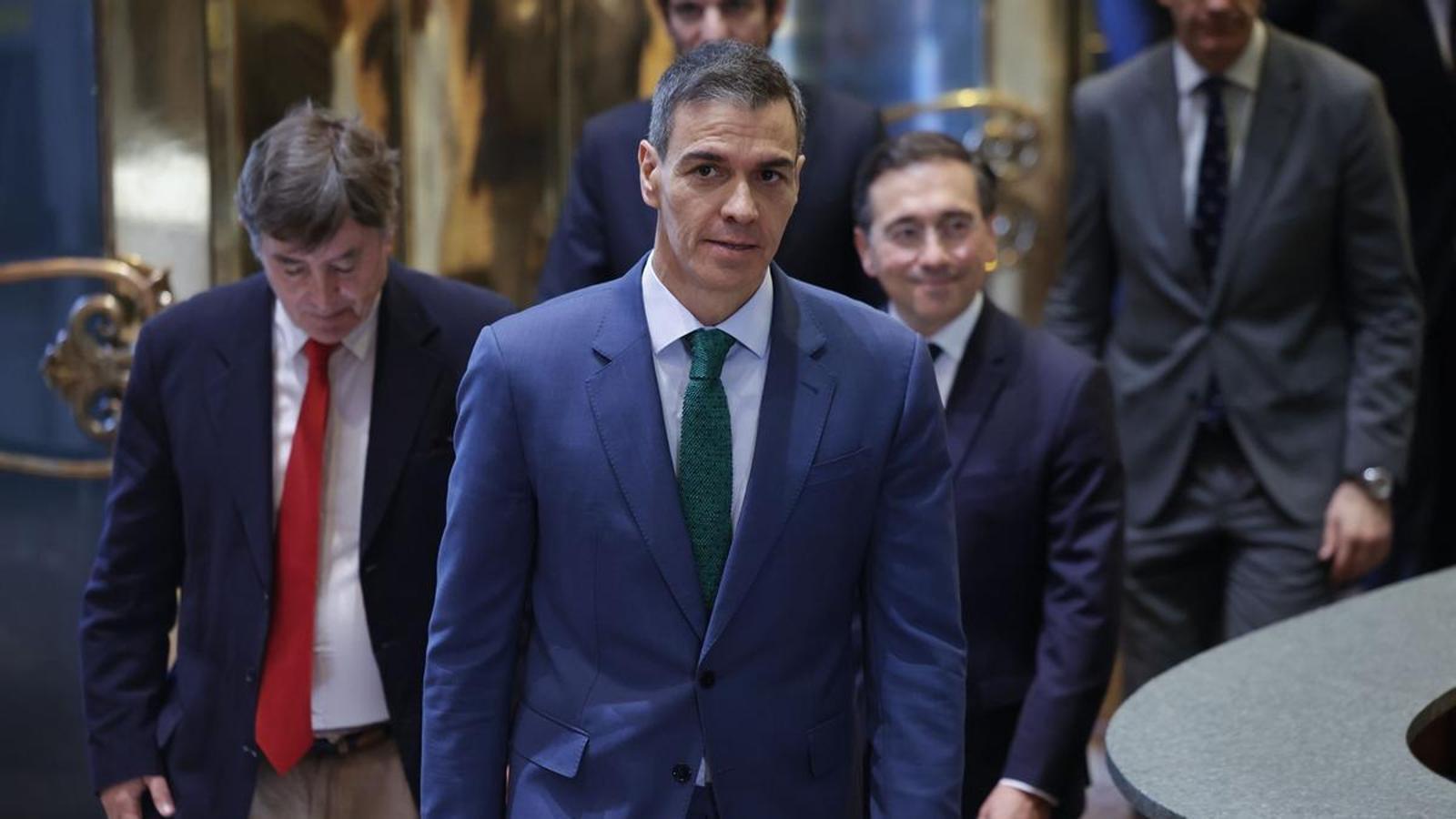
The principle of majority obliges a distribution of actors to make possible the necessary combinations to reach power, which has been expressed with the right/left division, but which in current times is in a phase of radicalization, and the space for this euphemism called "center" has been reduced. Pedro Sánchez has surpassed Aznar in years of government (he only has Felipe González ahead of him now) and enters a peculiar situation: while he exhibits an external profile, the scene overwhelms him at home. A confluence of various factors: the weariness of power, the crisis of the left, the shift of the right under the growing tutelage of the far-right, and the hangover of peripheral nationalisms after the Catalan Process. All this at a time when Trumpism has spread insolence around the world and the transition from industrial to digital and financial capitalism is degrading liberal democracies.
The far-right is increasingly riding on the back of the right, Feijóo has made the criminalization of the adversary a monothematic issue, Sánchez has been looking at the world more than Spain for months, and the left is in a phase of blurring. And suddenly, by chance, the judicial power has carried out a series of actions that have even led to entering Ferraz, the headquarters of the socialist party, in search of compromising information. All this generates a certain air of perplexity which, accompanied by the reiterated reticence of the new economic powers, gives the impression of a mobilization, a casual one, we should believe, that is considerably raising the tension: "Sánchez, leave now". Are subterranean currents between powers at work? Why this haste? Sánchez's face tightens at times. He says he will give explanations. About what?
