Telecinco harasses Zapatero's daughters

For weeks, Telecinco and Antena 3 have been showing contempt and prejudice against Zapatero's daughters that go beyond reasonable journalistic interest for their indictment. Both in morning and afternoon magazines and in the news, there is an obsession with showing photographs of them. The fact that they are two thirty-year-old women who do not conform to hegemonic canons, neither aesthetic nor stylistic, provokes a morbid fixation on their image. It is not new: when they were minors, they were already victims of cruel mockery.
On the one hand, there is a sexist and condescending discourse. Ana Rosa, after a monologue judging the education received by these girls, assures that “ellas tienen su empresita”. Sonsoles Ónega has a former secretary of Zapatero daily who tells anecdotes of when the girls lived in Moncloa. Antena 3 presenter Pepa Romero spoke of them as if they did not have the most basic psychological capacities: “Are Ellas son conscientes de la gravedad del asunto al que se enfrentan”?”.
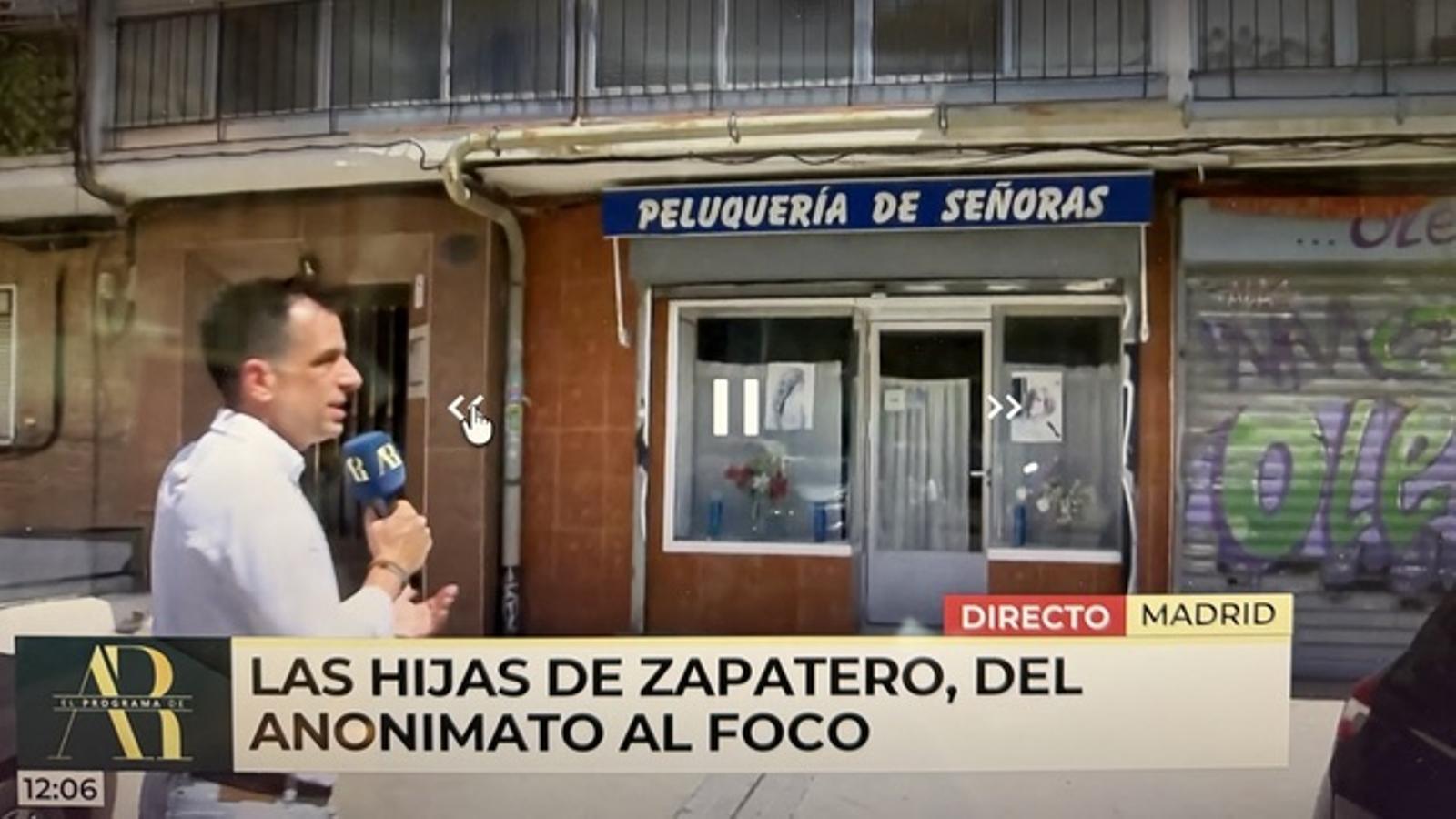
But the worst we saw was on El programa de Ana Rosa. They sent reporter Jorge Luque to the door of the building where one of Zapatero's daughters lives and indicated that the other sister lived two streets down. They showed the facade and the street of a humble and working-class neighborhood. They even revealed the address. They also showed the park where the sisters walk their dog. The reporter assured that the girls were at home at that moment: “We are eager to find them to ask them some questions”, said the reporter in a defiant tone. He had interviewed the neighbors and explained that most of them did not know they were Zapatero's daughters: “Not even the neighbor next door, who is the one who collects the packages for her”. Luque made the owner of the nearby hair salon come out. The hairdresser explained: “They don't want anything with anyone. They don't greet. They go very fast”. “Is itshyness or arrogance?”, asked the journalist, who insisted that they would wait there to be able to talk to them. An hour later, they made a second connection. The reporter had not moved from the intercoms. The camera showed the street, the building, and the park again. “They still live here. They still sleep here. The neighbors confirm it for us”. He pointed to the building's door and, with his arm, indicated the exact path, ten meters long, they took every day to get into their car, and revealed that lately they did it in a hurry: “It must be that they don't feel like walking. They don't take the dog out anymore. And it must also be for security reasons. With the tension that exists in this country and the tension they have on top of them, it's probably not advisable for them to go alone. In fact, the sign of their company has already been vandalized”, he highlighted. He insisted on the vandalism as proof of the discontent against them and the risks that this entailed. An act of fierce cynicism, because that connection violated the privacy and security of the Zapatero sisters. Dehumanizing them and putting them in danger is not innocent. It is the line of attack that hurts Zapatero the most.
