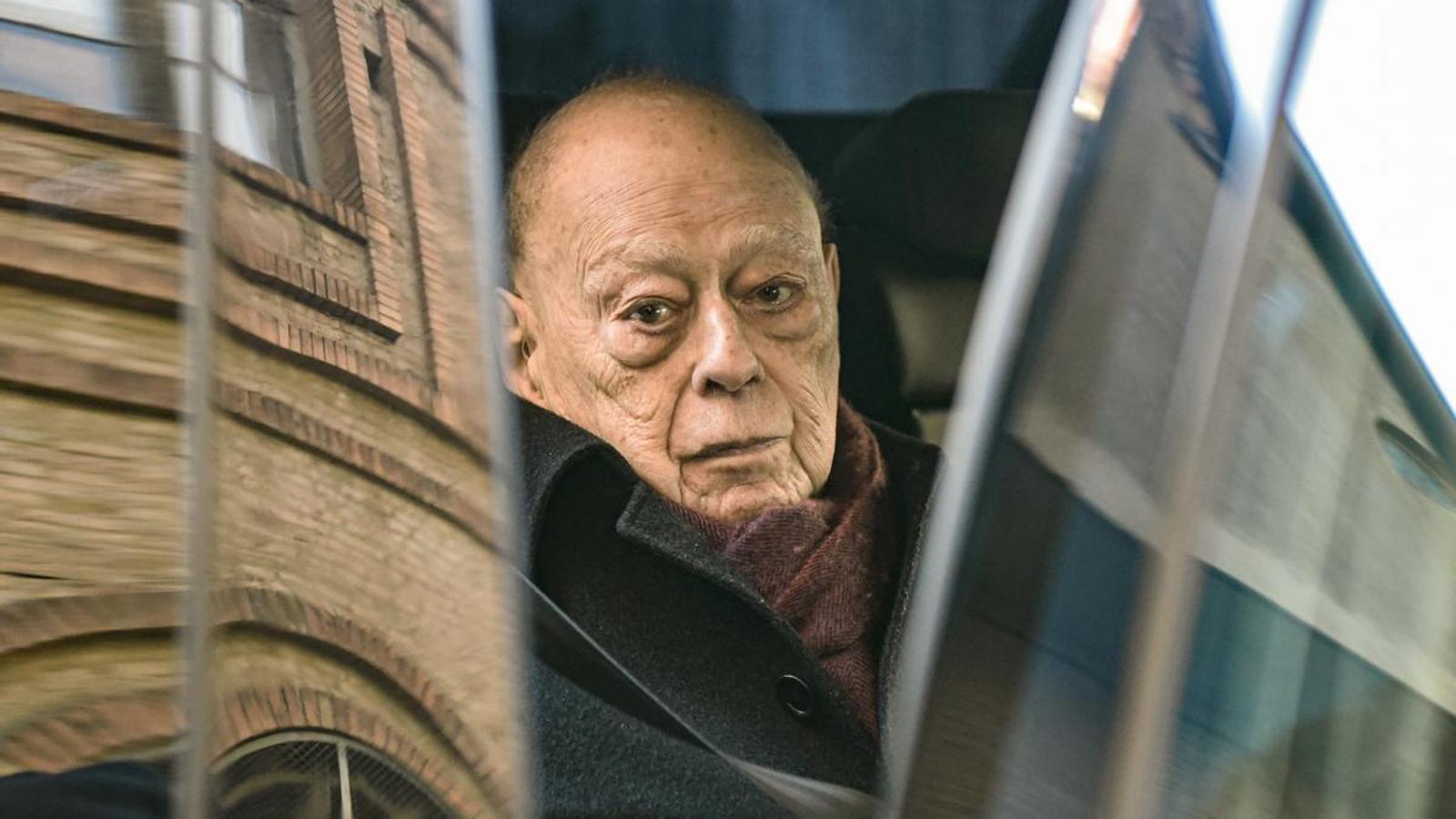

In the end, Jordi Pujol's citation before the National High Court has been a kind of black whim (a capricho by Goya, who already denounced the abuses of power of the Spain of his time) by the court presided over by magistrate José Ricardo de Prada, who has not bothered to hide much his complacency in making the former Catalan president go through this grotesque episode. “The court does not want to fall into ageism,” he let slip, in an evident tone of mockery. In Madrid they have corroborated what had already been determined in Barcelona: that Pujol was not in physical or psychological condition to appear before a court. “Personal contact was essential,” insisted judge De Prada, light years away from acknowledging that he and the court had committed what in legal language is known as a monumental fuck-up. The most elementary common sense warned that the maneuver, besides being ugly, had no sense or content, beyond a gratuitous exhibition of power in greater abundance by ultranationalist Spain. But the most elementary common sense is something that cannot and should not be asked of the Spanish judiciary's leadership, because they are exempt from it.The episode recalls several things about justice in Spain. One, that slow justice is not justice and that when it takes ten, twelve, or fourteen years to judge things, it can happen, for example, that one of the accused (against whom, on the other hand, nothing has been proven) is already dead or in very poor health, as in this case. On the other hand, for the protagonists of the Kitchen case, which is being tried in the same National Court, the delay has been good for them to fuel the attacks of feigned amnesia with which they appear to testify. The mention of Kitchen leads us to the following questions: the different yardsticks of Spanish justice are also political. And this explains why De Prada and his court have fun mocking Pujol, while in the Kitchen courtroom, Judge Teresa Palacios takes care of interrupting or discrediting questions that might inconvenience Rajoy, De Cospedal, or Sáez de Santamaría, who not only do not receive any kind of vexatious treatment but arrive and leave with their heads held high. Placing justice at the service or against one political interest or another is one of the worst forms of perversion of the rule of law.This episode has also been a reminder that what we call the Catalonia-Spain conflict is the result of the sum of two weaknesses: that of Spain, which has never managed to complete, not even with the Civil War, its Jacobin and homogenizing national project (one state, one nation, one flag, one king, one language), and the weakness of Catalonia, which not only has not managed to get out of this national project of Spain, but also, to a large extent, does not want to get out of it. Spanish nationalism is boastful; Catalanism is victimist; both are resentful and rancorous. Nothing ever advances, or advances very little. Jordi Pujol is a complete personification of all this.
