The students in the black hole of the internet
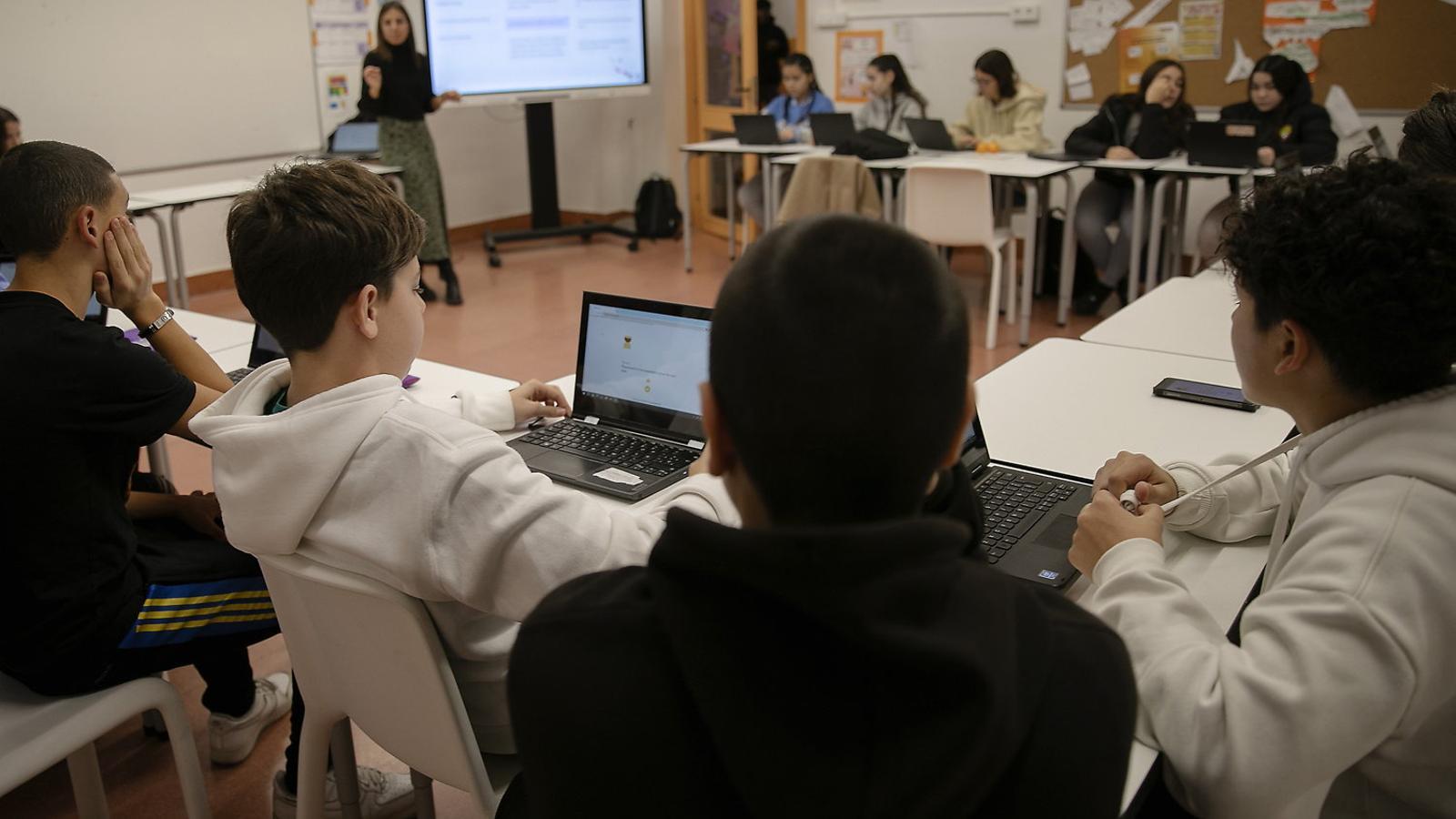

It seems that the political response to the current challenges in education is going through a double surveillance, digital and police. Much has already been written about the police surveillance on these pages. On the other hand, not so much about digital surveillance. We can say that we have an education If we scale the class problem to geopolitics, a couple of weeks ago Palantir became a topic of general concern following the publication of the 22 techno-fascist and ethno-supremacist theses of its director, Alex Karp. The initial result was an increase in the stock market value of the software company at the service of war and institutional surveillance. These strategies apply to companies linked to AI or to tech companies such as Amazon, Alphabet (Google), Meta, Tesla... That is, for the large digital monopolies within what has been called "platform capitalism", a capitalism that extracts economic and financial returns from human behavior through the analysis of all the digital data we produce on the different platforms and services, including those linked to public education. Through these infrastructures, daily life and geopolitics become communicating vessels, as do entertainment, education, and war.
In the late seventies, analyst and consultant Roger Clarke was already talking about dataveillanceIn the late seventies, analyst and consultant Roger Clarke was already talking about Technofascism), impossibility of self-determination, and the creation of a climate of permanent suspicion. Nowadays, companies like Palantir advocate for exploiting all these uses and returning to the internet of after World War II, when it was part of the industrial-military complex; a dual consideration of connected digital technology as an information and warfare weapon.In other words, it all seems like a chain of blunders: official contracts with North American monopolies of neoliberal acculturation, non-negotiable technological protocols, textbooks that lead students towards the black hole of the internet without guidelines or any kind of guidance, an import of digital tools without prior literacy from both teachers and students, and a justifiably tired teaching staff that goes on strike and which, instead of being listened to and reinforced, is compensated with police surveillance in classrooms and more software. compensated with police surveillance in classrooms and more software.
For all this, attention must be paid to alternatives. The French government has decided to migrate public IT to Linux (free software). This transition will affect all digital layers: workstations and operating systems, collaboration and communication tools, antivirus and security software, artificial intelligence and algorithms, databases and storage, cloud infrastructure... The objective is clear: to disengage from dependence on North American imperialism, its companies, and its public-private war framework. Denmark, Germany, the Philippines, India, etc., are also progressively doing so.If we want to ensure the preservation of democracy and different forms of cultural and educational sovereignty, we must look at the relationship governments establish with these monopolies. Why do the Spanish and Catalan governments not break contracts with AWS (Amazon), Google, or Microsoft? In the educational field, there are initiatives such as the DD suite project by XNet (2022) within the framework of the Plan for Privacy and Democratic Digitalization of Educational Centers, or the Linkat project by the Generalitat (2006, stable version 2023). In 2025, the Responsible Digitalization Plan of the Generalitat de Catalunya began, but it is far from responding with political force to all these economic, educational, and cultural evidences. If in 2020 it was possible to pivot towards the digitalization of education in a model that was more of a “digital tsunami” (an unconsidered emergency transformation) than a migration, if in five years AI and the digital economy linked to war has been able to cover a planetary dimension, a responsible digitalization plan must be able to respond to the urgency of the moment.
