The Sagrada Família: obstinacy and longing

In the eighties of the last century, being naturally sociable and living in the US, I had a story to tell about where I came from. It included two observations about Barcelona that are shocking today. One was the ethnic homogeneity of the population. During a sabbatical in Barcelona in '81, an Indian student I was supervising for his doctoral thesis visited me. He was Sikh and, therefore, covered his head with a turban. When he went out on the street, people stared at him, and someone even asked him where he had gotten a bed of nails to sleep on. The other, which will be the focus of this article, was that, referring to the phenomenon of tourism in Catalonia, I noted that it extended along the entire Catalan coast except in Barcelona, where it was absent. Tourists avoided it with almost surgical precision.
But this was about to change because in Barcelona, and in Catalonia, the democratic recovery was accompanied by a yearning for international projection that materialized in the promotion of the Olympic Games, an event that signified an extraordinary showcase of the city to the world, and also its opening to the sea.
The next step was to enter into synergy with another phenomenon that was developing at the same time: the drastic decrease in the cost of air travel for people. Barcelona found itself excellently positioned to benefit from it. And from this came an air connectivity that was very uncommon for an airport that is not a hub for any major airline, and with it an explosion of visitors: congressmen and conference speakers, others who travel for business reasons, students, expats, digital nomads, and, above all, classic tourists who come for cultural events and/or the general attractions of the city. I would say that the connectivity that we all make possible is especially important for the first two categories and is therefore key to attracting investment.
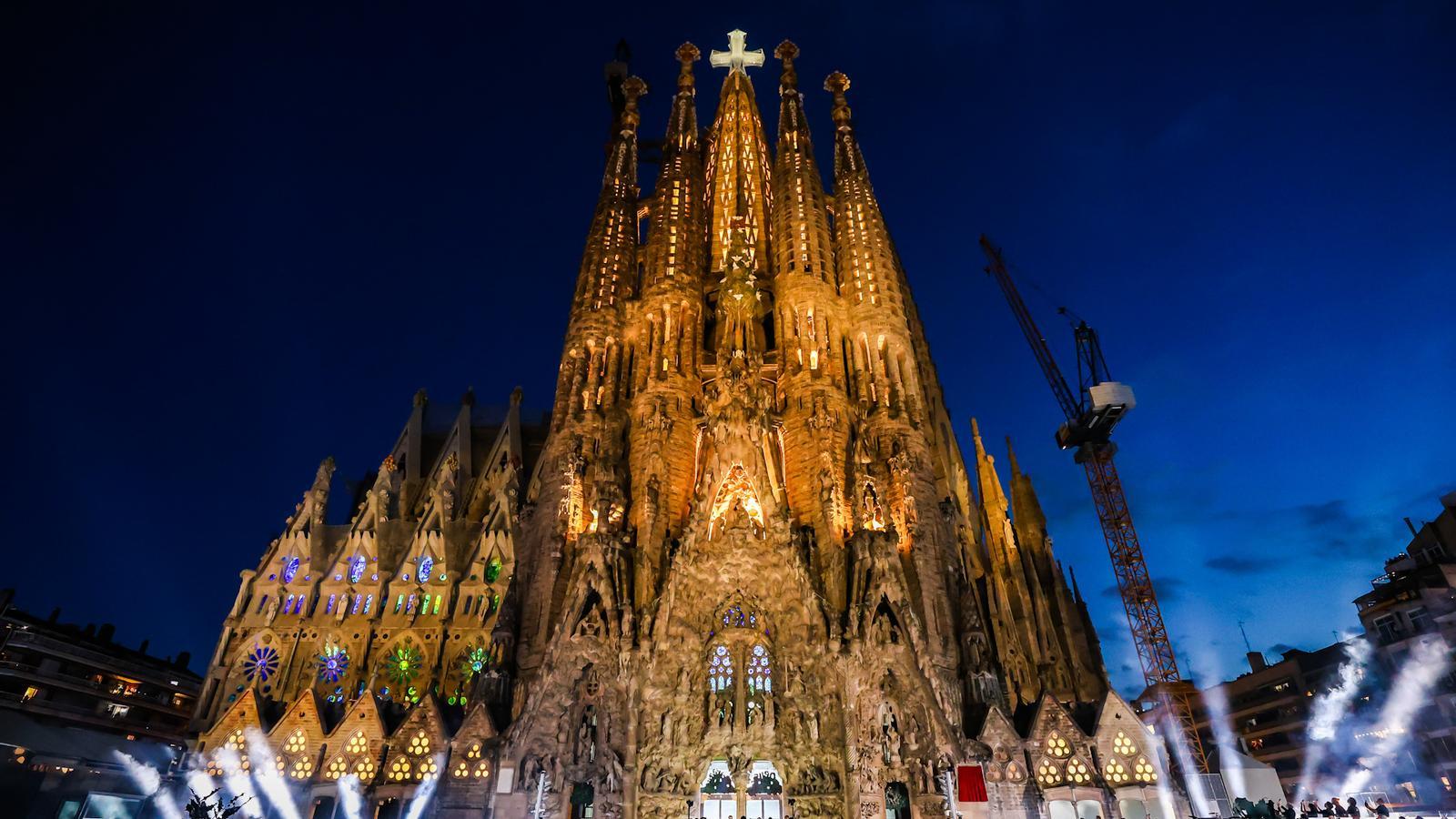
I arrive at the Sagrada Família, a project driven by the stubbornness of a genius and the remarkable tenacity of his successors, but which my generation has seen grow to its current state thanks to funding provided by tourism. The inauguration of the Jesus tower, in the presence of Leo XIV, was breathtaking and a source of pride for those of us who share Barcelona's longing for brilliance. It is the consecration of the Sagrada Família as one of the great global icons of a city. An icon does not directly lead to the emergence of a global center for research or technology in a city (but the European headquarters of RMIT, an Australian university, is in Barcelona because its architects collaborated with the Sagrada Família). However, if there is the will, it helps. Perhaps Paris, a capital city, would be Paris without the Eiffel Tower. But I dare not say the same in the case of Barcelona.
The impact of the Sagrada Família could further increase Barcelona's attractiveness as a tourist and business destination. Whether this translates into a net benefit and broad public support will depend on whether we do, and do well, what is necessary to control costs. I mention three aspects:
1.- Perhaps it was a mistake to try to alleviate pressure on areas with recognized tourist attractions by creating scattered attractions throughout the city. It has not worked and has spoiled local attractions like the Carmel batteries. Wouldn't it be better to recognize that there are tourist areas that require specific urban planning treatment, while preserving those not designated as such for residents? Obviously, adequate compensation would also be needed for affected residents in tourist areas. Venice is pointed out as what we don't want to be, but if we manage with a little grace, there's no danger. The parallel in Barcelona is metropolitan Venice, which, in terms of residents, is 50 times larger than that of the canals.
2.- Refinement and good taste are vital, for us and for a quality external impact. The model is the exquisite inauguration ceremony of the Sagrada Família. The antithesis, the proliferation of souvenir shops. They are horrible. During the Olympic Games, municipal regulation made it possible to dignify the image of the city and its businesses. I know efforts are being made to repeat this. Let's hope they bear fruit.
3.- A complex issue is tourist housing. They take up 1.5% of the city's ordinary housing and, due to their scattered nature, cause disproportionate disruption. But they also cover a third of the tourist overnight stays in a city that deliberately hosts major trade fairs which are now fully booked. This is worth considering. It is not a minor issue.
