The good idea of the end of the debate
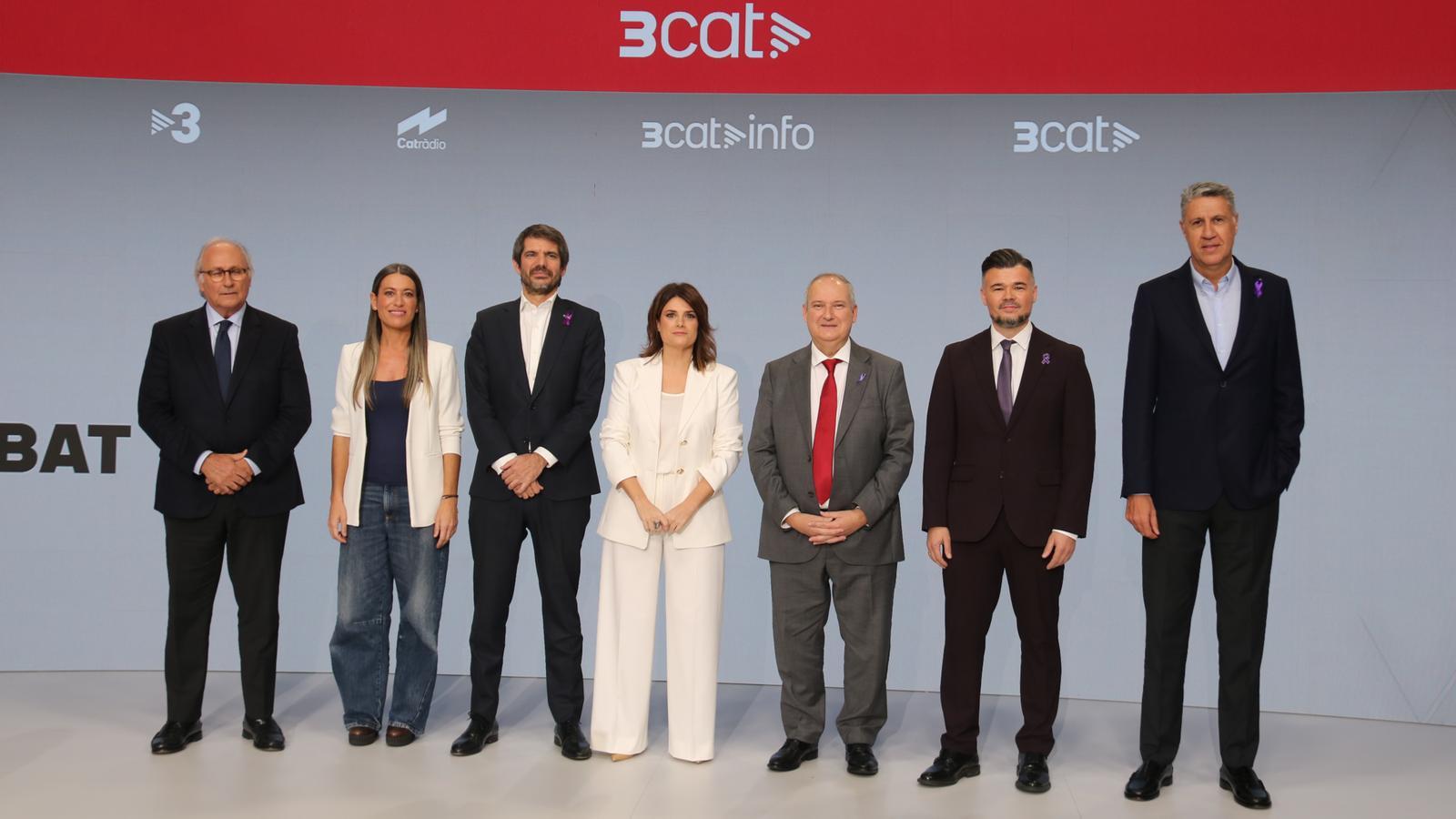

With only a few minutes left before the end of the TV3 election debate, Ariadna Oltra created a certain suspense to make one last proposal. Seeing the good tone among the candidates when they arrived at the studios, she took advantage of this cordiality to ask them to highlight a virtue of the opponents sitting on either side of them. It was a success: the climate of the debate at that moment was optimal. The candidates seemed to be enjoying the discussion, as if they had forgotten about the cameras. From their reaction to the idea, we interpreted that they had not been warned about this exercise. If it is prepared, it has no grace, because it is about making them flee from the learned talking points.
Albiol praised Rufián's persistence. D’Aizcorbe highlighted that “he is a serious person”, a quality highly appreciated by those on the right. The ERC candidate extolled “Hereu’s biblical capacity to be liked” and was generous with Albiol, highlighting his tenacity and the merit of being out on the street all day “and he doesn't care who he talks to”. The mayor of Badalona could not hide his excitement. It was like an injection of self-esteem because, euphoric, he wanted to celebrate that harmony: “High five! High five! High five!”, he asked Rufián, raising his arm so they could shake hands. “Don't get carried away...” the other one retorted with nonchalance.
Hereu had it easy with Urtasun considering they were both ministers at the table. He referred to the pleasure of working with him. Of Rufián, he highlighted his passion for political communication “which does its pedagogy”. Urtasun was reciprocal with Hereu, valuing his affable temperament in the council of ministers, and since he expressed it with a certain nostalgia, Hereu boldly pointed out: “The important thing is that we will continue!” The representative of Comuns-Front Ampli praised Míriam Nogueras: “When she wants, she is a person capable of dialogue”. This “when she wants” hid a certain resentment. In Nogueras' turn, she excused herself by saying that she did not know the Vox representative very well, and taking into account that he had spent the debate reading the papers word for word, she noted sarcastically: “He brings everything very well studied and he is very diligent”. The diminutives were of a killing condescension. With Urtasun there was also a reproach in the preamble: “Unlike other people in your party, what we have agreed upon, he has fulfilled”. Aizcorbe, from Vox, was the last one. From Nogueras, he highlighted her ability to rectify, because before she did not greet him and now she does. And about Albiol, he summarized it by saying that he only had good words for him.
In a campaign that feels like Groundhog Day, with strategies oriented towards discredit and in a very tense social context, the exercise broke the norms. It humanizes politicians without performing comedies or infantilizing the audience. It allows one to intuit the temperament of the candidates and, at the same time, detect the cracks. Now that televisions are trying to maximize the profitability of political tension, it is good to remember that disagreement can be managed in a healthy way. That is what democracy is about. And the viewers were grateful for it.
