The discarded ones

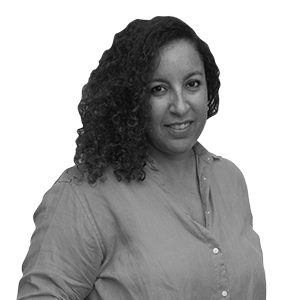
There is an age from which, we have been told, women stop being relevant. We disappear, we become invisible just because we have stopped being fertile. Reproduction or death, tied to the imposition of the duty to be pleasing to the eyes of men. We don't feel that way, of course, it's how they continue to represent us in high-impact media: series, films, advertising. The idealization of youth (to which many of us wouldn't return even if crazy), the creation of needs derived from the desire to preserve it at all costs, and the lack of women's voices telling us the real and honest experience of what it means to grow old create a terribly cruel imaginary for those of us who are still alive past forty, fifty, sixty. Smear yourself with creams, exercise, starve, mutilate yourself.
This week, after watching several films in a row starring young women who were so beautiful the screen seemed to devour them, I suddenly envied their carefree, natural fullness. I never felt that way, myself, and not because I didn't fit the beauty standards they transmitted to me (two very different ones, to complicate things even more: in the village they wanted me fat, white, with long, straight hair and a lowered gaze, here they told me I should show my collarbones, my cheekbones, that I should get a tan and that if I wanted to embody the exotic fantasy I had to show off wild curls as if I had just landed from the furthest desert), but because when I was a teenager I didn't feel young, beautiful, desirable, or worthy of being loved. This discomfort, the lack of self-love, connected with the dominant culture in the West for decades: the need to modify the body (as if 'the body' were not me), to control its shape, its size, its appearance, its weight, its height. Only with the years and the experience of real and profound love sustained over time have I understood that a person's attractiveness has nothing to do with the parameters given to us by the beauty industry. A kilo more or five or ten changes nothing, neither do the inches on the hips or waist. And yet, the persistence of messages that tell us we are ugly in one way or another every day, every minute, every second can have a devastating effect. Bah, ignore it, my feminist reason tells me, but the force of culture is very great and sometimes you fall, simply. You fall into the trap of wanting to be someone else.
I was tempted to go to the beautician and say: “Take all this off my face.” “What?” she would have asked me, “the wrinkles, the spots, the imperfections?” No! I would have answered her: "Take away the frights and the anxieties." That time when I had just landed on the other side of the world and I received a chilling call: “It’s a malignant tumor and it’s inoperable”. Or the day the pediatrician ripped my stomach open in the emergency room for my eldest son’s gastroenteritis: “If you had brought him any later, you would have lost your child”. Or the sleepless nights when they are little and you don’t know how to calm them. Or the longing for skin when I’ve had to travel without them. I looked at my face in the mirror and decided that no, that nothing needed to be removed, that I carried a map representing the geography lived, the anxieties and the pain but also the joys, the joy of living. The first laugh of the two children I have had, the first steps, the first words and all the ones that followed. And in the same way that I enjoy reading in the faces of others the years they have been in this world, and I find the natural ones that tell stories infinitely more beautiful than the plastic ones that mummify the grimace, just as I find people of all ages pleasant, I also want mine, my age, to be seen. What I have lived and all that I still have left to live.
