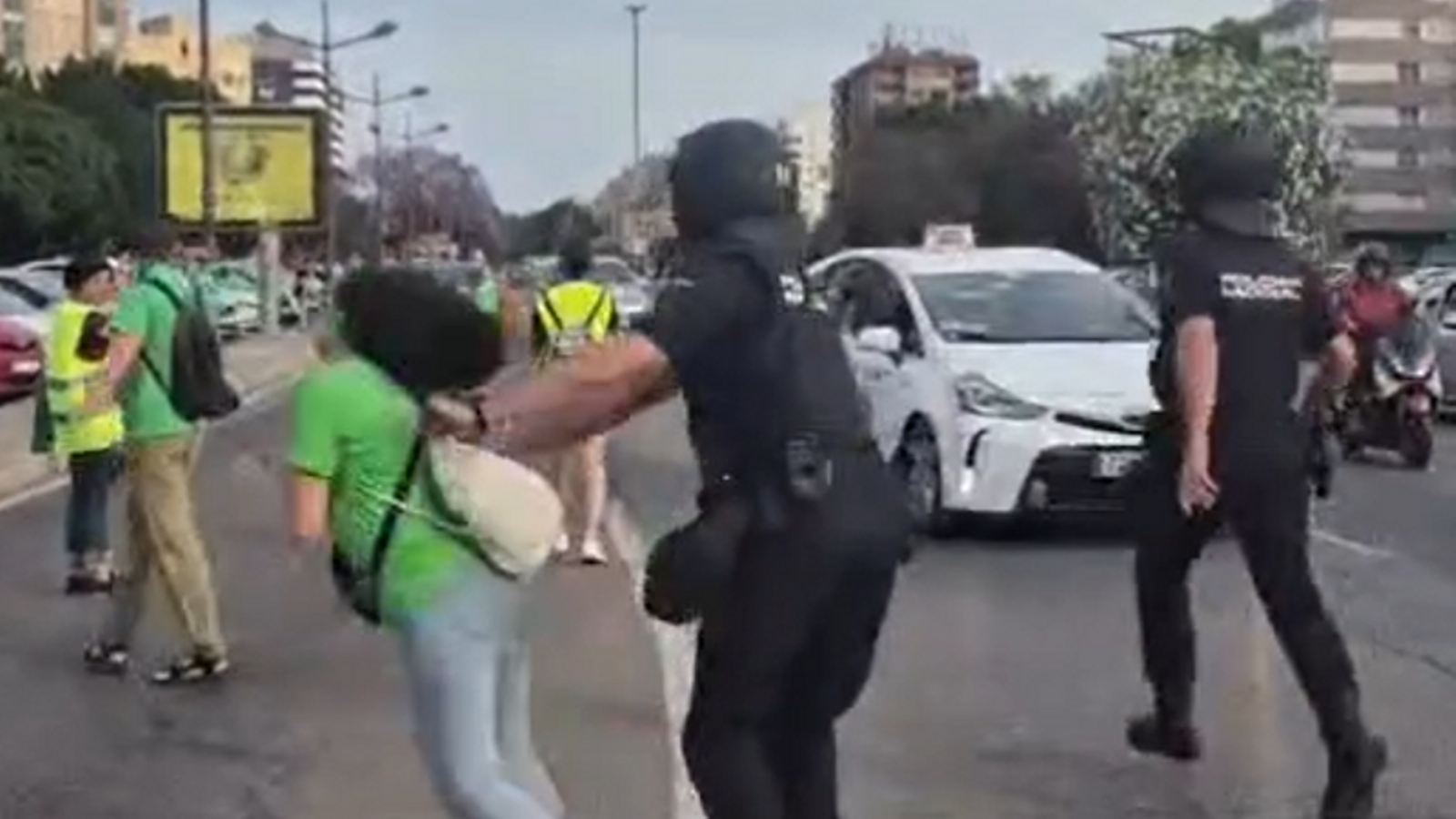

A national police officer shoves and throws to the ground a person who was peacefully protesting in Valencia. He does so like a bad policeman, with disproportionate force for the situation, which was a protest by teachers who were going to block a street's traffic. A bad policeman and a bad person: he makes her fall like a coward, from behind, without the woman being able to see him coming, and from the blow he delivers, he breaks her nose when the woman hits the ground with her face. But even more outrageous is the response of the police unions to the Spanish government delegate, Pilar Bernabé: “You will not investigate anything [...]. You already assume someone's guilt [...]. If you go out to block streets, you expose yourself to being kicked out.” In reality, there is not much to investigate, because the policeman's guilt is demonstrated in the video. And it is one thing to expose yourself “if you go out to block streets” and another is to have to endure the gratuitous violence of someone who feels impunity because they are uniformed.There are police officers who complain about the same thing: that the times when people saw a police officer and obeyed without a word are already history, that now people confront them and have violent attitudes, because it's not just that they no longer instill fear, but they have also lost authority. But then comes the vicious cycle: for them to be believed, the verbal and physical attitude of some officers is increasingly surly, and even more preemptively aggressive, by default, to begin by demanding respect, which only increases the distance between two worlds that barely touch or know each other anymore, such as that of citizens and that of the police, because people only see police officers passing by locked in cars and we assume they are behind the street surveillance cameras. And thus, another link between citizenship and public authorities is being severed.
