The beach
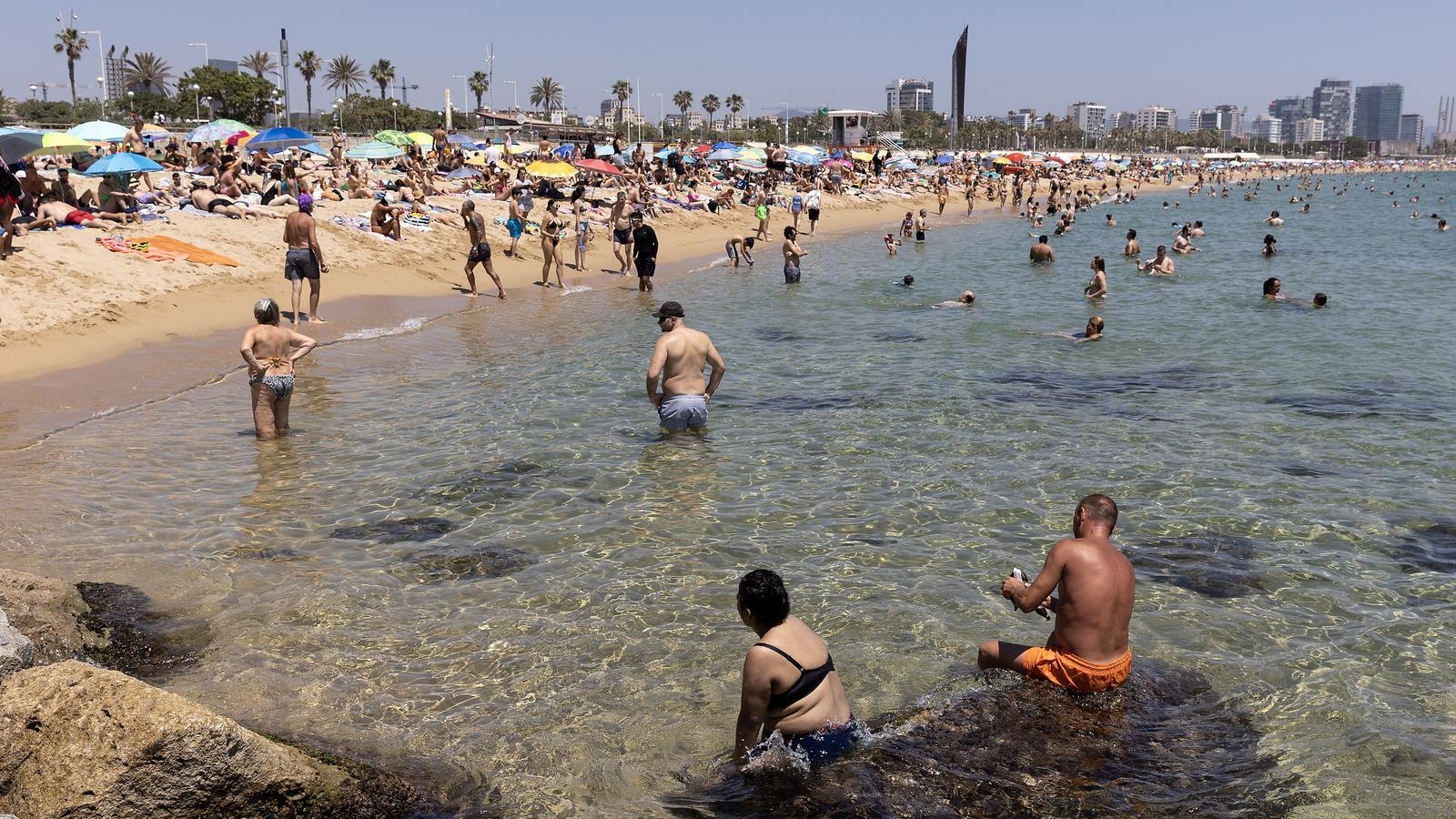

Perhaps you will read this on your way to the beach, or sunbathing on the sand. For me, the beach transports me to childhood; that's why I like it so much. I learned French at El Golfet, making friends with the grandchildren of my grandparents' friends. My grandmother loved to practice the language on the sand and looked for any excuse to socialize with French retirees rather than Catalans. I believe she always thought that France was a civilized country, a refuge to escape to if the dictatorship returned. Walking down the coastal path, looking for shellfish on the rocks, and jumping over the waves before retracing the uphill path was my life. Now I go there to play paddleball, to read, or simply to listen to the waves so I don't hear anything else.For urban planners, the beach is a magical place. In the city it is very difficult, and it is becoming increasingly difficult, to mix people. Everyone tends to move where they feel comfortable with their tribe, and with the polarization between the rich and the rest of urbanites, urban boundaries are expanding. But the beach is different, and that fascinates me.Each beach is a world. I choose them according to how much I want to keep my distance. In Castelldefels and Gavà, you can sit by the sea, on a kind of natural step carved by the waves, which allows you to place the book on your lap and read without back pain, while you dip your feet in the salty foam. In Barceloneta or Vila Olímpica, you can get there by metro, which is a luxury within reach of very few seaside environments. In Maresme, you can travel along the beaches by train, with no more interference than a nautical club or a beach bar. And in the coves of Empordà, you can sacrifice towel space for a rocky scenery, with steep reds and green pine forests, which invite you to swim along the rocks without losing proximity to the mainland. You can be packed in like anchovies, but you go into the water and you can see fish and seaweed with cheap glasses.
Curiously, I like beaches from which no architecture is visible. I prefer to see rocks, dunes, or spontaneous grasses rather than apartments or hotels. I also don't like it when there are sun loungers, even though Italy and the French Côte d'Azur have started to popularize concessions to private, priced clubs with very expensive restaurants right by the sea. If the rich can afford a boat, let them leave the sand tax-free! The value that beaches bring in terms of recreation, health, and coexistence cannot be paid for even with the most expensive municipal fee in the Mediterranean.Finding an anarchic hole in the sand, making a small mound to rest your head and planting your towel there is a luxury that no other public space allows. You can't make your own space in squares, nor in public gardens, which make it increasingly difficult to have a picnic on the grass. But sand is this wonderful material that erases memory every day and allows people with completely different tastes to settle in. They are small, very ordinary, spontaneous gestures that allow each tribe to make their home to measure, for a few hours. And, on the way back, the metro fills with salty bodies, car seats get wet, and houses fill with sand that has come stuck to the towel.The beach is a very primary and at the same time very versatile space. When the sun no longer stings, nets, goals, or gymnasts are set up there, turning the sand into a large sports center without the need for maintenance. Some municipalities have slightly elevated promenades that allow you to walk a few centimeters above the sand and sit on sinuous stairs to spend hours simply watching the spectacle of seeing entertained people. And, at night, there are still brave ones who swim there or simply gather without having to pay the terrace tax. Can you imagine an urban square with uses as intense as beaches?Barcelona has 33 hectares of beaches, qualified urbanistically as a "port system", and accompanied by green areas, parks, and gardens, which allow separation of the first built line from the water. I believe that if Barcelonians tolerate the built density, it is because of the possibility of going down sloping streets at any time, getting into the water, swimming for a while, and looking at the city from afar, from the sea. Amidst the waves, one realizes that the true summer climatic refuge is these rugged coasts. Then it is understood why, after the war, great sea baths were promoted on the beaches, as popular spaces to promote hygiene habits in the midst of cities devastated by bombings and with very precarious domestic spaces.
