The Archive's Hill
-
CAT -
CAST
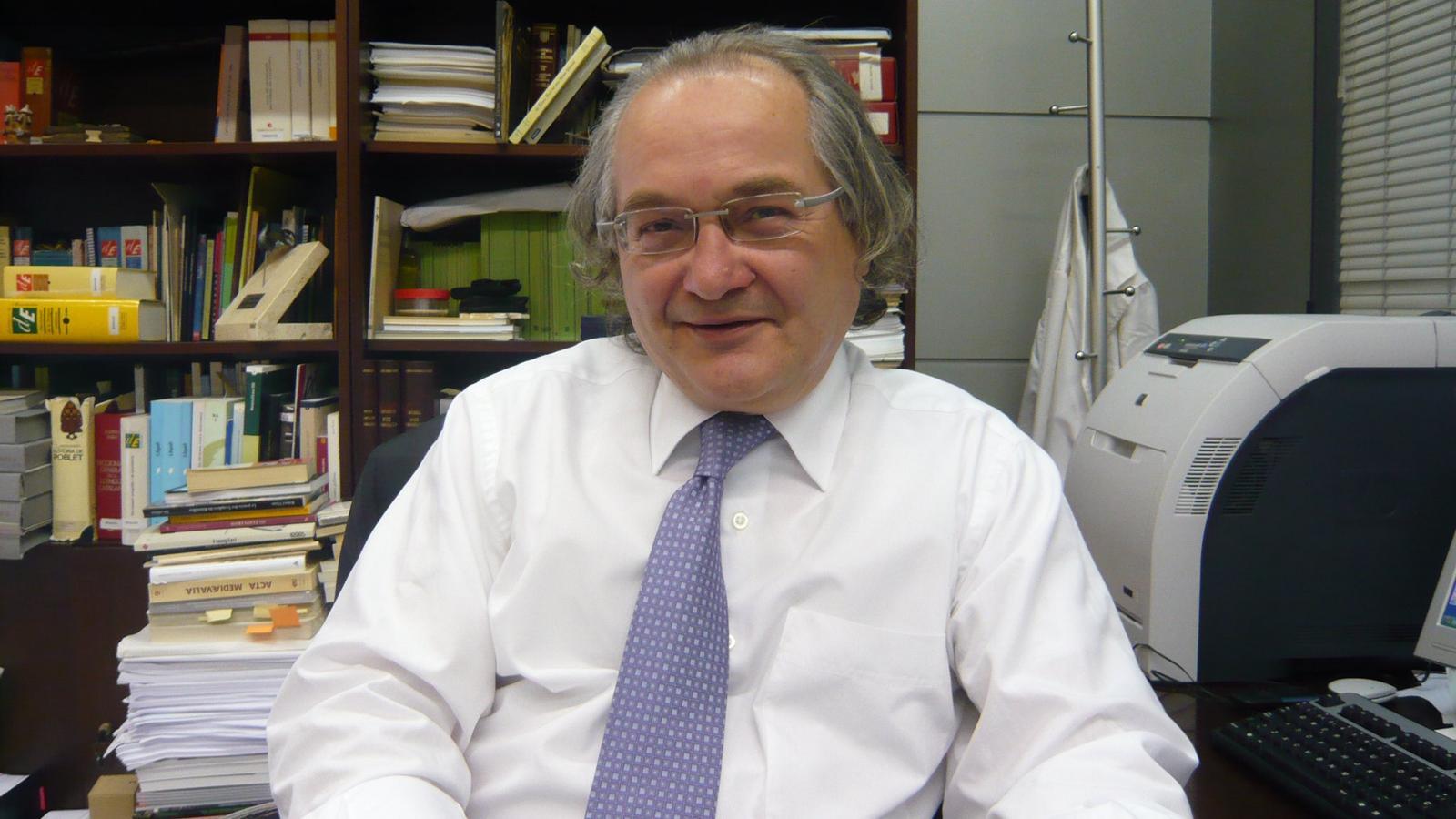
Josep Maria Sans i Travé has died. The media have buried him with brief notes. Fame has long ceased to go hand in hand with erudition or a job well done. It follows other winding and unpredictable paths. Perhaps it has always been this way. A few months ago I received his last book, with a dedication included, "Dos bàndols, a novelized recreation of the post-war atmosphere in Solivella, the town in Conca de Barberà where the Xipella subdialect is spoken and where he was born in 1947. He soon left for Barcelona and beyond. But he returned often. He was a restless man all his life, an intellectual of action with a political soul. An "orden" Catalanist with a shrewd look, with a controlled impetuosity.
In my time as a young cultural journalist, we became good friends, especially from the moment he became director of the Arxiu Nacional de Catalunya (ANC) in 1992. We made a curious tandem. He, always hyperbolic, called that period 'the heroic times'. Well, they were hopeful, energetic, and involved a few skirmishes. The most talked-about and longest-running was that of the Salamanca papers, which finally arrived at the archive's headquarters in Sant Cugat. But not all of them, of course: happiness is never complete. That day, despite the national euphoria that emanated, Sans Travé celebrated it by biting his tongue, as 'a victory for Spanish democracy'. Very Pujol-like, right?
He remained at the head of the National Archive for 23 years, as many as Jordi Pujol at the head of the Generalitat. Before that, he had been head of the Archives Service, back in 1980. He was therefore part of the first batch of professional civil servants in the developing Catalan administration. When he joined, everything was in its infancy. Specifically, the National Archive was a kind of warehouse on the corner of Villarroel - Consell de Cent, in a building that had been a school and the headquarters of the newspapers Solidaridad Obrera
and Solidaridad Nacional. The director whom Sans Travé succeeded was Casimir Martí, a priest and historian specializing in the labor movement and the religious history of the 19th and 20th centuries, a historiographical partner of Josep Benet. Martí and Benet were two titans of Catalanist cultural Catholicism with a social soul. Something that practically no longer exists today. Pujol had made them his own.
Sans Travé represented a generational leap. He had trained at the University of Barcelona and then, within the College of Spain, at the University of Bologna, where he obtained his doctorate with the extraordinary Vittorio Emanuele II prize. He also held a scholarship from the Higher Council for Scientific Research to investigate at the Vatican Secret Archives and in other foreign, state, and Catalan documentary centers. He therefore had a solid training as a medievalist and was a good connoisseur of archival reality.
The process of the Catalan Templars: between torment and gloryThe Trial of the Catalan Templars: Between Torture and Glory.
Extroverted and inquisitive, Sans Travé was neither tortured nor lived in glory. He worked hard. For him, life and work went hand in hand. The National Archive was his home. He also directed the edition of the "Dietaris de la Generalitat de Catalunya (1411-1713)": 109 original volumes (preserved in the Archive of the Crown of Aragon, actually the Royal Archive of Barcelona) grouped into 10 modern volumes, published between 1994 and 2008. And he continued the publications of the Noguera Foundation, created by the notary Raimon Noguera in 1976, half a century ago, one of these small great cultural institutions.
Sans Travé, a modern, active, and committed man in the service of a past he wanted to keep alive. He has passed away. We will miss his contagious enthusiasm.
