Submarines: a strategic necessity

-
CAT -
CAST
Electromagnetic waves do not travel through water; sound waves, however, do, through pressure changes. Electromagnetic waves travel at the speed of light, 300,000 km/second; sound waves, at 1,500 km/second, and, being mechanical, their speed varies depending on the conditions of the medium through which they propagate, the water temperature, etc. Sound waves exhibit the effects of reflection and refraction, meaning they do not travel in a straight line, unlike electromagnetic waves in air or a vacuum.
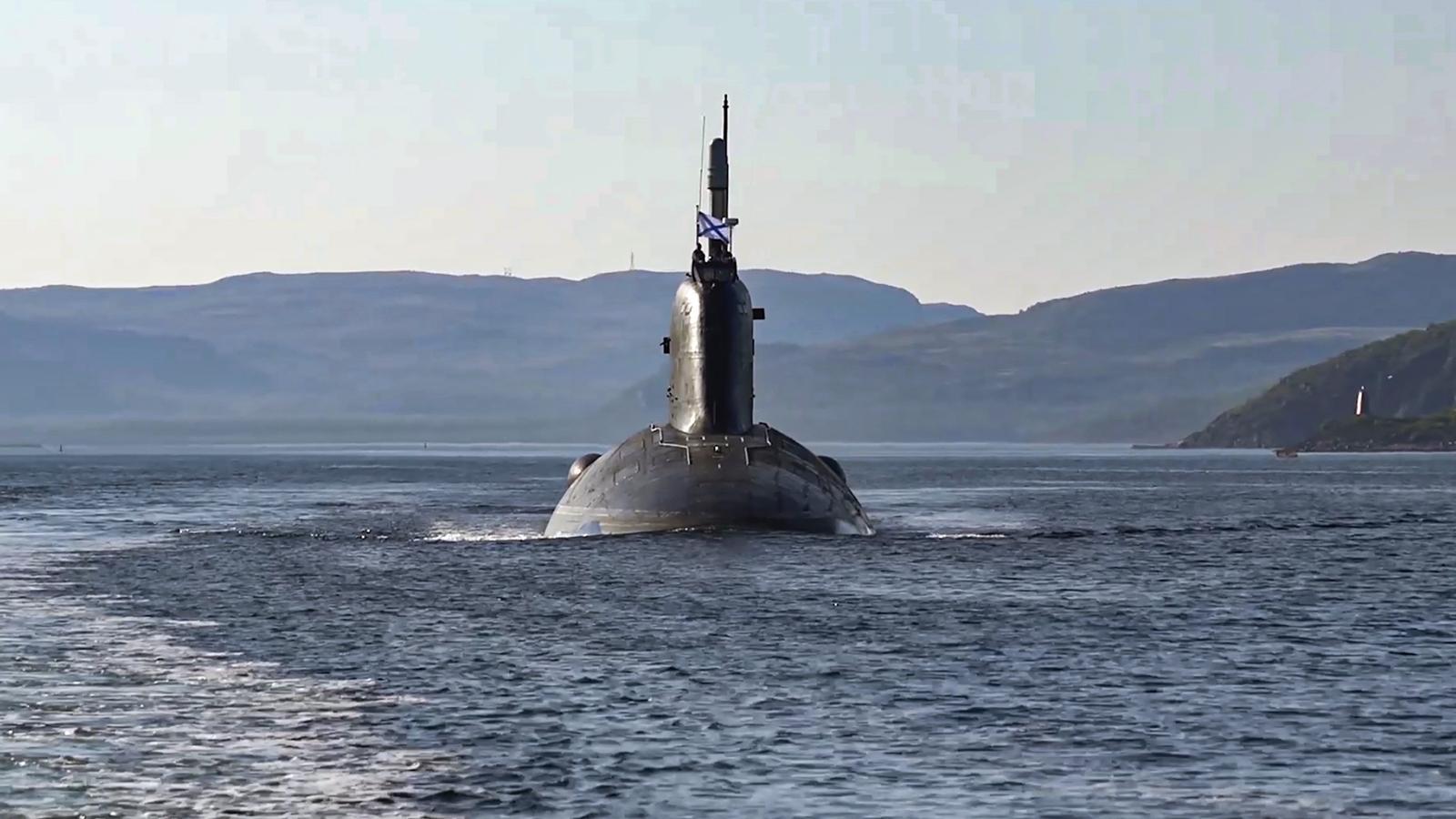
Therefore, the quintessential offensive naval weapon is the submarine, because it is difficult to detect. Whenever there has been a dominant naval power—the United Kingdom in the 19th and 20th centuries, the United States in the 20th—the counterpart—Germany and the USSR, respectively—has developed a submarine force for reasons of efficiency: it allowed them to achieve high military capability with a reduced investment.
The submarine, operating in a dense medium like water (1 g/cm³), is subjected to immense pressure, 10 kg/cm² at a depth of 100 m. This presents a significant challenge, compounded by the lack of oxygen necessary for the operation of the propulsion systems, which are internal combustion engines. Until the arrival of nuclear submarines in 1957, which do not require oxygen, submarines were powered by electric batteries, which were charged by diesel engines operating when the submarine was on the surface.
In the 1920s, Spain possessed Holland-class submarines of British design. With the arrival of the Republic, the Minister of the Navy, Giral, and his successor, Rocha, launched a new program for D-class submarines, a Spanish design, which was formalized in 1934. The Civil War and technical and industrial difficulties prolonged construction for twenty years, and the boats were delivered to what the navy referred to as a "navy."
Spain built the Daphne and Agosta conventional submarines from the 1960s to the 1980s, identical to French designs, constructed in Spain with materials and equipment imported from France. When, in the 1990s, Spain decided to build submarines for export, it agreed with France to collaboratively design and build a new conventional submarine, the Scorpène. It was a technical and commercial success and was sold to Chile, Malaysia, and India. The submarine industry is significant. A conventional submarine like those mentioned costs around €500 million and ensures a stable market due to the buyer's dependence on the builder.
In 2002, the decision was made to build a new submarine for the Spanish Navy, the S-80, without collaboration with France. This decision harked back to the autarky of the 1930s. France has continued to sell Scorpène submarines. Spain, after its separation from France, has not exported any submarines…
In recent years, the S-80 submarine in Spain has been built without design specifications, construction processes, or equipment and systems standards validated by experience. As a result of the abrupt end to collaboration with France, cooperation with French suppliers of essential equipment and components—hull valves, ballast blowing systems, hydraulic systems for rudders, etc.—was severed. Navantia has been forced to specify systems and seek out companies to manufacture them. It has taken 23 years to build the S-80 prototype, and design problems have necessitated lengthening it by 9 meters and increasing its displacement by 500 tons.
A submarine requires a dual capability: the technical capacity to design and build a complex vessel, and the industrial capacity, with a network of companies capable of manufacturing the necessary equipment and components. Reliability is essential in a submarine because it determines its safety.
Finally, a submarine's combat system – detection, information processing and management – requires a capability proven by experience.
It is in these two areas—the reliability of the equipment and components and the effectiveness of the combat system—that the S-80 program has shown weaknesses. Spain lacks industrial ecosystems with consolidated capabilities in these two areas.
Spain has a threefold experience: a) the self-sufficient design and construction of D-class and S-80 submarines, which has resulted in cost overruns and excessive delays; b) the construction of submarines with a third-party design and imported equipment and systems, as in the Daphne and Agosta programs, which has satisfied the internal need for submarines but, lacking ownership of the design, has not been able to be exported; and c) shared design and construction with a state and industry with proven capabilities, and sales to third parties within the framework of this collaboration, as has been the case with the Scorpène program of Navantia with Naval Group, from France, which is an experience that has been technically and commercially successful.
This last alternative has yielded better results than the other two in terms of product quality, technology transfer, and market share. In this area, Spain has only two potential industrial partners in Europe: it must either resume collaboration with France or negotiate an alternative with Germany or, potentially, with Sweden, which recently won the contract to build submarines for Poland. There are political and industrial arguments for and against each option, but the decision is crucial.
The European defense market is evolving towards integration, supporting alternative c) for future submarine programs. It is vital to bear this in mind now that the attitudes of the US and Russia mean that the strategic autonomy of the European Union is more at stake than ever before.
