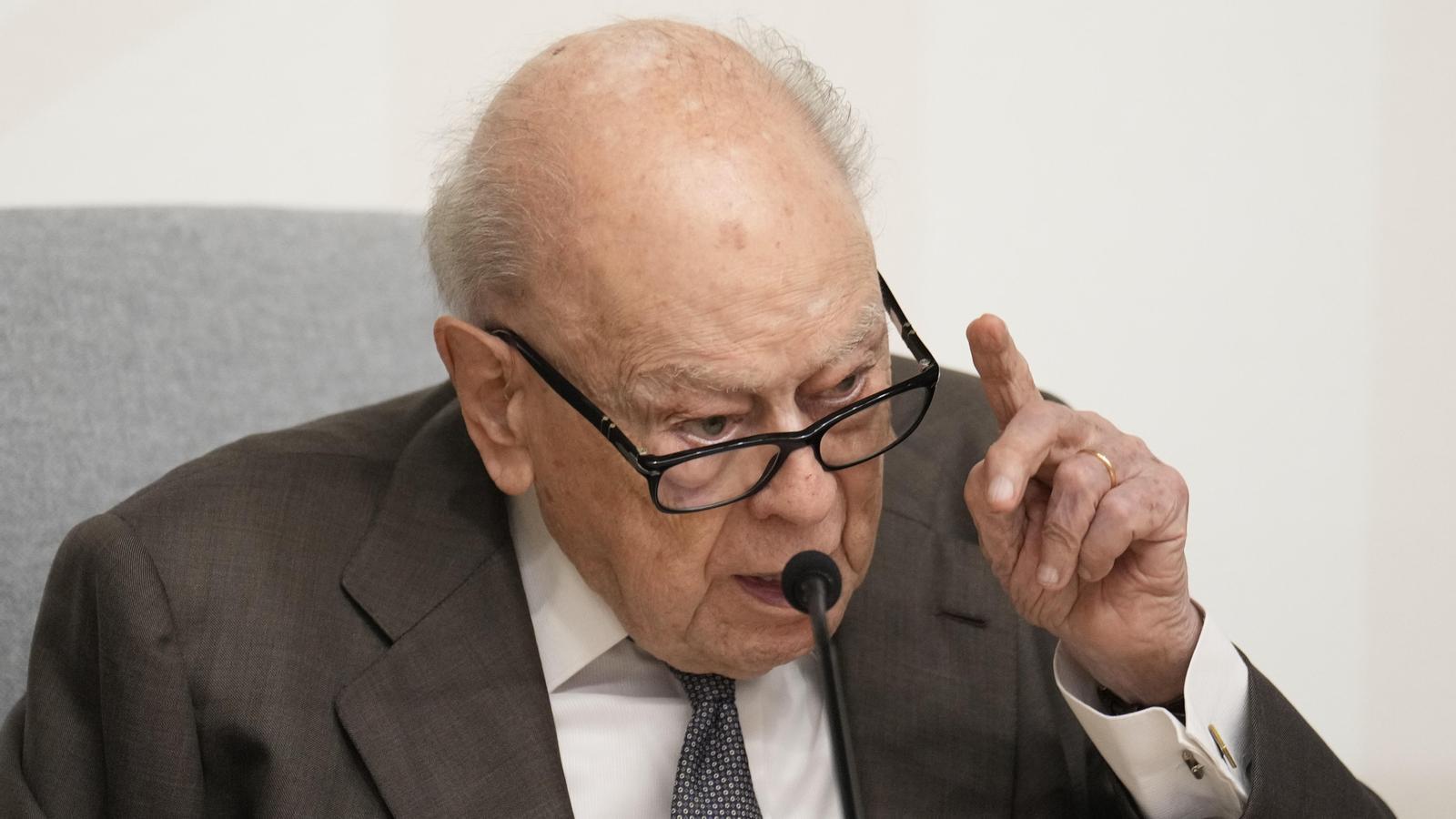

The praise that President Salvador Illa has dedicated to Jordi Pujol and Convergència has done a good to the public life of the country.
Let not the perspicacious worry, for we have already realized that it is easier to praise a disappeared party and have the decency not to make firewood from the fallen (convergent) tree than to praise a rival party, and it is easier to speak well of a 96-year-old former opponent than of a young, promising, and active one. Surely we agree that if Convergència still existed, the PSC would be reminding them in every debate about the 3%. And that Illa has sought, from day one, to position himself in the convergent center: the one of getting down to business, of industry, of the internationalization of companies, of public healthcare, of Christian humanism, of co-responsibility in the governance of Spain, and of direct contact with the Crown; in other words, well-understood Catalanism; that is, non-independentist. What he will not capture, of course, is the charisma and epic of a figure who will go down in history as one of the fathers of the contemporary nation.
But adding and subtracting sincere acknowledgments and electoral opportunism, hearing a socialist president speak courteously of Convergència and Pujol has had, at the very least, the virtue of returning to politics, for a moment, the nobility of the human factor and the objective recognition of the opponent's merits. Because convergents and socialists shared almost all the political power of the country for decades, but that was more than a political battle: it was a cultural war, a cold war in which many socialists lived better against Pujol. There are still some of them: resentful because, against all odds, Pujol won in 1980 and did not stop until 2003. These would never have thought they would hear a socialist president praising pujolism.
