A sentence on Spanish democracy
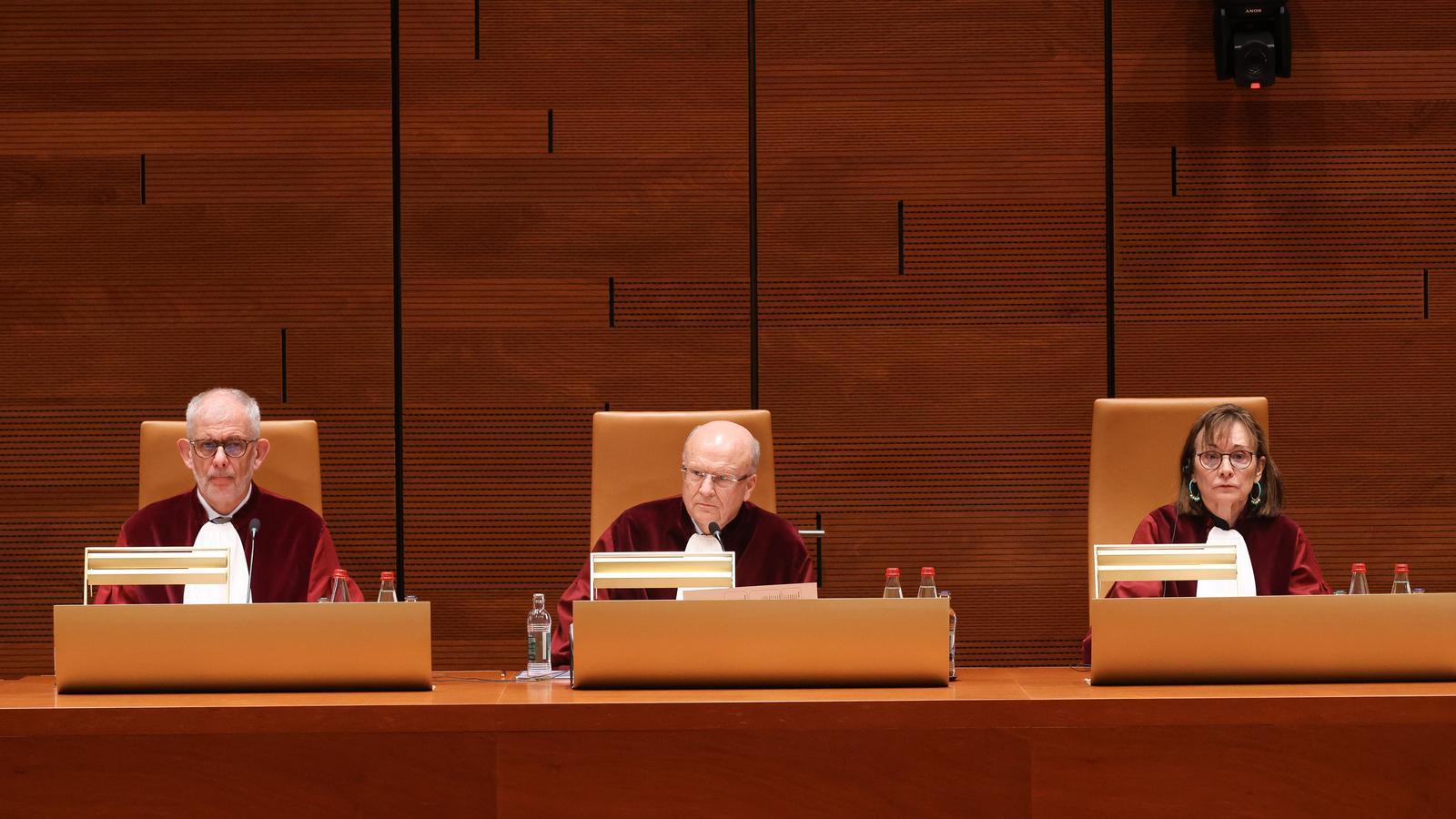

The judgment of the Court of Justice of the European Union (CJEU) is a stark reminder that the trial of the Procés was a charade where everything was seen: false testimonies, which everyone knew were false, were given with impunity; prosecutors were seen reciting from memory what the police officers summoned to testify were supposed to say; defense witnesses were questioned by the court; defense evidence could not be presented to support the veracity of the defendants' statements; for the first time, private prosecution was brought by a far-right party; civil rights and human rights organizations suffered all sorts of obstacles in carrying out their supervisory task, and a very long etcétera of irregularities that resulted in a judgment confirming Spain as a country with political prisoners and exiles. Justice was not sought, but revenge for a mobilization (the ballot boxes of October 1st) that exposed the democratic shortcomings of a state that, faced with legitimate dissent, only knew how to resort to repression.The ruling, without explicitly saying so, encompasses all of this. And more: Spain lost its full democracy status in the index of The Economist, and became a flawed democracy, precisely because of the response it gave to Catalan independence, a brutal response in all aspects: police and judicial, but also institutional and political (King Felipe VI's speech on October 3rd, the application – invented on the fly – of Article 155). It became clear that Spain has a serious internal problem: years later it regained the label of full democracy, but the development of events has shown that it is a term that is too big for a state where the police fabricate false evidence against the enemies of the ultranationalist right, where citizens are spied on with programs like Pegasus (recently we have learned about the cases of David Fernàndez and Carles Riera), where a rapper has been in prison for more than five years for a satirical song, where the gag law is never repealed, or where just yesterday two activists in Mallorca who had painted slogans against tourist saturation were arrested and accused by the Civil Guard of belonging to a criminal gang.Or a state, also, in which justice not only acts in part, but refuses to apply a current law such as the amnesty law, now also reinforced by the CJEU ruling. Predictably, now the Constitutional Court will rule in favor of the appeals for protection filed by exiled pro-independence leaders convicted of embezzlement for the organization of the October 1st referendum, and the Supreme Court will try to torpedo it, because the high Spanish judiciary does not even try to conceal the political affiliations of judges and prosecutors. The CJEU magistrates are obviously also aware of the political content of their ruling. They, however, have no interest in favoring some political parties over others: rather, they say that what is at stake in Spain is democracy itself, and the rule of law.
