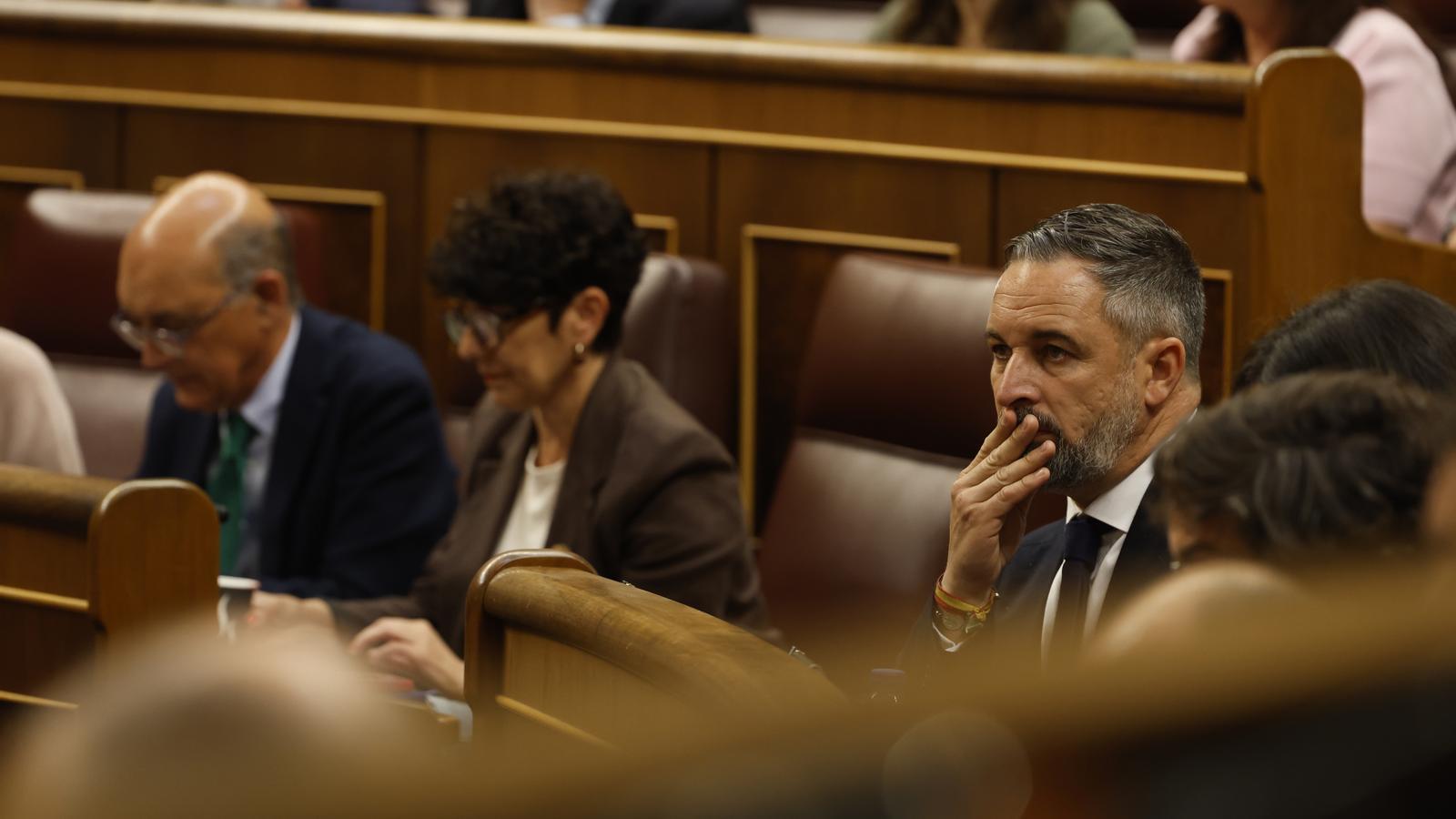

The slogan of national priority, like almost all the rhetoric of the Spanish ultra-nationalist right, is a copy of part of the doctrinal arsenal of Trumpism. In this case, the original is America First, which was one of the slogans that led Trump to the presidency of the USA, along with Make America Great Again that Trump has embedded in the visors of his depressing baseball caps, and which with its initials gives its name to the MAGA movement. Nothing new under the sun of ideologies and reactionary discourse: external and internal closure, withdrawal, hatred or suspicion towards that and those who come from outside, and exaltation of a handful of traditionalist values that function as the chrome of a supposedly lost prosperity, but which in reality never existed.Slogans like “first the locals” are by-products of politics, crude distortions of liberalism, in which ideas have been replaced by emotions: fear, rage, hatred. This is what the far-right feeds on, and this is the broken genre that the Popular Party has bought (has bought again) from its partners and adversaries in Vox. The acceptance, even with nuances and tug-of-wars, of “national priority” represents, as explained in this newspaper's editorial, a very important, indeed definitive, concession by the PP to xenophobic, racist, and supremacist discourse. From the PP, they always know how to find some euphemism to mitigate their genuflection before Vox and, in this case, they discuss (pretend to discuss) to link "national priority" to roots and not to nationality. But the underlying issue does not change: what the PP is doing is giving coverage and legitimacy to a racist and xenophobic proposal from the far-right.From here, some feign surprise or cheat with non-existent parallels. It must be said: neither Bildu, nor Podemos, nor ERC, nor Sumar represent in any way, within the left, anything equivalent to what Vox represents from the right: a party that claims, for example, the legacy of Francoism and that makes frontally unconstitutional proposals, such as this one of national priority, which also defies the EU Treaties. If we want to know how the PP relates (and is likely to continue relating) to Vox, we just have to review how it does so in the autonomous communities where they already have dealings: right now, in Extremadura and Aragon, after obstructing governance for half a year, they have agreed to form governments in exchange for draconian political invoices that the PP will have to pay little by little. In the Valencian Country and the Balearic Islands, the PP has spent two years in government with the support, from within or from outside, of Vox: every vote that is to be carried forward in the Balearic parliament or in the Valencian Courts requires a negotiation from scratch, with political prices and soaring interests. It is legitimate to think that, if the PP maintains such a difficult partner (it has alternatives in most communities and municipalities), it is because, deep down, the political project of the PP and that of Vox are indistinguishable.
