Put Barcelona on the map
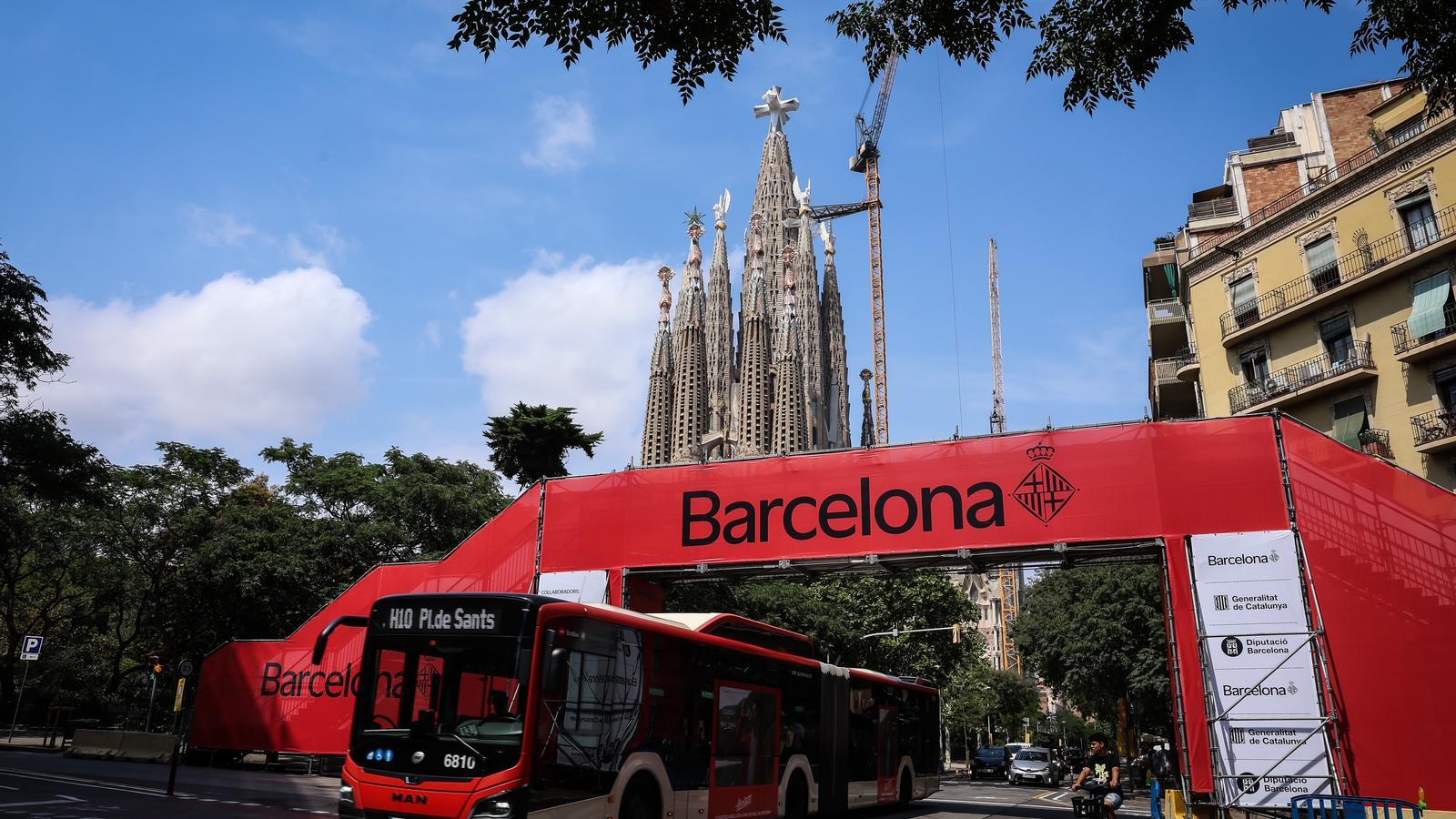

As a cycling enthusiast and city resident, the start of the Tour from Barcelona generates contradictions in me that perhaps bear some resemblance (saving distances, so no one gets offended) to those experienced by some Catholics with the Pope's recent visit or by addicts of nautical sports (there seem to be some) with the America's Cup.
Living in Barcelona, it is increasingly disconcerting to hear institutional leaders, who promote and invest millions of public euros in these events, recycle rusty speeches about "putting Barcelona on the map" and attracting millions of tourists, and present us with always excessively optimistic estimates (to put it mildly) of the economic impact of major events.
It seems that the PSC, now that it governs all administrations again, has decided to bet everything on the old manual from 1992. There was even, in the preparation for the Tour's departure, a call to form a body of volunteers with undisguised Olympic resonances. Despite its chiaroscuros, it is evident that the case of the Barcelona Olympic Games was a success story for the city, especially for the urban transformation that accompanied it.
In any case, what worked in 1992, in 2004—with the Forum operation and the dubious urbanization of the lower part of Diagonal—already had the air of a B-series sequel. Now, on another scale, the attempts are increasingly hollow. And they increasingly resemble the degraded version of major event politics that the Valencian PP, hand in hand with Rita Barberà and Francisco Camps, promoted.
It's been 34 years since 1992. Barcelona is well established on the world map: last year it received more than 16 million tourists and, recently, it has also received an intense influx of so-called expats and digital nomads who come to settle there. All this generates evident tensions in the life of the city. Especially in the real estate market, but also in mobility, cost of living, public space, and the commercial fabric. Much has been written about it and it is not worth insisting on it: you only have to live in the city to understand it.
This uncontrolled growth of tourist pressure is not exclusive to Barcelona. If the reader has recently walked through Valencia, they will have seen how in five or six years what happened to Barcelona in twenty has happened to it. It is happening in many cities in Europe and the world, and everywhere the residents' complaints are the same. Therefore, correcting it is complicated, because global trends are very strong, and local interests linked to tourism are very powerful. It will not be done overnight, but governments have instruments: taxation, regulation, investments.
What is absolutely incomprehensible is that the PSC, from Barcelona City Council and the other administrations it controls, is pressing the accelerator in the opposite direction to what common sense dictates: they seem to be seeking the definitive conversion of the city into an international showcase of iconic images in which it becomes increasingly difficult to live.
At different times, most of the other parties have participated in these celebrations directly or indirectly. But I would say that a few have already realized the mistake and are looking for ways to correct it. The socialists, on the other hand, continue to reoffend as if they only had a manual for governing the city, without the ability to adapt to the changing context.
The irony these days is great, and hurtful: while from the City Council and the Generalitat they talk about Barcelona as the world capital of sport and millions of euros are paid to host events, the development of new bike lanes has been abruptly halted, the Bicing is degrading, popular sports facilities in many parts of the city are in lamentable conditions, and a historic and popular club like Europa sees its sporting and economic viability threatened due to the lack of investment from the City Council.
The policy of major events has its audience, as everything that generates economic activity tends to gather social support. But as the city council's own data shows, there is growing criticism of tourism and, probably, the electoral effects of these international showcase bets will be increasingly negative. Now, the opposition must be capable of proposing an alternative, credible, and serious model, which goes beyond the anecdote, to outline another future for the city and for the country as a whole.
