Our bodies, their data
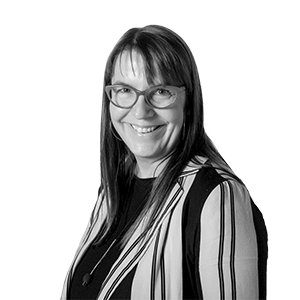
In the seventies, a young woman from Boston arrived in an indigenous village in western Mexico with a book in her backpack, Our bodies, ourselves, a manual for women to understand their own bodies and make decisions about their own health. Her name was Leslie Korn. In the village, they began to meet to share stories, questions, and practical knowledge about health and well-being. And what had started as teaching quickly became an exchange.In one of those encounters, Korn saw a man cutting green papayas and spreading the sap on freshly cut raw meat. The sap contains papain, a proteolytic enzyme that they used there to tenderize meat, but also to treat wounds and infections. A decade later, already at Harvard, Korn would end up studying proteolytic enzymes in a pharmacology laboratory. The same knowledge with two names: in the village it was custom; in Boston, science.The question is not whether knowledge is true –papain does the same job in both hemispheres–, but who has the authority to certify it and who signs it. Korn arrived at Harvard interested in community health and indigenous medicine, things that were then considered eccentricities. It is no coincidence that both are women's territories. A large part of Western medicine has been built on knowledge transmitted from hand to hand and from mouth to ear –that of midwives, that of healers, that of caregivers–, which was disqualified as superstition precisely when the profession was formalized and which has since reappeared, purified and with bibliography, within the canon. This knowledge has almost always traveled without an author's name. The laboratory that validates it is cited, not the hands that sustained it for centuries.One might think this is archaeology. It is not. Today, certification involves clinical trials, indexed journals, and increasingly, databases that feed algorithms. For decades, women were underrepresented in clinical research, and we are still feeling the consequences. We took one body, the male one, as the standard, and the rest has been considered a variation. Not going any further, this week we learned that the Spanish Agency for Food Safety and Nutrition published a report with nutritional recommendations for menopause in which some reference values – iron, vitamin C – came from studies done only on men, without even warning about it.But let's return to Leslie Korn, who fifty years after that first stay in Mexico continues to live and practice there. Her conclusion is that healing happens where culture and community intersect. I would add another aspect that is more difficult for us to accept, and that is that papaya does not prove that tradition is always right, but rather that the method should begin by listening to those who already know. Even when those who know do not have an office, publications, or research projects.
