One family, one vote?

-
CAT -
CAST
For some time now, a background murmur has been heard that speaks of an involution regarding women's rights. Among the notes of this cacophony, there are two that particularly concern me and are closely linked: discourses that question the necessity of women's suffrage and the phenomenon of tradwives (traditional wives) and stay-at-home girlfriends, girls who stay at home. Since the newspaper ARA already spoke about tradwives in 2024 in a pioneering way, I will focus on the former, which also seems the most dangerous to me. These involutionary discourses originate in the United States, but they are spreading like wildfire through Latin America and are beginning to reach Europe, as was seen in July at the foundational meeting of Mulheres Conservadoras de Portugal, a movement linked to the far-right party Chega and evangelical movements. Women's suffrage seemed a definitively established right since it began to be implemented, not without many struggles, at the end of the 19th century. Setting aside curious cases, such as that of 1776 in New Jersey, where the use of the word "person" instead of "man" in the suffrage law led some clever women to join in until the "mistake" was corrected, women's suffrage was generally achieved in the first half of the 20th century, with some bloody exceptions like Switzerland, where women did not gain federal voting rights until 1971. As for Spain, the controversy that pitted Clara Campoamor against Victoria Kent and which ended up establishing women's vote in 1931 is well known.Now, however, this right, which is basic for the construction of women's public voice and for their civic autonomy, has been called into question for the first time in more than a century. Ultraconservative groups in the United States, such as that of the evangelical preacher Doug Wilson, are attacking the nineteenth amendment to the Constitution, the one that legalized women's suffrage in 1920, considering it a "cancer of individualism." Curiously, when individualism guarantees universal male suffrage nothing happens, but when a law allows women to be considered individuals and grants them a voice, the forces of hell are unleashed.
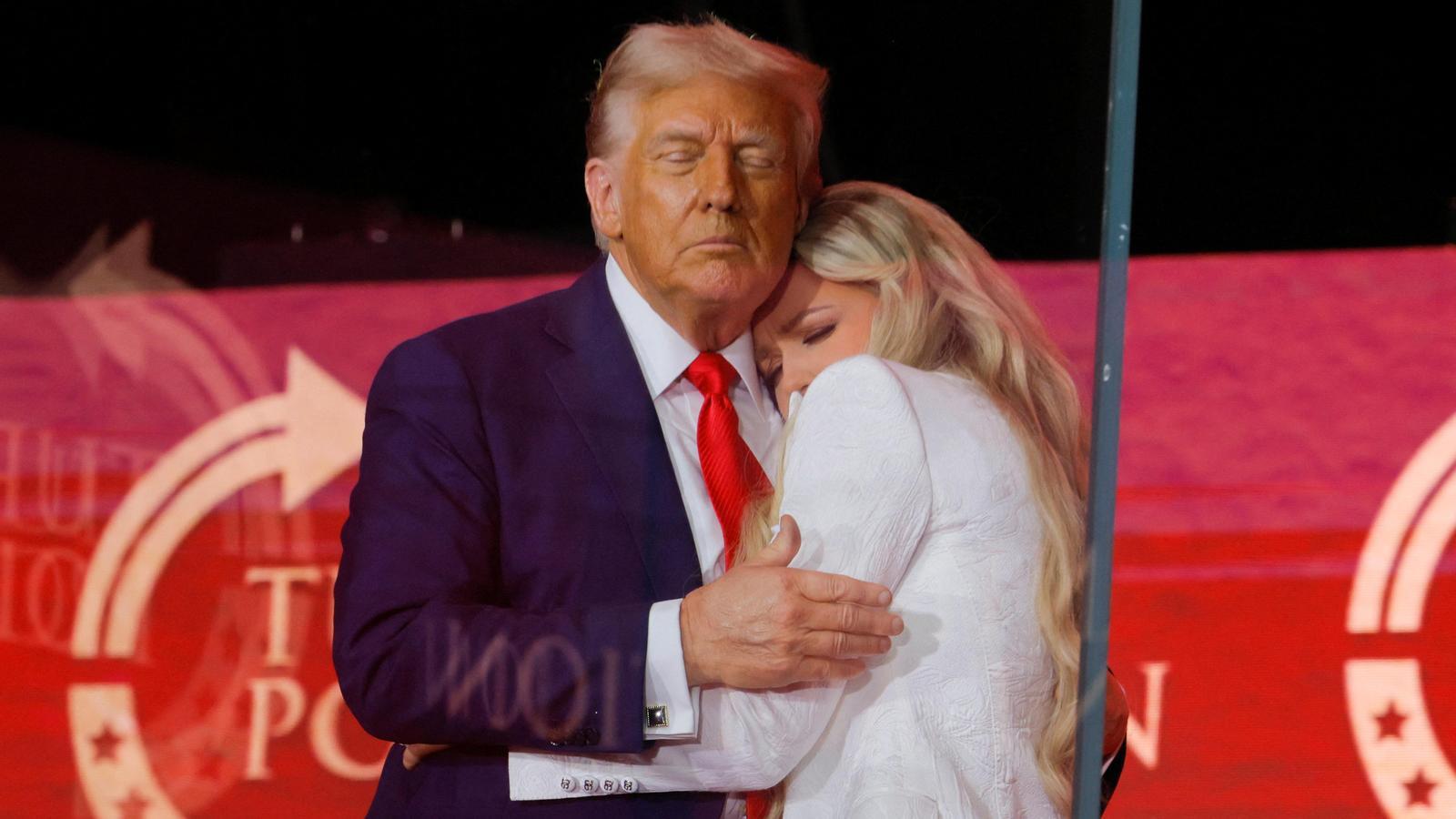
Another notable case is that of the followers (and female followers, because as Simone de Beauvoir said, patriarchy could not be maintained without complicit women) of Erika Kirk, Charles Kirk's widow, who claim that, as spouses are "one flesh," married women do not need to vote because the husband's vote already represents them. All this is accompanied by religious language, with which women's voluntary renunciation of the vote is romanticized as a form of surrender to the "divine plan." However, it is not clear what would become of single women in this scenario. Some voices indicate that the father or older brother could vote for them, and they do not consider the case, so frequent in the United States, of single-parent families where a single woman is the one raising the family. Nor is it known who would vote for Mrs. Kirk, who is a widow. These ultratraditionalist women, who recall Serena Joy from The Handmaid's Tale" in the process of building Gilead, practice a significant tightrope walk between their ideological discourse and their life practice, which often contradicts it, because these women have economic independence and a public voice, exactly what they want to deny to others. In Mexico, Javier Albarrán, a young politician from the PAN (National Action Party), also states that to strengthen the family as the axis of society, individual votes should be replaced by a vote per family, naturally represented by the pater familias. Once again, we should ask ourselves what would happen in that 40% of Mexican households without a father present. In Brazil, where the temperature is rising as the presidential elections of October 4th approach, political commentator Paulo Figueiredo, a known Bolsonaro supporter and grandson of dictator João Baptista Figueiredo, calmly stated that “women vote statistically very badly, especially single women”. Obviously, voting badly means voting for the left, a voting choice of a majority of women.What is all this noise? A weather balloon to test social tolerance? I think so, it's a textbook Overton window to test the acceptance of extreme proposals. According to Joseph P. Overton, when a political group wants to introduce an extreme idea, it chooses an even more radical one, repeats it constantly in the public space to desensitize society, and finally manages to pass the first one, which in principle would have been unacceptable, as a real possibility. So beware of weather balloons and Overton windows. For now, no one will take away our vote, but we are starting to discuss, I the first in this text, what should simply be indisputable.
