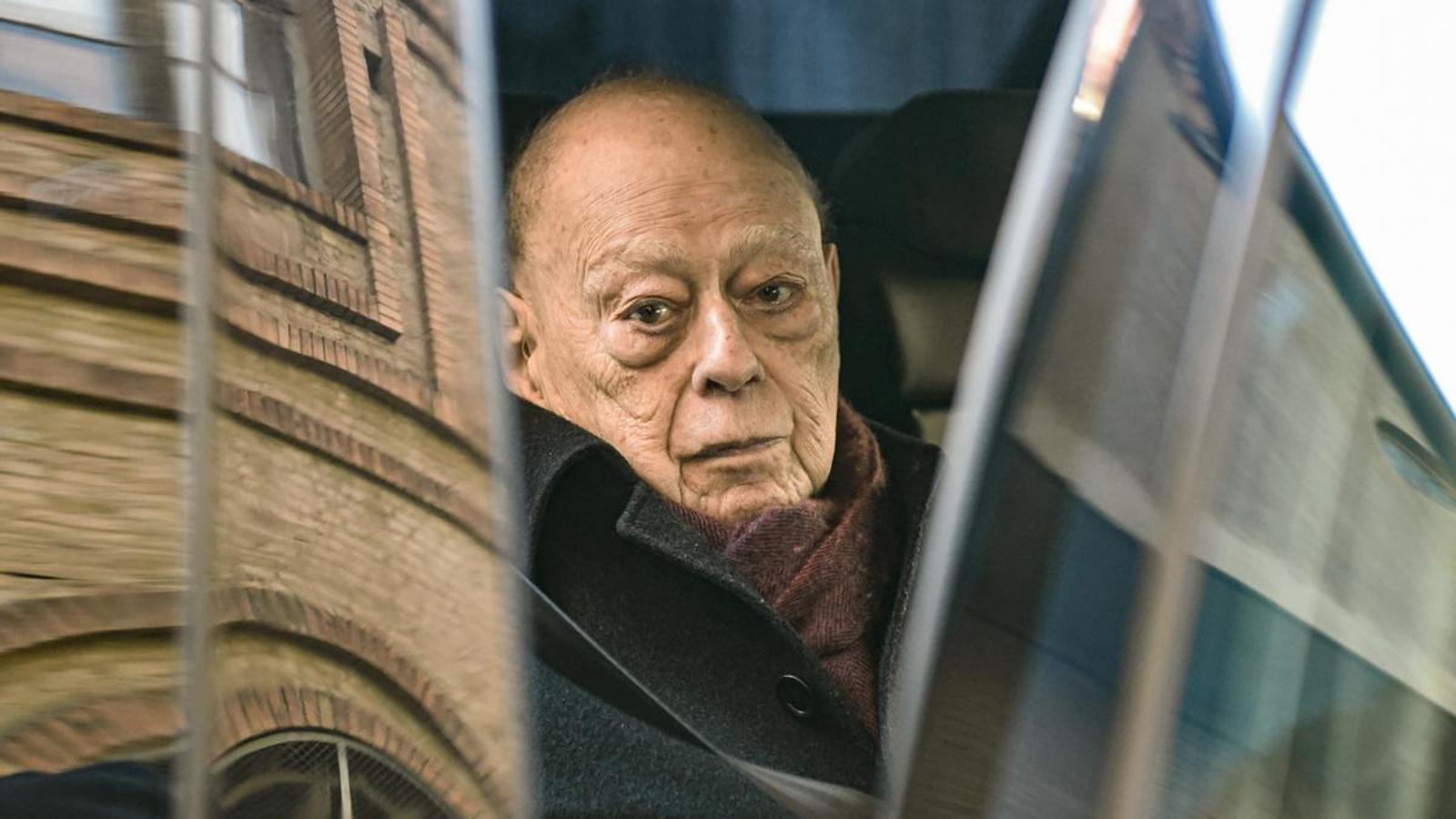

Jordi Pujol is testifying this morning at the Audiencia Nacional, in Madrid. At the beginning of the sessions, they didn't make him come, but today they did. Everyone knows why. Even President Illa has made it clear.
The court does not want it to be said that it has softened because the accused is 95 years old, walks with a walker, does not hear very well, and repeats himself. It does not matter that they know he is not in a condition to defend himself, as the forensic doctors already told them five months ago. The man who, after spending his life claiming he was not an independentist, ended up saying that he no longer had any reason not to be, because Catalans only had two options: either residual or independent, has to pay a price. When Pujol spoke of broken bridges, it was worth listening to two generations of Catalans, even if only to disagree. But if Pujol himself said it, perhaps there was no other choice but to move forward. And the State itself, which when he retired sounded him out to offer him a noble title for services rendered, took note.
The trial is ending and his name has barely come up in the five months of oral proceedings. That is why some people close to the former president (and optimistic) believe that bringing him to Madrid would only make sense if, after the examination he will undergo before the session begins, the judge ends up removing him from the case due to incapacity, a situation that would be a more desirable possibility for the court than having to acquit him.
It is the last trial of Pujol's life, but not as important as the one in 1960 before a military tribunal during Franco's dictatorship. Regarding the trial of history, the popular jury has long since separated the Pujol father of the homeland from the Pujol father of the family.
