Mali's Defense Minister assassinated in jihadist offensive
Two Catalans, who were part of a Spanish delegation of musicians, are confined to a hotel in the capital and are doing well
-
CAT -
CAST
BarcelonaMali's Minister of Defense, General Sadio Camara, died this Saturday in an explosive attack during the large-scale offensive launched by Al-Qaeda and northern secessionist groups against civilian and military targets. In the attack, three relatives of the leader who were at his home in the town of Kati, located about 15 kilometers north of the capital, Bamako, also died.
The assassination of Camara, 47 years old and in office since 2021, was one of the main members of the military junta that leads Mali. He was also one of the soldiers who participated in the coup d'etat of 2020 that overthrew the elected former president Ibrahim Boubacar Keïta. The following year, he overthrew another transitional president, Bah Ndaw, and intensified instability in this Sahel country, where jihadist groups have become entrenched.
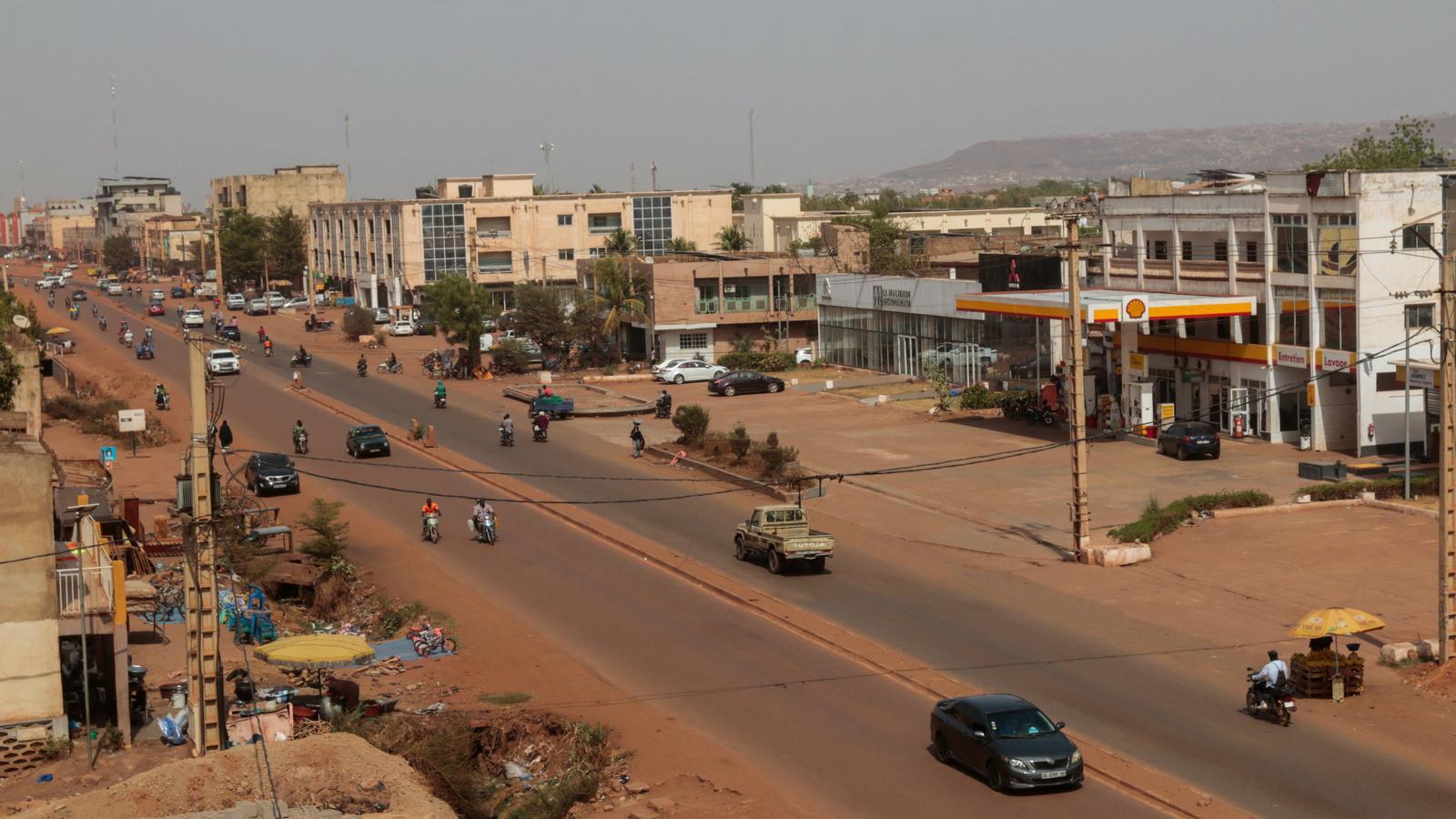
As a result of Saturday's operation, two Catalans who were part of a delegation of twelve Spanish music programmers had to confine themselves in a hotel in Bamako until this Sunday, when they were able to leave from the capital's airport towards Casablanca. The delegation was in the country to attend a festival called Hola, Bamako promoted by Casa África. Sources from this Spanish government institution to promote Hispano-African relations explained to ARA that all participants "are well" and that the two Catalans are the director of Guitar BCN, Judit Llimós, and the manager of Catalan-African musicians Javi Zarco.
Llimós explained that on Saturday, around five in the morning, they heard a first explosion and that, since then, they have been confined to the hotel. The offensive began at dawn. There were power outages, but, according to the Catalan woman, they were isolated.
The secessionist Azawad Liberation Front (FLA), which claims this northern region, and the Group for the Support of Islam and Muslims (JNIM, an Al-Qaeda affiliate in the Sahel) launched a coordinated offensive in the north of the country that culminated in the capture of the strategic city of Ki. JNIM carried out unilateral attacks against civilian headquarters and military barracks in Bamako, Kati, and other central cities, and attempted to assault the international airport of the Malian capital. According to the army, the offensive has been repelled, after hundreds of attackers were "neutralized" and it has assured that the situation "is totally under control". The government has decreed three days of night curfew in the capital.
The territory that is Mali today has been the intellectual and commercial engine of a succession of West African empires, famous for the thousands of medieval manuscripts of Timbuktu, the imposing adobe architecture of the Niger River valley, and a vibrant musical tradition that has attracted tourists from all over the world. But in the last fourteen years, there have been rebellions, jihadist attacks, the arrival and subsequent abrupt withdrawal of French forces, and several military coups.
Link with Russia
In coordinated attacks on Saturday, JNIM used car bombs and drones. The government confirmed the offensive by “armed terrorist groups not yet identified”, and assured that its forces were combating it. Even so, it gave no further details, which led the population to desperately seek information on social networks. And what they found was not encouraging at all: videos of the destroyed house of the Minister of Defense, General Sadio Camara, who was the liaison between Mali and Russia.
After the two coups d’état in Mali in 2020 and 2021, a military junta governs the country. This junta began to distance itself from the West and move closer to Russia, while the jihadist groups JNIM and the Islamic State spread throughout the country's regions. This led Moscow to become involved in the fight against jihadism in Mali. First, with the private security group Wagner, and later, with the paramilitary group known as Africa Corps, linked to the Russian Ministry of Defense.
Both JNIM and the secessionist group that participated in the offensive have expressed the desire for Mali to distance itself from Russia. "The attack is inspired by the example of Syria, when at the end of 2024 Islamist and rebel groups rapidly overthrew the regime, amid Western support and the neutrality of its Russian ally. Mali's future is open to all possibilities, and everything depends on the stance adopted by international powers," predicted an analyst from the country, who prefers to remain anonymous for security reasons.
