Gaziel, 1936
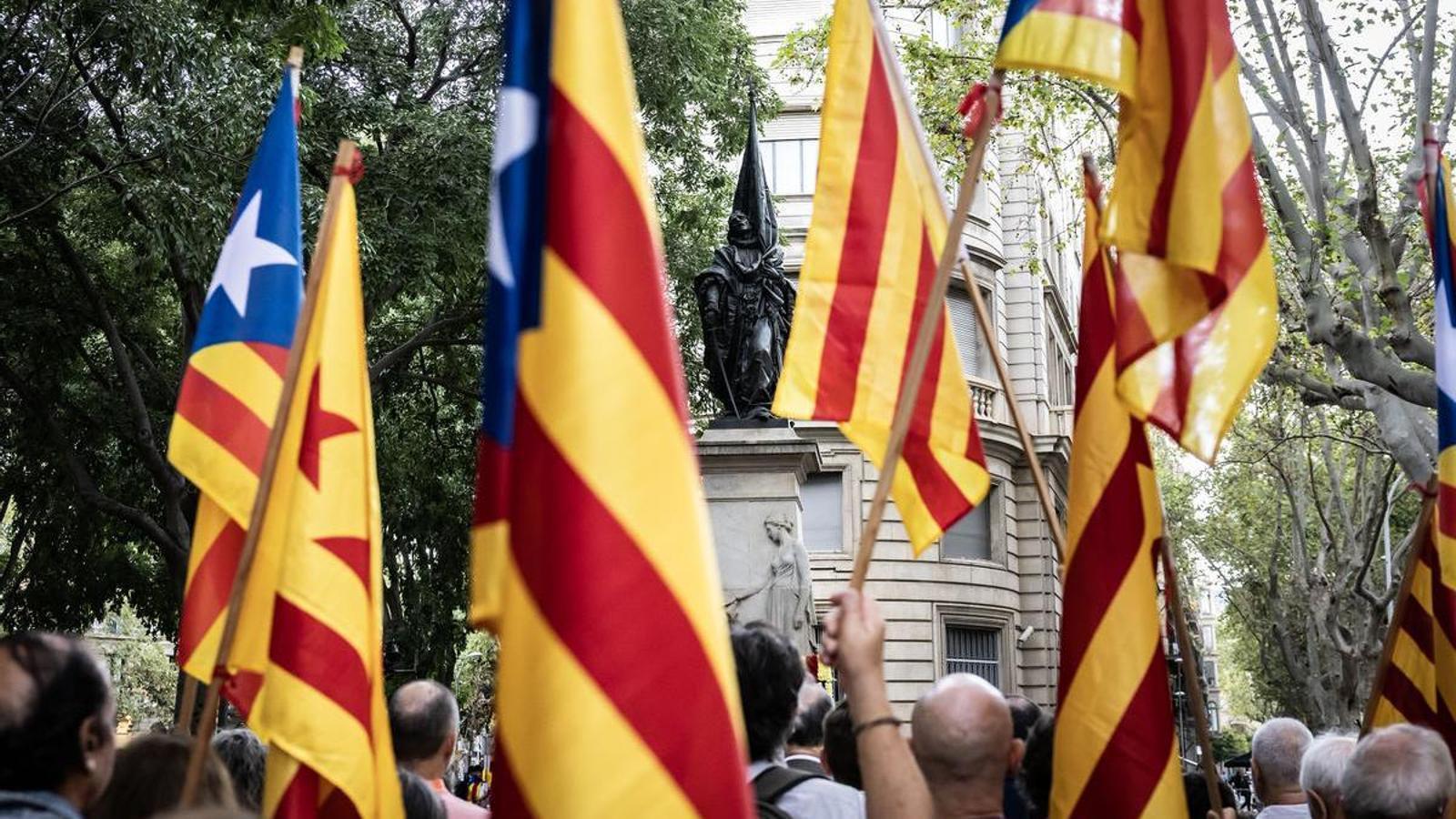

The right-wing shift of the country is advancing unstoppably. I am not speaking in electoral terms, but rather about the level of tension and simplification of the debate, ingredients of this turn towards the purest and hardest right, the one that boasts of easily finding culprits and remedies. The right is taking over the landscape and finding fertile ground in a country like Catalonia, where several factors of disaffection coincide: a) a feeling of decadence and uprooting; b) a real strain on public services, and c) the pendular response to the left-wing turn of the years of the 'Procés', when the CUP set the agenda with an impractical and highly moralistic leftism (“Franciscan”, as Enric Juliana called it). The 2010s, in Catalonia, were an Age of Aquarius, with a lot of posturing and clichés. Manuel Delgado has said that “in the face of hate speech, the left has offered urban gardens”. It is an exaggeration, but one based on real facts.I am of a certain age and I remember how the yuppies hedonists of the 80s laughed at the hippies. Everything is cyclical, but each cycle makes things worse. The migration crisis has derailed the left, which has been left without an answer, has worn out the term fascist to the point that it no longer means anything and has left the field open to half-baked Trumpists who preach Manichaeism and ethnic hatred. To face this offensive, anti-fascism no longer has a David Fernàndez, but rather Juana Dolores and other parodies that dare to speak in the name of the working class and continue to point out trivialities instead of addressing what had always been the strong point of the left: real policies against inequality and the collapse of public services. These are major threats that the rampant right will hardly address, because it is more profitable for them to spread fear and hatred towards the weak, and, in the case of Spain, to stimulate a jingoistic resurgence that, even without exaggeration, can be branded as neo-Francoist. The most worrying thing about this phenomenon is not the brainless with their braying, but the police, the judges, and the economic and media oligarchies that hope to fish in troubled waters. It is a coalition too powerful for the PSOE to deal with, considering that the Sánchez government is driving without a steering wheel and with flat tires.Spain is moving with firm steps towards the hegemony of the PP and Vox, which will have a lesser reflection in Catalonia. But in front of it, there is no longer the old transversal, mesocratic Catalanism based on civic strength, but rather a PSC surrendered to the PSOE and, therefore, in a state of shock; two depressed parties managing the shipwreck of the 'Procés' and a local far-right that instead of challenging the State, as it should, prefers to attack those who wear a veil and do not eat pork. A desolate panorama that can only be reversed when Catalan identity—which, despite its thinning, constitutes our core, in a country torn apart by divisions of all kinds—decides to form a common front and stand up. Since October 1st, we know that this means conflict. External and internal. Are we prepared for it?Let us remember –once again– the journalist Agustí Calvet, Gaziel. In 1936, when Companys asked him for advice, the journalist predicted the rise of fascism and the fall of the republic: “Will we have time to organize ourselves (...) so that when the inevitable collapse comes, our freedoms do not also collapse?”, he asked himself. And finally, an appeal to the unity of the Catalans: “It is not (...) an indispensable task: it is THE ONLY ONE”. The difference is that Gaziel advocated for this Catalan unity in the face of “Castilian and Castilianized Spain”, and today we know that it is not possible to make a clean break between these two realities. Here is the challenge we will face.
