Gaudí(r) with Cerdà
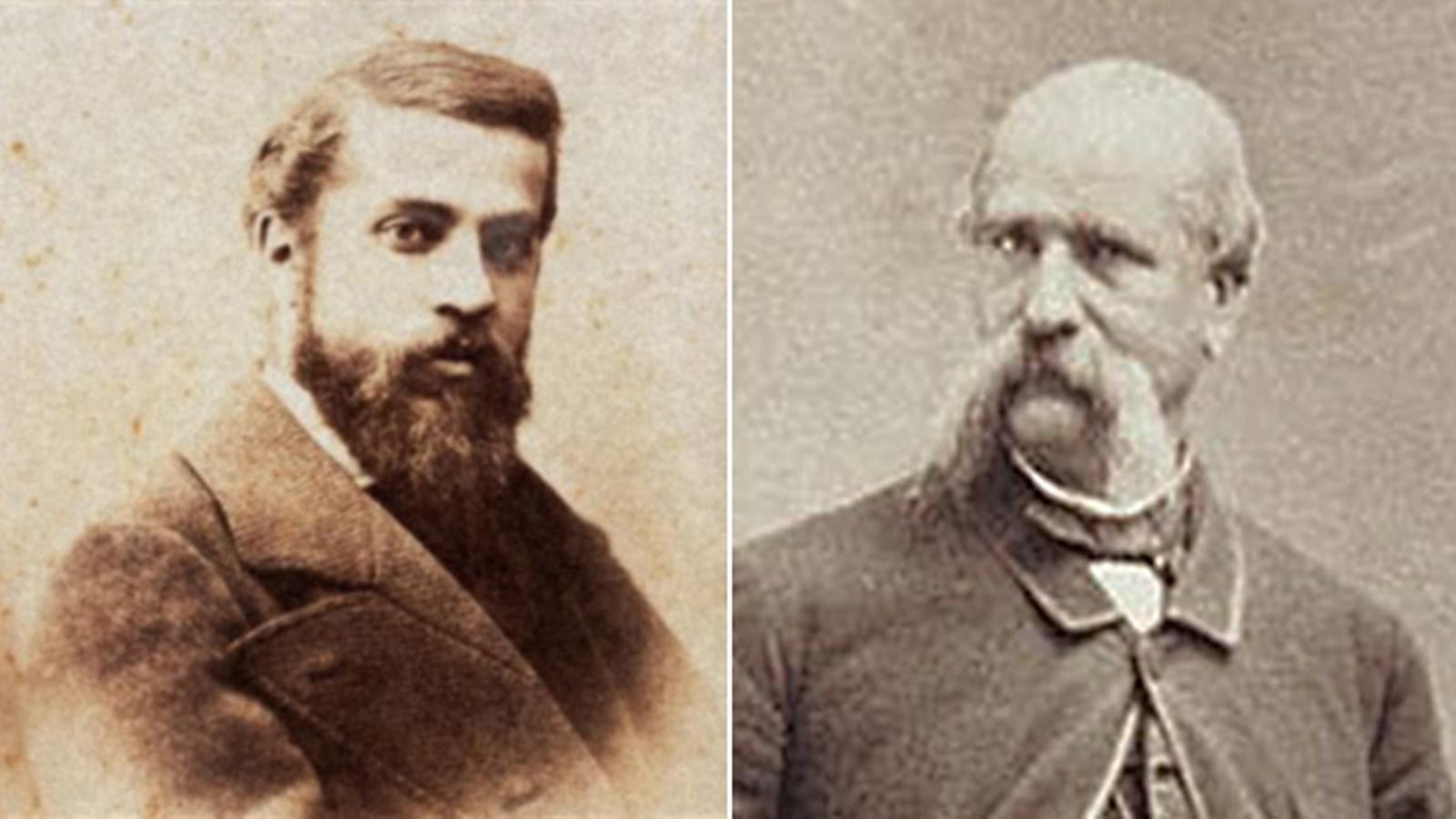
The brilliant figure of Ildefons Cerdà has often served as a scapegoat. The trend was initiated by a prominent figure of conservative Catalanism and modernist architecture, Josep Puig i Cadafalch. His obsession still lingers. The Barcelona City Council finally wants to dedicate a sculpture to Cerdà in Universitat square, one of the initial spaces where the Eixample began to be built. Surely someone will still pull from the drawer of bad ideological fixes the tired clichés about the engineer who shaped modern Barcelona: that he was a utopian socialist (false), that he was a unimaginative rationalist (false), that Madrid imposed his project on us (in this case, it was a stroke of luck). For too long, he has been absurdly and simplistically despised as a centralist stain.
The long silence that Cerdà suffered has been gradually corrected, largely thanks to engineers, who have adopted him as a reference. Albert Serratosa was a great Cerdà enthusiast and has been continued by Francesc Magrinyà or Andreu Ulied, among others. Magrinyà has now published the exhaustive Teoría Cerdà. La revolución urbana e industrial (UPC). But also by architects like Oriol Bohigas, the first to seriously champion him, and Salvador Tarragó; and many others.
Gaudí, from a completely different angle, was also not understood due to his excessive and unclassifiable modernism, his extreme religiosity and Catalan identity, and the apparent distance that separated him from architectural modernity. A triple, myopic assessment that was corrected sooner than in Cerdà's case. Gaudí is today immensely popular and universally admired. What remains, however, is the controversy over the continuation of the Sagrada Familia. But both supporters and detractors of finishing it do so in his defense.
This year we celebrate 100 years since the death of Gaudí and 150 since that of Cerdà. Two prolific geniuses without whom Barcelona would not be what it is nor would it have achieved the renown it has. Gaudí's relevance is artistic; Cerdà's, structural. They are the product of different times, strong personalities with great creative capacity and phenomenal practical determination. People of action and thought, of science-technology and imagination. Inventors of forms.
Cerdà was very critical of the stagnant and corrupt Spain. He came from a wealthy rural family from Centelles and confronted his father to be able to study first in Barcelona and then in Madrid. He was a scientific, hygienic reformer, with a political mindset - a parliamentarian in Madrid, a councilor in Barcelona, and president of the Diputación de Barcelona - and entrepreneurial capacity - he created a company to build the Eixample -, a man of liberal social orientation, federalist and republican. He thought of the common interest. He was well-connected, married to the painter Clotilde Bosch, daughter of Josep Bosch, who had become rich in Cuba. Clotilde was part of the courtly entourage of Isabella II, with whom she went into exile in Paris. Clotilde and Ildefons separated, she had been unfaithful to him... Perhaps that fueled his republicanism. He lived solely for the Eixample.
He habitually spoke Catalan and his Spanish had a strong accent. He mastered French: he often traveled to Paris, where he met Baron Haussmann, the great urban planner, who wanted to keep him. Cerdà was a typical modern man of the 19th-century urban revolution - industry, steam, railway... -, who looked to the future with optimism and a desire to overcome inequalities. He was not a revolutionary: "I don't think anyone will judge me so stupid as to assume I will propose the expropriation of all the land included in the Eixample project."
Gaudí was also a Barcelonian by adoption, a fervent Catholic, and a radical Catalan nationalist. In his youth, the Renaixença erupted, and later political Catalanism. He also had a technical spirit and ambition for well-done work, attentive, like Cerdà, to international novelties. He also thought of the common interest, but instead of a political vision, he had spiritual inspiration. Both lived obsessed with work. Now that we celebrate their anniversaries, it would be good for Barcelona if Gaudí did not overshadow Cerdà.
