Francesco Tonucci: "A child doesn't commit suicide, a teenager does."

-
CAT -
CAST
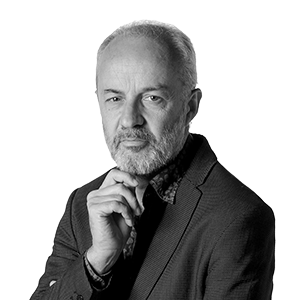
That phrase in the title opens your eyes. Francesco Tonucci, the great Italian thinker and pedagogue, the creator of the concept the city of children, She says this so we understand the importance of giving children opportunities to experience frustration, to take risks in their independent learning, to learn on their own. How? With freedom. Children don't need us to protect them; we should let them go out to play, go to school alone—there's data showing that they're more punctual if they go alone—and go shopping in the neighborhood. "In reality, greater autonomy means less risk."
"Children learn to speak on their own, through trial and error. No one teaches them," says Tonucci. "If we tried to teach them to speak, we might have a lot of people with aphasia," he jokes. If we don't let children make mistakes and interact with the world without supervision—with friends, neighbors, teachers, strangers—if we overprotect them, if we're always hovering and hovering, if we don't let them scrape their knees, fight, even more than fight, fight, fight, cry, cry, cry, and cry, even more than cry, and cry, then perhaps it's already too late. "Experiencing frustration at 4 or 5 years old is completely different from experiencing it at 14. A child cries, tells their parents... and the next day they're back to playing, perhaps even with the person who hurt them." According to Tonucci, the increase in depression (and suicide) in adolescence has a lot to do with overly sheltered childhoods.
This Thursday I had a public conversation with the wise and provocative Tonucci in the García Márquez Library, which was packed to capacity, as part of the series Education to build livable futures Organized by the Barcelona City Council. "Children aren't stupid," he repeated more than once. "A child who can't yet walk, when they see some steps, doesn't dive headfirst; they turn around and, using their hands, help them back down." The obsession with safety, which began in the 1980s, has led us to clip the wings of childhood. With our fearful adult gaze, we only see dangers. They see a world to discover; they are hungry to learn, to live, to go further. And all we do is put obstacles in their way, watch them, and confine them to closed spaces. Tonucci says it's true that there are more cars now, but he emphasizes that "it's completely false that the city is more dangerous than it was 40 or 50 years ago." Today there are fewer accidents and fewer crimes.
So what does he ask of parents, of the mayors of cities and towns? "Get your sons and daughters, all the children, out into the squares and streets to do their own thing. Get rid of the cars and put children in, and you'll see how they, and consequently all of us, live better. The city will gain quality, we adults will behave better, we'll help them." As if by magic, the city will become more humane. And the children will understand and experience the limits and dangers for themselves.
When he says these things so forcefully and radically (he's also very critical of the education system, but that's a topic for another article), Tonucci is accused of being naive, a do-gooder, an idealist. His response? "In a world like this, being called naive is a great honor." He's not cynical, nor malicious, nor fatalistic. He's convinced that Trump must have been a child who didn't know how to play. Now we're all paying the price.
"Using children as a benchmark doesn't mean infantilizing the city, but rather benefiting everyone." Tonucci doesn't want closed and protected playgrounds, but rather green spaces where children and adults can mingle. "In parks, children get tired very quickly. It's very strange: a child who is playing never gets tired! They forget to eat and even to go to the bathroom. What does it mean that they get tired of being in the park? That they haven't really played." "Adults play to have fun, to win... Children play for the sake of playing; it's the usefulness of the useless." Einstein said that "play is the highest form of research." "Outside the home, with friends, boys and girls learn things that can't be learned at home or at school: they learn about themselves." Let's not take that treasure away from them.
