Fascism as a sentimental question
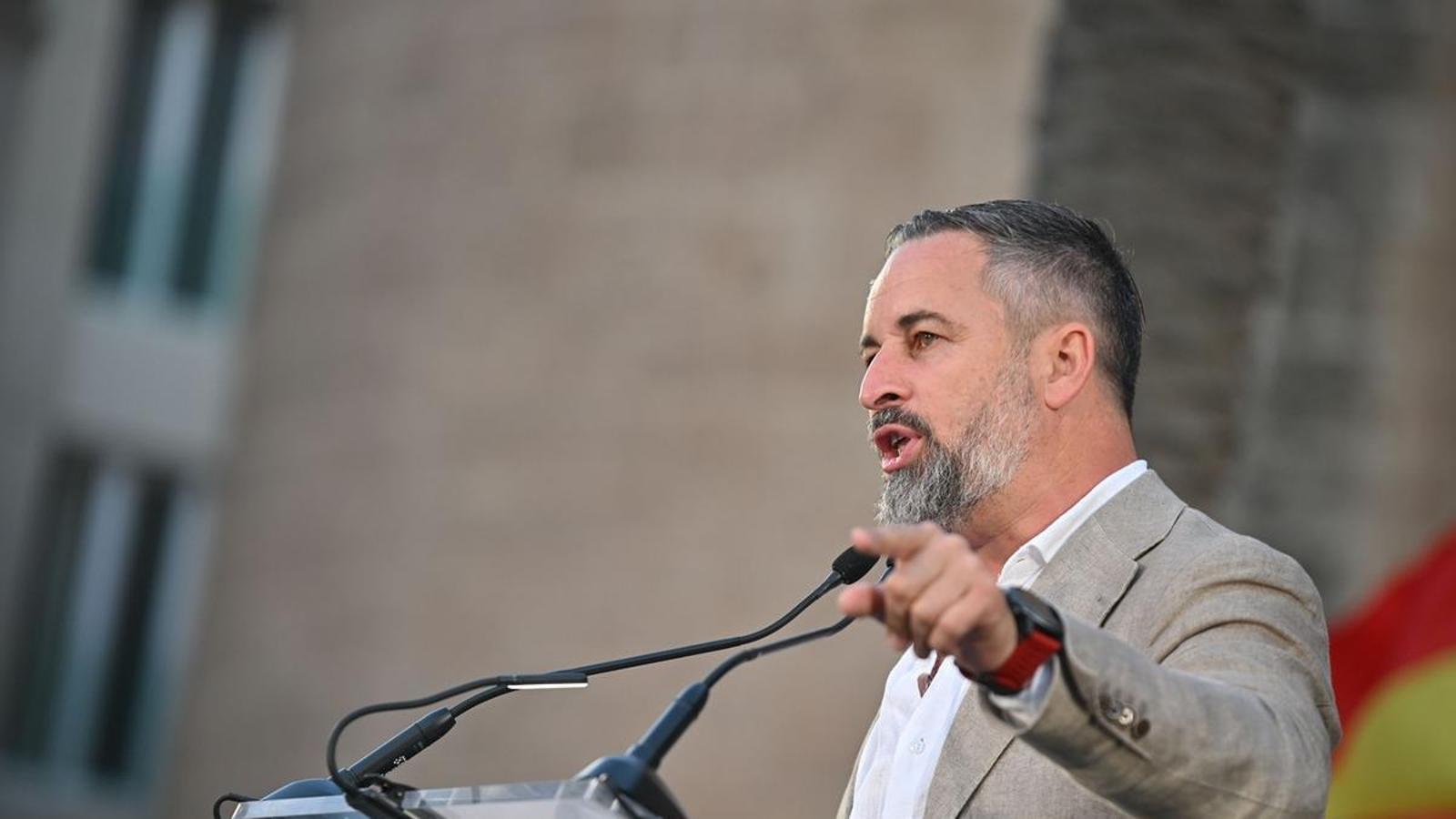

Fascism is a sentimental issue. It arises, above all, from certain masculine sentiments. Economic, social, and cultural causes can be sought, but it is fundamentally the collective expression of a series of personal frustrations.
Let's go to the origin of the term. That is, to Benito Mussolini. In the First World War (1914-1918), Italy fought alongside the allies and against the Austro-Hungarian Empire, which still occupied part of the peninsula. After cataclysmic defeats like Caporetto, notable victories like Vittorio Veneto, and a casualty list that, between dead and wounded, exceeded one million, France and Great Britain sidelined Italy in the peace negotiations. It received almost no economic or territorial compensation. It was as if Italy had lost the war.
The consequence? Demobilized soldiers felt intense frustration. On March 23, 1919, months after the armistice, Mussolini recruited 60 of these frustrated men, known as arditi, and created the Fasci Italiani di Combattimento. The rest is history.
Something similar happened in Germany, the great defeated nation in the conflict. Like Italy, the German nation had barely existed for a few decades. It had been born as an empire (Reich), under Prussian militarism and the euphoria of victory over France in 1871. Suddenly, it had become a fragile republic subject to war reparations.
For former combatants like Adolf Hitler, this was an unbearable humiliation. Many soldiers joined communist "soviets." Hitler, as a police spy, was tasked with attracting as many of these humiliated ex-combatants as possible to the nationalist and ultra-conservative side. As is known, he was very successful.
There was hyperinflation, deflation, and instability, but the Nazi serpent would not have emerged without the sentimental pain caused by defeat.
Coming to the present, we do not find military defeats. But we do find feelings of frustration. I have no doubt, although I also have no conclusive proof, about the sentimental root of contemporary movements quite comparable to fascism: it is a masculine reaction, as emotional as it is difficult to express, to the historical progress of women.
If the fight against slavery was the great just cause in the 18th and 19th centuries, the 20th and 21st centuries must be defined by the slow but inexorable destruction of the patriarchy. For a good number of men, especially young ones (the most active and often the most disoriented), the masculinist counter-revolution holds an ineffable appeal.
In his recent book "El franquisme en temps de Trump", Francesc-Marc Álvaro underlines the interest of many young people (more than 20% of those under 24) in Vox's proposals. And he quotes a phrase from Santiago Abascal: "Teachers are nervous because progressive crap is being answered. Young people no longer swallow exacerbated feminism, nor historical memory that tells us what to think about our past, nor all the left-wing mantras. The right is the new punk".
Oh, "exacerbated feminism". If you add nostalgia (mostly male too) for an idealized past where the male condition dominated a hierarchical, homogeneous (i.e., white) and generally "pure" society, you already have an explanation for the new more or less fascist movements.
This applies to Vox and to all the rest. Especially to the staggering phenomenon led by Donald Trump. The President of the United States convinces his voters that white men never had responsibility for slavery and the subsequent segregation of blacks, nor for the extermination of the native population. And he proposes to return to an unspecified past of greatness that, by simple chronology, must coincide with slavery or segregation.
In addition to the nostalgic dream, a large part of Trump's appeal to his people is the vociferation, the insult, the threat. That is, the most caricaturedly masculine way of doing politics. The same can be said of Javier Milei. Or Santiago Abascal. Or Vladimir Putin. As could be said of Hitler or Mussolini. They are all ridiculous expressions of "virility".
I do not minimize the impact of mass migrations, a contemporary phenomenon whose emotional impact (and social, but to a lesser extent) is comparable to that of feminism. In any case, note the response of the new fascisms: return to the past and to a supposed homogeneity, displace personal insecurities towards the abstract and comforting sphere of the "sacred and offended nation", put an end to "woke nonsense" and, essentially, to a compassion that, in the subtext of their speeches, is identified as "feminine".
