Catholic spring?
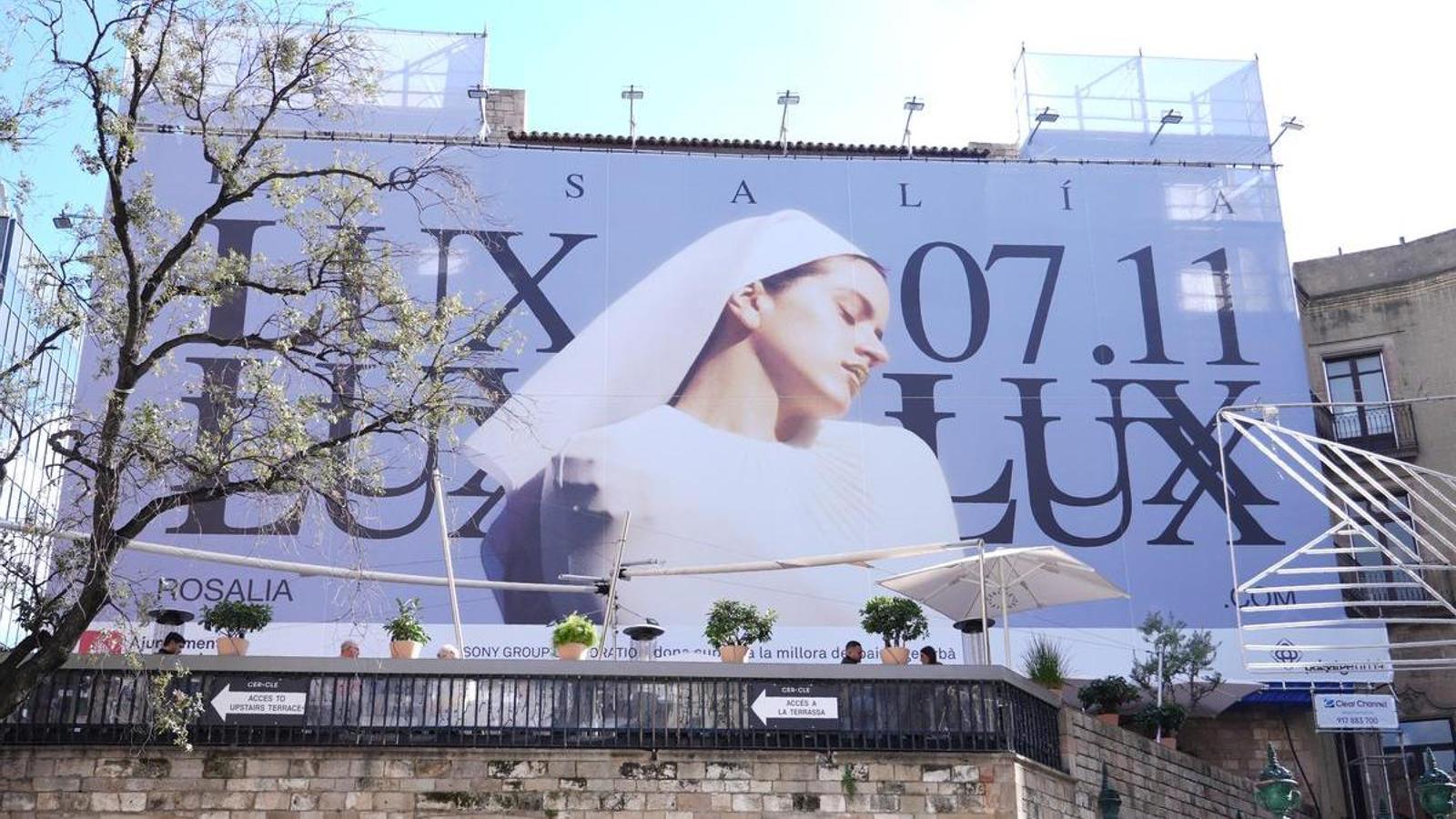

The extraordinary global resonance of Rosalía's latest album, the success of the film Los domingos, the media coverage of the papal succession, and the more or less "spiritual" bias (the quotation marks are important here) of certain high-audience series have led to the expression "Catholic spring" being used in certain circles. I already referred to Rosalía's specific case a few months ago, because it seemed significant to me, to say the least. The fact that it is a genuine marketing product, albeit of high aesthetic and musical quality, does not discredit the real interest it has generated among many young people (and not so young). How should all this be interpreted? The CIS data show that there has been no increase in the practice of Catholicism in Spain in recent years, but rather a slow and sustained decrease. According to CIS surveys, the percentage of the population declaring themselves Catholic —practicing or not— has fallen from around 60% in 2020 to 55.4% in April 2025, with a particularly marked drop among non-practicing Catholics. In parallel, the groups of agnostics, indifferent, and atheists continue to grow, together accounting for nearly 40% of the population. The CIS does not detect, therefore, any "spring", that is, any generalized upturn; in fact, the dominant trend is progressive secularization. Catholicism continues to be the majority religion in Spain, yes, but it has not experienced any real growth, at least during the 2020-2025 period. All of this, however, does not quite align with the references we presented at the beginning. So, what is happening?There is no structural revival, nor of vocations, nor of liturgical participation, nor of the global proportion of Catholics, but there are micro-tendencies that no one expected and that suggest certain changes in attitude. Could they be symptoms of a minority but significant cultural change? We will see. What we are witnessing is not a sudden explosion of spiritual fervor, but rather the progressive exhaustion of a life model that, for decades, has presented consumption and ultra-individualistic self-sufficiency, without ties or commitments, as immediate paths to happiness. This narrative, which took root strongly from the second half of the 20th century, has been showing its cracks as younger generations have experienced firsthand the consequences of a fragmented, accelerated, and often meaningless life, which demands more and more stimuli (generally, by paying).
The implicit promise that assured us that, once freed from traditions and transcendent references, we would be happier has been a great fiasco. Many young people have grown up amid a depressing paradox: they have never had so many options, and at the same time they have never experienced so much uncertainty, loneliness, and, above all, emotional fragility. Job insecurity, the pressure to build an exhibitable (pseudo)identity, or the feeling that everything is provisional, among other things, have been eroding confidence in that model that promised an emancipation that — alas — has transformed into a new alienation. Life needs roots, community, and meaning. The agnostics or atheists who claim that these three things are also plausible outside of religion are absolutely right.In any case, the attraction towards "spiritual" topics (I underline the doubtful quotes again) exists. It is not a nostalgic return to traditional religiosity, but a reaction to the realization that radical individualism and compulsive consumerism have not been able to answer the fundamental questions of existence. When the present becomes a kind of inconsistent illusion and the future becomes too uncertain, the search for a stable framework is no eccentricity.All of this does not necessarily imply a more intense religious future, but it does imply a change in sensibility. The culture of "you can do anything", of "visualize what you want and you will achieve it" and other nonsense of that kind has given way to an awareness of vulnerability, especially after the mental shock that the covid pandemic represented for young people. Transcendence, once considered an annoying remnant of the past, becomes for some a possibility —and I say "possibility", not "answer"— to give depth to a life that risks getting trapped on the cold surface of the mobile screen. No, there is no Catholic spring. Nor is there a winter. The background landscape is blurry, blurred, but people continue to be what we were, I don't know if for better or for worse.
