Authority and desks
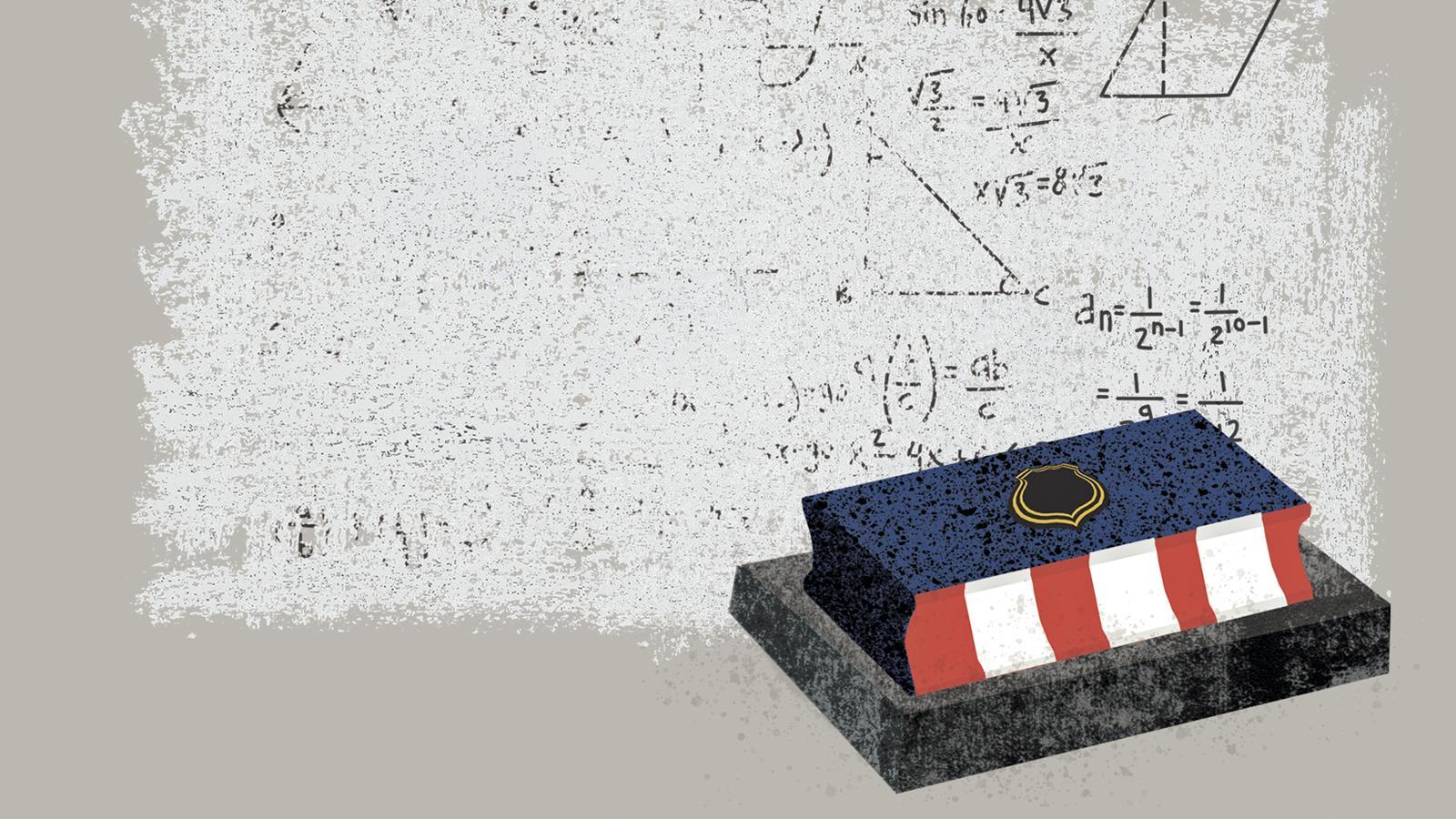
The Teaching strike is not a labor protest but a diagnosis of the country. The unease of teachers and families points precisely here. It does not speak solely of salaries, schedules, or bureaucracy. It speaks of a deeper fatigue: the school has been caught between growing demands and a progressive erosion of authority, prestige, and the teaching function, and many families are also not satisfied.
For years, education has been presented as almost the universal answer to all social fractures. We have asked public schools to integrate cultures, compensate for inequalities, educate emotionally, prevent violence, manage conflicts, adapt to the digital revolution, and, at the same time, maintain good academic results. But while responsibilities increased, social trust in the figure of the teacher and the quality of teaching decreased.
The crisis in Teaching has the discrediting of authority as one of its origins. The word authority has gradually become suspect. Too often it has been confused with authoritarianism, imposition, or rigid hierarchy. But democratic authority is not that. Hannah Arendt reminded us that educating implies assuming “responsibility for the world”. The teacher represents more than an administrative function: they represent knowledge, experience, and the transmission of a shared legacy. When society systematically questions this authority, what ends up being weakened is not only the teacher's position but the very idea of cultural transmission. But authority is also fueled by commitment, and the fact that teachers did not step forward, as other sectors did, during the lockdown, widened the gap between teachers and families. The poor PISA results and the lack of pedagogical adaptation to AI have also not helped the rapprochement.
We have a society saturated with information, but with growing difficulties in distinguishing between knowledge and noise. Today, schools compete with permanent screens, with logics of emotional immediacy, and with a culture of rapid consumption that has profoundly altered attention, reading, and the relationship with intellectual effort.
In this context, many teachers feel they are no longer just teaching. They manage emotions, avoid conflicts, negotiate boundaries, and try to maintain an authority that society once recognized naturally. Being a teacher had been a figure of cultural reference. Now, often, the teacher is perceived as a manager of educational services subjected to constant scrutiny from families, administrations, and digital environments.
The pedagogue Gregorio Luri insists that part of the teacher's unease stems precisely from this feeling of disconnection between pedagogical discourses and the reality of the classroom. For years, the educational debate has been filled with solemn concepts – competencies, innovation, transversality, personalization – while many teachers experienced a progressive loss of time, recognition, and real autonomy. The paradox is that we had never talked so much about education and, at the same time, there had never been such a sense of frustration. On this, it is advisable to read the book Tiempo para la escuela, by Montse Jiménez, Carme Ortoll, and Coral Regí.
There is also another uncomfortable issue: the relationship between equality and knowledge. If the school relativizes intellectual rigor, the most vulnerable students are the first to be harmed. Families with more cultural capital can compensate outside the classroom for what the school fails to transmit. Others cannot. That is why the debate about authority is neither reactionary nor nostalgic: it is profoundly democratic.
And this is probably the fundamental issue. The school does not need to return to the authoritarianism of the past. It needs to rebuild an authority based on knowledge, on example, on responsibility, and on social trust. No educational system can function if its teachers feel alone, questioned, and permanently delegitimized. But it also cannot function if school results are precarious and teachers abandon the compass that says their north is the intellectual growth of students.
The ability to build a shared world depends on the quality of the school. We are risking social cohesion, the functioning of the social elevator, and the economic progress of the country. Therefore, if more police officers are needed to maintain order, something that the directors of difficult schools have privately requested, let them be there. If ratios need to be improved, guards dignified, and salaries raised, let it be done, but also let the quality of schools and teachers be evaluated to know if they meet the expectations of a society that needs them to be trained and involved.
