Athens, 2,506 years ago: the triumph of sophistry, relativism, democracy, and the West

The Sophists have a bad reputation. Those itinerant teachers were skeptics and relativists, they charged for their lessons and sought to persuade, through one argument or the other, instead of seeking absolute truth, in which they did not believe. Plato and Aristotle despised them.
But it was the Sophists who inspired Athenian democracy, a system as corrupt and unstable as it was prodigious, which 2,506 years ago, in the battles of Thermopylae and Salamis, determined the primacy of what we call the West, until today.
It would be unacceptable for an uninformed person like the one who signs these lines to claim that the Sophists (Gorgias, Hippias, Protagoras, etc.) were right, that there are no immutable truths, that politics is the art of persuasion and possibilism, and that Plato and Aristotle were wrong. This, however, Friedrich Nietzsche already said. It could, therefore, be true.
Let's start with the peculiar character of the Athenians: they were envious and venal, they gave credibility to any fable, they could not stand the wise and the powerful, they overthrew their heroes as soon as they had the opportunity. They constituted, therefore, the ideal society for the democratic experiment. An experiment promoted in 508 BC by the legislator Cleisthenes, who proclaimed that all citizens (not women, not slaves) were equal.
Seen from a historical perspective, it was a wild and wonderful moment. And a triumph of Sophistic relativism. To end aristocracy and timocracy (rule by the rich), Cleisthenes formed artificial clans, in which people of any condition and geographical origin were mixed: it didn't matter, since all citizens were equal. He also promoted the election of rulers (members of the Boulé or Council) by pure lottery: again, it didn't matter, since all citizens were equal. And he invented ostracism: each year, citizens voted on pieces of clay (the ostraka) who should go into exile because they were too influential.
Two decades after Cleisthenes, Athenian politics was a mess that we would recognize perfectly today: whoever was best at deceiving ruled, false accusations proliferated to get rid of rivals, any lie passed as credible. Opinions ruled over facts. Not despite this, but precisely because of this, Athens was about to experience its culminating moment, its instant of eternal glory.
Two great figures vied for power: Themistocles, a demagogue and corrupt, and Aristides the Just, supposedly austere and honest (according to Plato), but in reality as venal as his opponent. Both had fought heroically in the battle of Marathon (490 BC), the first Hellenic clash with the all-powerful Persian Empire.
Marathon had been, for the Persian Darius, a mere border skirmish. In reality, many Hellenic cities were already medized, that is, integrated into the empire's orbit. But Xerxes, son of Darius and king of kings, a devotee of the one god (Ahura Mazda) and self-proclaimed champion of truth, had a personal obsession with Athens. Which, for him, represented falsehood. Xerxes began to assemble the most numerous fleet (around 600 ships) and the most numerous army (around 250,000 soldiers) that the world had ever seen.
Themistocles argued before the Athenian assembly that the only possible salvation lay in the creation of a fleet of at least 200 triremes. The hoplites, the heavy infantry victorious at Marathon, opposed it, arguing (rightly) that the Athenians only knew how to fight on land. The old aristocratic families cried foul (rightly), because building a fleet had a ruinous cost. Aristides the Just stated that Themistocles was leading Athens to perdition. And even more so when Themistocles proposed a mass exodus and abandoning the Acropolis, that is, the sanctuary of the goddess Athena, protector of the city, to its fate. This was the height of it: a renunciation of the gods. But Themistocles convinced the assembly that the most important thing was the citizens, not the city or the goddess. The great relativist won, deceiving some and others and making concessions that horrified the most well-informed citizens.
To attract the Spartan enemies to the Athenian side, Themistocles placed one of them, Eurybiades, at the head of the fleet. The Spartans, great warriors, knew nothing about navigation. Nor did the early and varied Greek crew of the ships know how to navigate. The command of the land forces also remained in Sparta's hands (this was the only reasonable thing) and the most desperate undertaking of the campaign: King Leonidas assumed the attempt to halt a vastly superior Persian force at the pass of Thermopylae.
What happened in 480 BC is well known. Empty Athens was razed. Leonidas and his men died at Thermopylae. The cunning of Themistocles managed to trap the Persian fleet, already decimated by storms, in the strait of Salamis (800 meters wide), where sailing skills were of little use, and destroy it. Xerxes returned to Persepolis and ceded command of a reduced land force to Mardonius, which was annihilated the following year at Plataea. The West prevailed over the East.
What happened next (Rome, Christianity, modernity, the Industrial Revolution) would not have occurred without the political talent and lack of scruples of Themistocles. It should be noted that, on the eve of Salamis, Themistocles had sent an emissary to Xerxes' camp to ensure that he and his family would be respected in case of defeat: a hero and a cheat to the end.
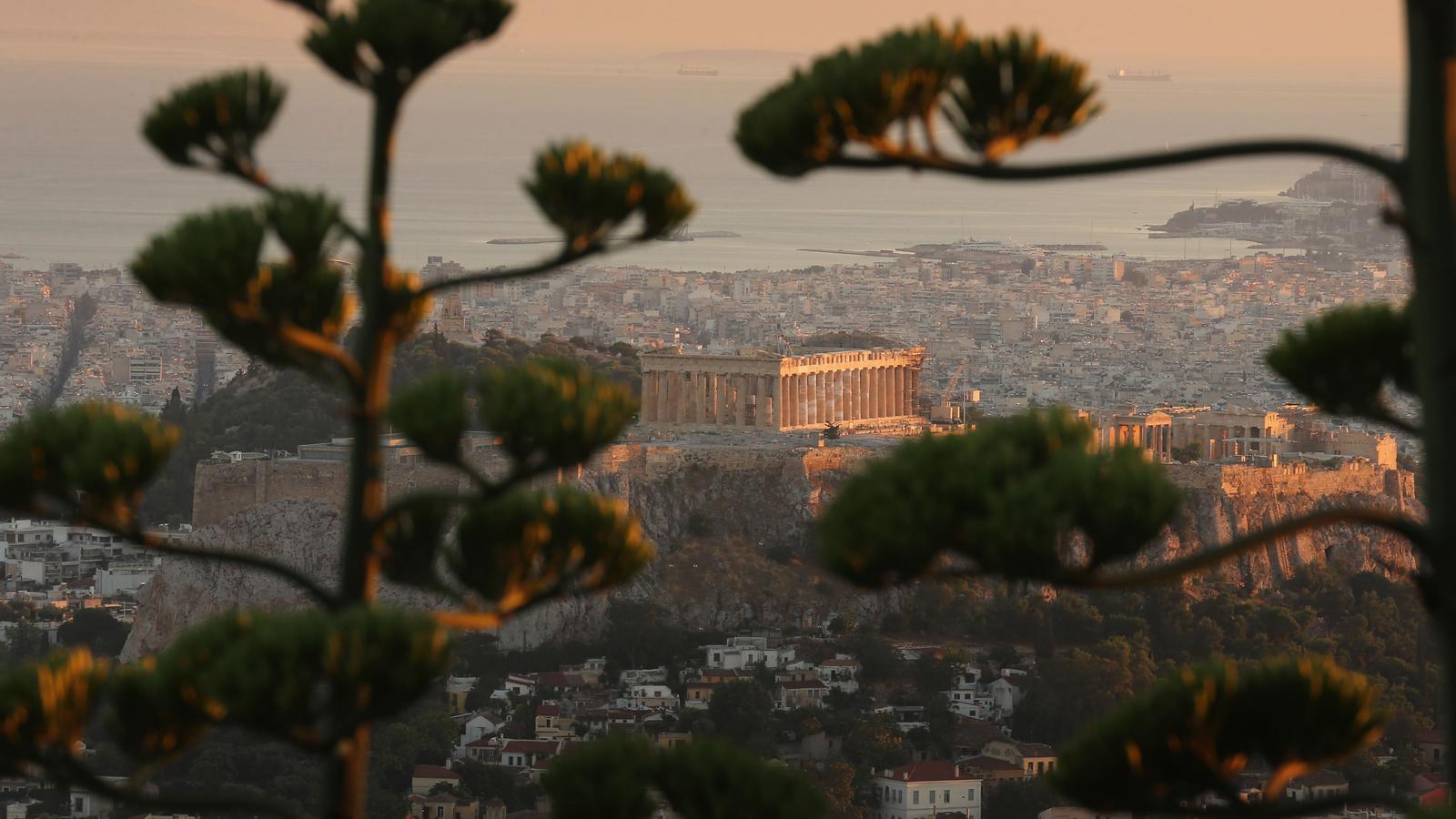
After the great victory, the Athenians behaved like Athenians and accused Themistocles of treason, who fled and, without further ado, entered the service of the Persian Empire. The Parthenon was built on the razed Acropolis. The eloquence inherent in democracy gave birth to Socrates, Plato, and Aristotle, enemies of democracy and proponents of enlightened tyranny. Athens fell to Sparta in the Peloponnesian War. And the confused, corrupt, and formidable democratic experiment was buried for two millennia.
